The first spool of Seaguar Red Label I bought was a 15-pound, 200-yard spool, and I bought it for a dull reason: I wanted one line I could leave on a baitcaster for a whole spring instead of respooling every other trip. I fish Wilson and Pickwick most weekends, plus a couple of farm ponds outside Florence, Alabama, and I have been doing it since I was a kid. I am 54 now, retired from the power company, and I have spooled enough line to know that the label is not the same thing as the truth. This is the honest version, including the parts of Red Label that are not fun.
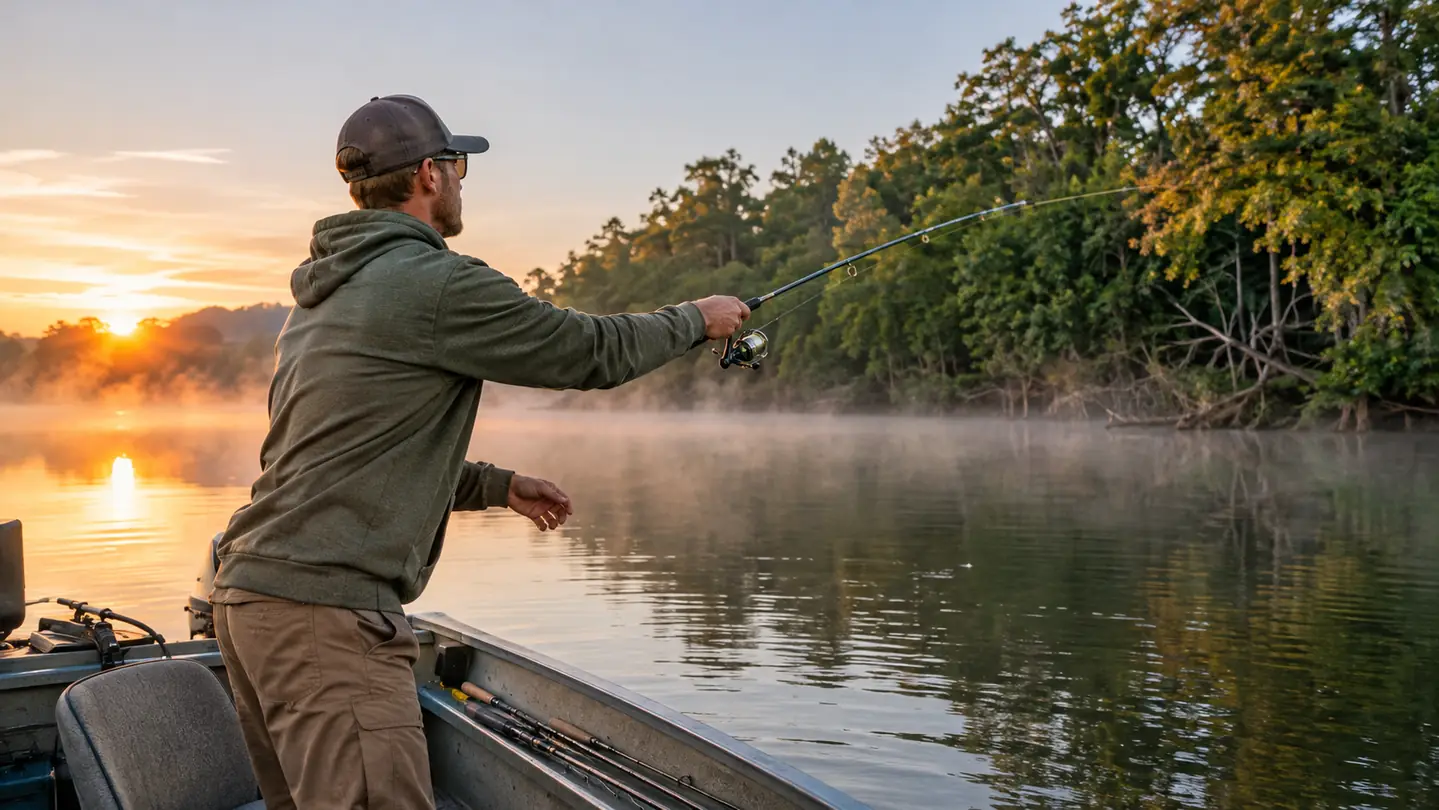
I put the line on a 17-foot aluminum jon boat with a 40 hp outboard and a bow-mount trolling motor. My usual casting rod is nothing fancy, and the reel is a baitcaster I have had for years. I tied a Palomar knot at the lure and checked the line after every fish. I used it as a main line, not as a leader, because the listing calls it a freshwater main line and I wanted to see if it behaved like one. I fished it from April into June, mostly early mornings, and I kept notes on my phone when something went wrong. That is the honest part: I wrote down the failures too.
The Quick Verdict
A dependable 15-pound fluorocarbon main line for baitcasters, with two real drawbacks: it is stiff enough to demand patience, and it is not the line I would put on a spinning reel for light lures.
Amazon Check Today's Price →The 15-Pound Spool I Kept on the Reel
If you fish a baitcaster and want a freshwater main line that is nearly invisible and built for knot strength, this is the size I used. The 15-pound, 200-yard spool is the one I can speak to.
Amazon See the 15-Pound Spool on Amazon →How I've Used It
I spooled the Red Label in my garage on a Saturday morning, with Darlene telling me I was going to be late for lunch. I ran it through a rag under tension, because fluorocarbon will punish you if you put it on loose. The spool is 2.4 ounces, and 200 yards is enough to fill my baitcaster with a little backing left on the reel. I did not use any magic additive or line conditioner. I wanted to know what the line did on its own.
The first trip was on Wilson Lake in April, water still cool and stained from rain. I threw a squarebill and a Texas rig, both on the 15-pound line. The line felt stiff for the first hour, and I had to tighten my spool tension a little. After that it settled down. I caught four keeper-sized bass that day, nothing giant, and the line held at the knot. I also backlashed once, my fault, and picked it out without cutting. That told me more than a spec sheet.
Over the next several weeks I used it on Pickwick and on two farm ponds. I caught fish on a jig, a crankbait, and a soft plastic. I checked the last six feet of line after every fish and cut back when it felt rough. I did not have a mystery break in open water. I did have one break at the knot on a hookset, and I am not going to blame the line for that. I had tied the knot in a hurry and did not wet it enough. That is the kind of thing an honest review has to say.
The farm ponds were the real test, because the water is shallow and the fish are pressured. I fished a weightless Texas rig and a small jig around grass and laydowns. The line did not balloon off the spool, and it did not give me loops after I set the tension. I did have to pick a small backlash when I tried to skip a jig under a dock. That was my thumb, not the line. I cut the backlash out, retied, and kept fishing. The rest of the morning was uneventful in the best way.
I also fished it in the rain on Pickwick, which is not my favorite way to spend a morning. Wet line can behave differently, and I wanted to see if the 15-pound Red Label got squirrelly. It did not. I kept the reel covered when I was not casting, and I wiped the line down when I got home. The line still felt stiff the next trip, but it cast the same. I am not going to pretend I did a lab test. I am telling you what happened in my boat.
What Works
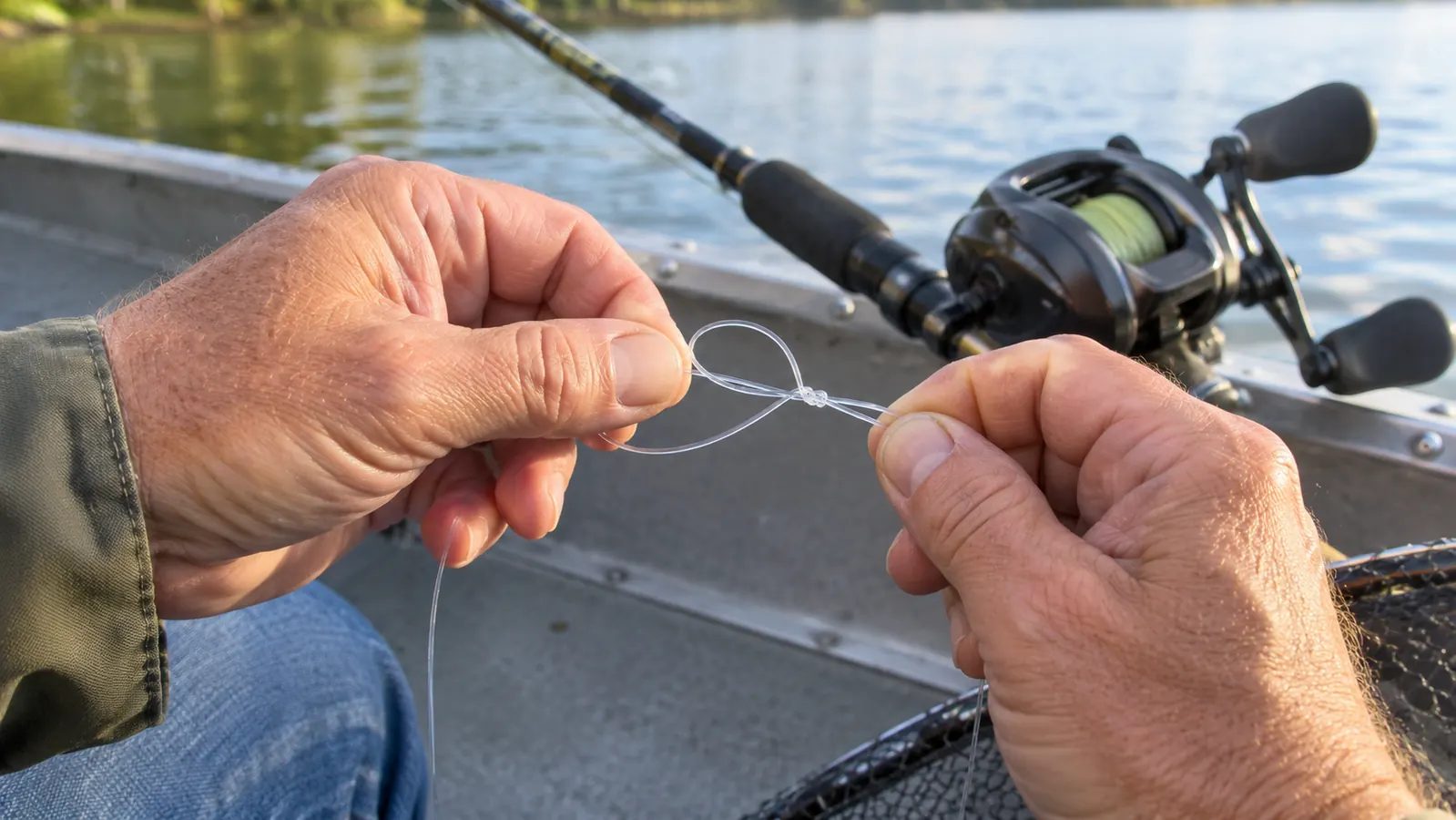
The listing says Red Label has superior knot and tensile strength, and my experience lines up with the knot part. I tied Palomar knots and a few improved clinch knots, and the line held when I leaned on a fish. The 15-pound test is a good middle size for bass. It is heavy enough to fish a jig around wood, and light enough that a crankbait still gets down. I would not call it a heavy-cover line, but it is not a noodle either.
The other claim that matters is that it is nearly invisible. I fish some clear water on Pickwick, and I am convinced line visibility matters on pressured fish. I cannot prove the bass could not see it. I can tell you that I got bites on days when the water was clear and the sun was high, which is when I worry most about line-shy fish. Take that for what it is worth. It is one angler's experience, not a laboratory test.
Seaguar makes its own fluorocarbon resins, according to the listing, and that is one reason I tried Red Label instead of a house brand. I like knowing the company controls the material. The listing also says the line is designed for baitcasting reels, and that matched my use. It cast well enough on my reel once I set the tension. It is not a line I would put on a spinning reel with a light lure, but it is at home on a baitcaster throwing a jig or a Texas rig.
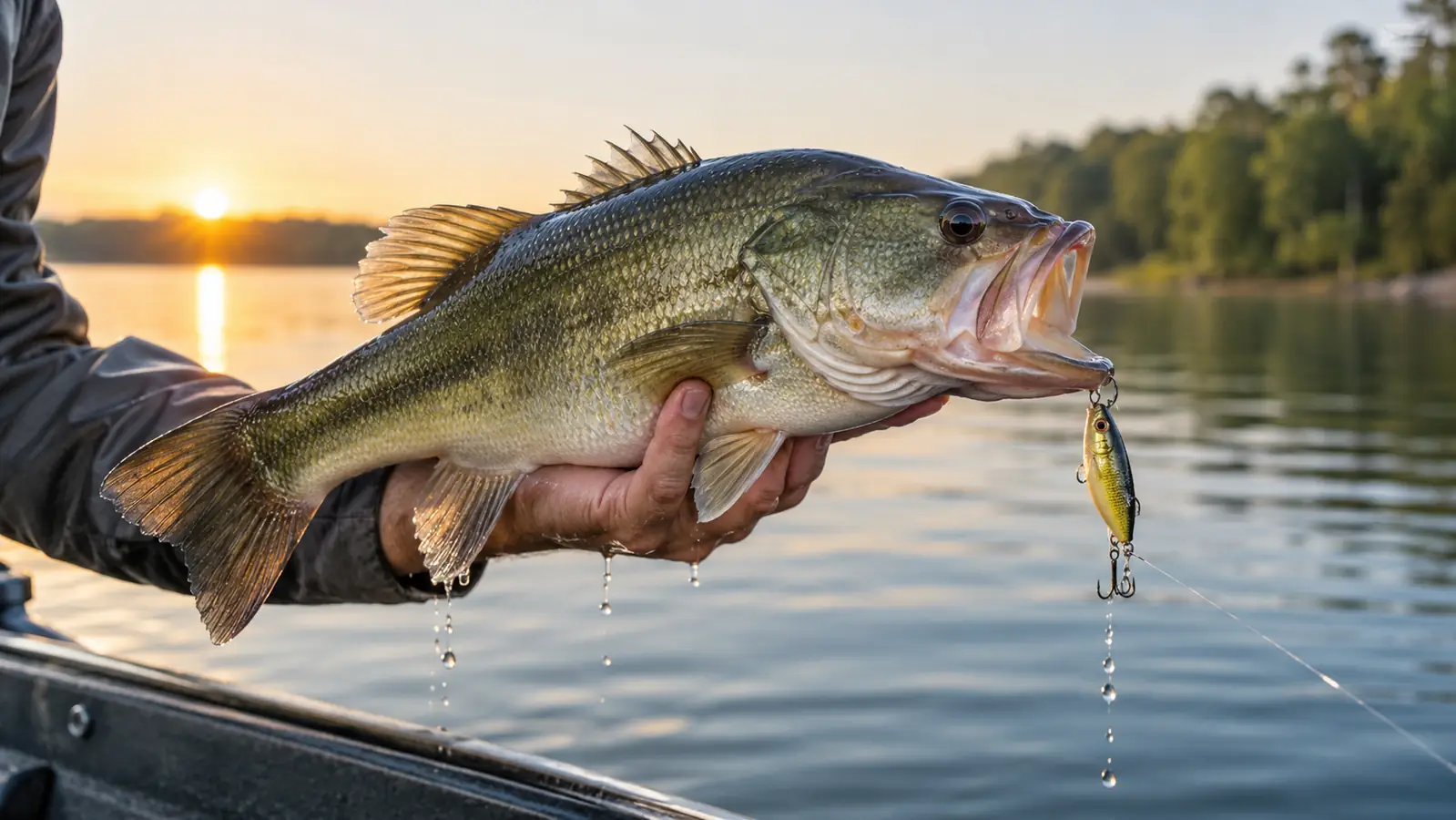
The best test came on a jig around a laydown on Pickwick. I felt the tick, set the hook, and the fish came up and shook its head. The line held, the knot held, and I got my hand under the jaw. I checked the line above the knot and it was clean. I retied anyway, because that is what I do. Could mono have done the same? Maybe. But I had more confidence in the fluorocarbon around that wood, and confidence is part of fishing.
The 15-pound Red Label held on the hooksets that mattered. The failures I had were knots I rushed, not line that gave up.
What I Liked
- Held at the knot on every hookset I did not rush, including a jig fish around a laydown on Pickwick
- Nearly invisible in the clear water I fish, which is the whole reason I pay for fluorocarbon
- 2.4 ounces on a 200-yard spool, so it carries easy in a tackle bag and fills one baitcaster with room for backing
- Seaguar makes its own resins, and the line cast the same after a wet morning and a wipe-down
- The 15-pound rating is honest middle ground for jigs, Texas rigs and crankbaits around wood and rock
Where It Falls Short
- Stiff for the first hour on the reel, and it will backlash if your thumb is sloppy
- Not a spinning-reel line at 15-pound, and too much for finesse baits and drop shots
- 200 yards fills one baitcaster, not two, so a deep spool needs backing
- It punishes a loose spool job with loops, which is a care issue but a real one
- Not a heavy-cover winch, and I would not fish it in thick hydrilla expecting it to haul a fish out
What Does Not Work for Me
The first knock is stiffness. Red Label is not a soft line, and it lets you know on the first few casts. I had to adjust my reel and my thumb, and I would not hand this spool to a beginner who is still learning to cast a baitcaster. It will backlash if you are sloppy. Once it limbers up it is fine, but the first hour is not the line's best hour. If you want a line that feels broken in from the first cast, this is not it.
The second knock is that it is not a do-everything line. The 15-pound size is too much for small finesse baits, and it is not the line I would spool for a drop shot. I also would not use it as a main line on a spinning reel with a 1/4-ounce lure. It is a baitcaster line for power baits, which is what the title says. If you try to make it cover every technique, you will be disappointed. That is not a defect. It is a job description.
The third thing nobody tells you is that 200 yards goes faster than you think if you respool often. I had enough for one baitcaster, but not enough to fill two reels without backing. If you have a deep spool, plan on backing. That is not a reason to skip the line. It is a reason to buy the right amount. I would rather have 200 yards of line I trust than a giant spool of line I do not.
The fourth issue is line management. Red Label does not forgive a loose spool. If you put it on without tension, you will get loops, and then you will blame the line. I saw that happen with a different fluorocarbon years ago, and I was not going to repeat it. I spooled Red Label tight and it behaved. That is not a feature on the label. It is just how fluorocarbon works in my experience.
The Fluorocarbon Question
Fluorocarbon is not magic. It is a material with tradeoffs. Red Label is stiffer than monofilament, and it is not as limp as braid. On a baitcaster, that stiffness can help with manageability, and it can hurt with light lures. I used it because I wanted a main line that was less visible and had good knot strength. I did not expect it to cast like braid, and it did not. If you understand that going in, you will be happier with it.
I also fished it around toothy fish in a farm pond, though I did not target pike. The listing says not to let pike and other toothy species scare you off. I cannot vouch for a big pike run. I can say the line held around wood and rock on Pickwick, and I retied after every few fish. Any line will fail if you do not check it. Red Label is no different. The difference is that it gave me confidence to lean on a fish in cover.
One more honest note: line is only as good as the spool job. I have seen anglers blame a line for loops that came from spooling it loose. I spooled Red Label under tension and it behaved. I also stored the reel out of the sun in my garage. I am not saying the line is fragile. I am saying it rewards a little care. That is true of every fluorocarbon I have used.
The 15-pound rating is a starting point, not a guarantee. I treat any 15-pound line as a suggestion, because a knot, a hookset, and a piece of wood all change the math. Red Label held on the fish I hooked in open water and around light cover. I would not fish it in heavy hydrilla and expect it to be a winch. That is not what the line is for. If you need a winch, use braid. If you want a fluorocarbon main line that is nearly invisible, this is a reasonable one.
How It Compares in My Boat
I still keep monofilament for topwater and for crankbaits in shallow grass. Mono floats, and it has more stretch, which helps keep treble hooks from tearing out. I keep braid for frogs and heavy cover. Red Label fits between them as a fluorocarbon main line for bottom contact and for moving baits where I want less visibility. I am not going to tell you it replaces both. It does not. It fills a slot in the boat, and it fills it well.
If you are comparing it to other fluorocarbon, the things I would look at are stiffness, knot performance, and how it holds up after a few trips. Red Label is stiff at first, but it held knots and it did not fail on me in open water. I have used softer fluorocarbon that cast better on spinning tackle but felt mushy on a hookset. I have used stiffer line that I did not trust. Red Label is in the middle, and for a 15-pound baitcaster line that is a reasonable place to be.
If you are on the fence, buy the 200-yard spool and fish it for a month. Do not judge it on the first ten casts. Spool it tight, set your tension, and give it a trip to limber up. If you still hate it after a month, you will know. If you are like me, you will forget about it, which is the highest praise I can give a fishing line. The good ones disappear. The bad ones remind you they are there.
Who This Is For
This line is for the weekend bass angler who fishes a baitcaster and wants a freshwater main line that is nearly invisible and has solid knot strength. It is for the angler who throws jigs, Texas rigs, and crankbaits around wood, rock, and grass. It is for someone who does not mind a little stiffness on the first trip and who will spool it under tension. If that sounds like your fishing, the 15-pound, 200-yard spool is a sensible choice.
It is also for the angler who wants to simplify. I like having one line on a reel that I can trust for a whole morning, without changing leaders every hour. Red Label let me do that. I still check the line and retie, but I did not feel like I was fishing on borrowed time. That is worth something on a Saturday when the bite is short and the wind is up.
If you fish Wilson or Pickwick in the spring, you know the water can be clear one week and stained the next. I liked having a line that I did not have to think about when the sun came out. I cannot tell you it doubled my catch. I can tell you I was not worrying about my line when I should have been watching my line. That is a small thing that adds up over a morning.
Who Should Skip It
Skip it if you mostly fish spinning tackle with light lures. The 15-pound size is too much for that, and the stiffness will cost you distance. Skip it if you are brand new to baitcasters and still learning to control your thumb. A softer line will be more forgiving while you learn. Skip it if you want one line for every technique from a drop shot to a frog. Red Label is a main line for power baits, not a universal solution.
Skip it if you refuse to spool under tension or check your line after fish. No fluorocarbon will save you from that. Skip it if you need 300 yards for a deep spool and you do not want to use backing. The 200-yard spool is what I used, and it is enough for one baitcaster, not two. Those are the honest limits. If none of them bother you, the Seaguar spool is worth a try.
The 15-Pound Spool That Earned a Spot on My Reel
If you want a freshwater fluorocarbon main line for a baitcaster, this is the size I fished. The 15-pound, 200-yard spool is the one I can vouch for.
Amazon Check the Listing on Amazon →