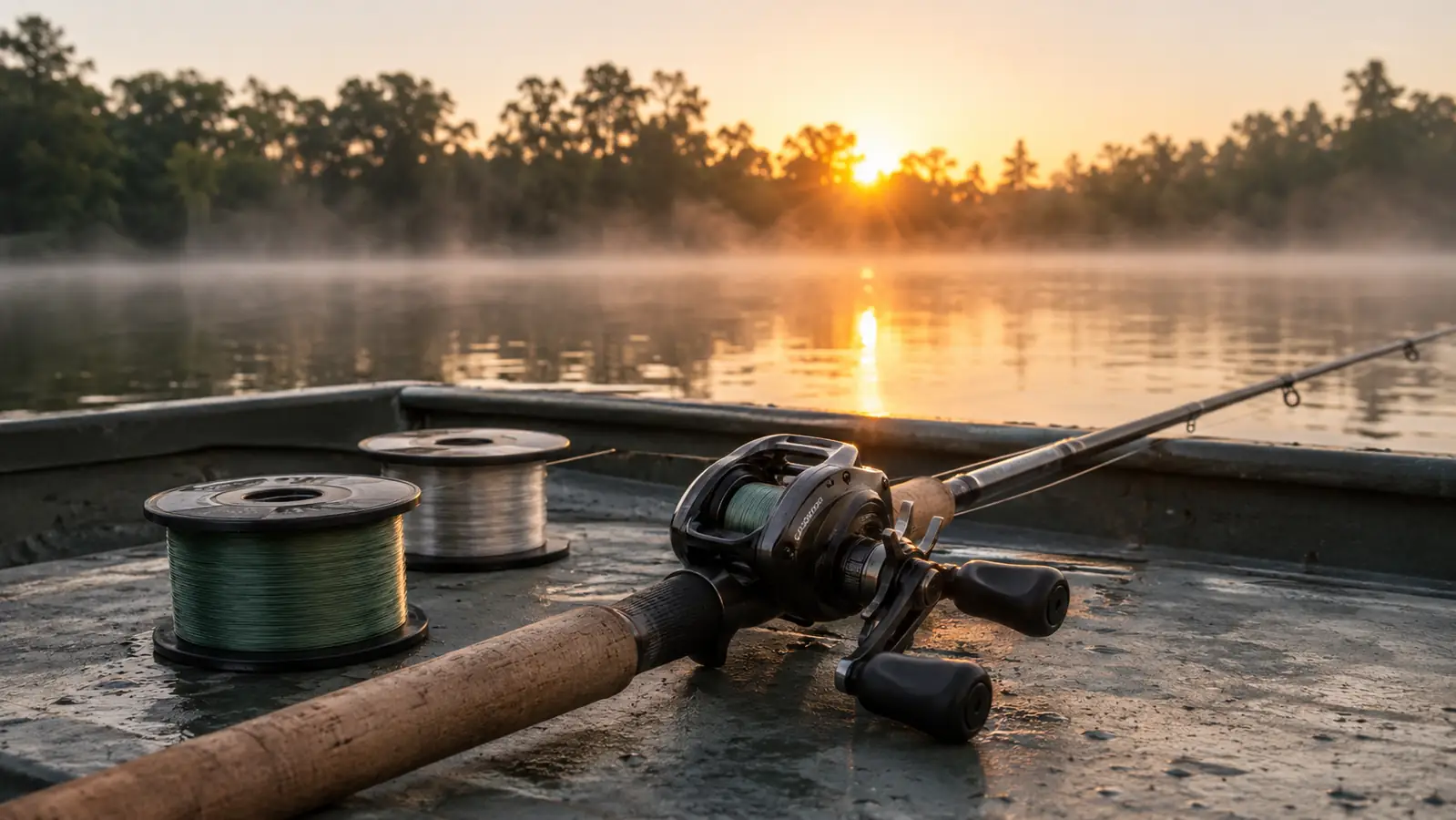
Short answer first, since you did not click over here for a long walk. I run Seaguar Red Label as the main line on my bait caster and I keep a spool of KastKing Fluorokote in the boat bag for the spinning rod. Both are fluorocarbon. Both catch fish. But they are built for two different jobs, and the angler who treats them as interchangeable is going to be unhappy on one rod or the other.
I fish the Tennessee River lakes out of a 17-foot aluminum jon boat, mostly Wilson and Pickwick, plus a couple of farm ponds when the wind lays down and the dog needs the ride. Red Label has been on my jig rod for the better part of three seasons now. That is the honest frame for everything below. I am not comparing spec sheets out loud. I am telling you which line I respool first every spring and exactly why.
| Seaguar Red Label | KastKing Fluorokote | |
|---|---|---|
| Knot strength | The whole point of the line. Built around knot and tensile strength, and it holds when you lean on a fish. | Decent, but I retie more often with it, especially after a hard fight. |
| Abrasion resistance | Takes a lick on shell and rock and keeps fishing. I still check the last two feet, but I am not cutting line every cast. | Softer surface scuffs sooner around hard cover and toothy fish. |
| Manageability | Stiff. That is a plus on a bait caster and a nuisance on a spinning reel. | Softer hand, comes off the spool clean, casts light baits with less fuss. |
| Cost per yard | Sold on 200 and 1,000 yard spools, and you pay for the extra performance. | Bulk spools land well under the Seaguar per yard. Best value in the comparison. |
| Spool sizes | 4 to 20 pound test on 200 and 1,000 yard spools. Covers most bass work. | Bulk spools make frequent respooling easier to justify. |
| Designed for | Bait casting reels and freshwater main line duty. | Spinning gear and lighter presentations. |
| Best for | Jigs, Texas rigs, crankbaits and spinnerbaits around cover. | Finesse and light-line work where a soft line casts better. |
Where Seaguar Red Label Wins
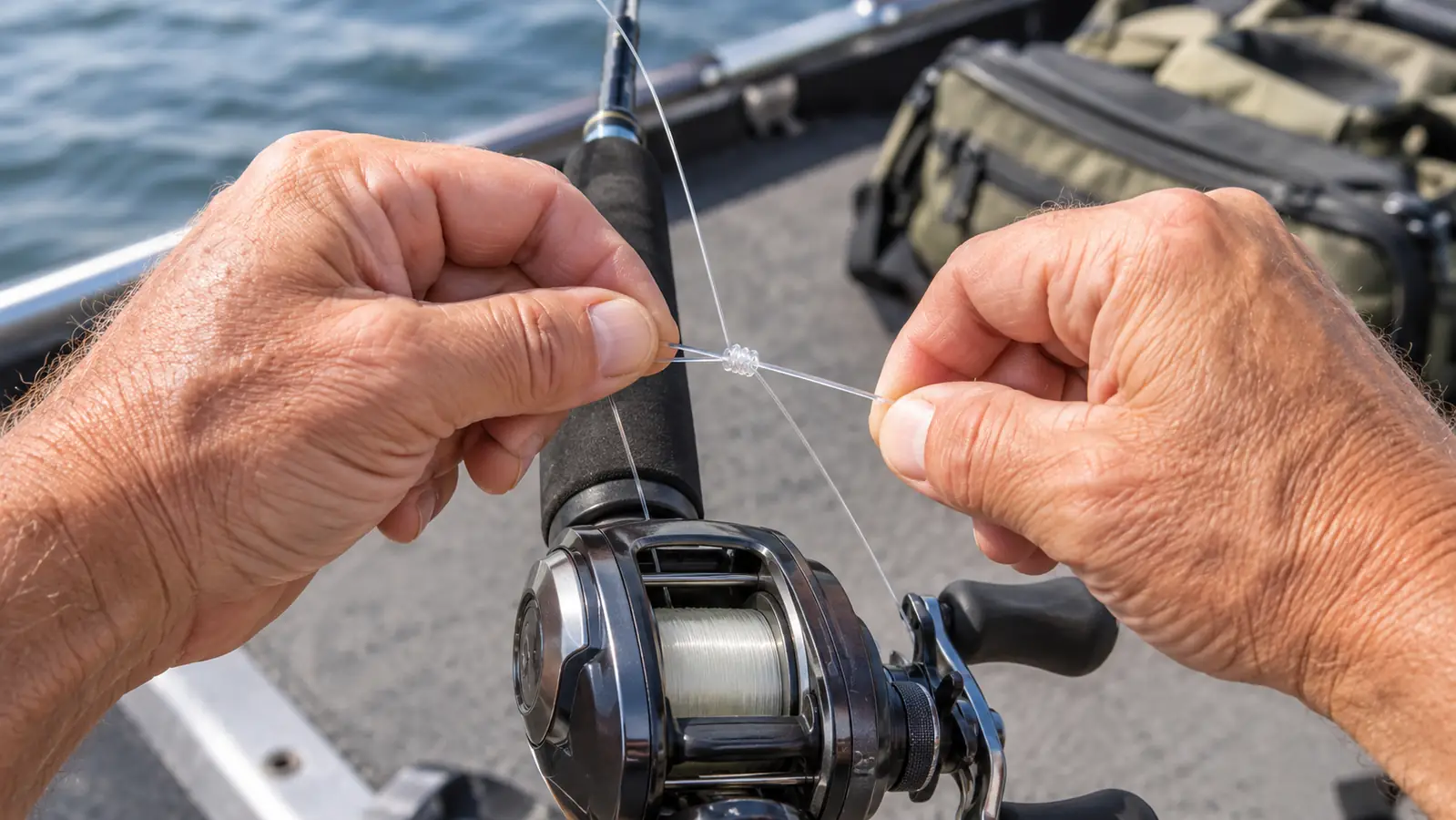
Knot strength is the argument, and it is the only one that really matters to me anymore. Red Label is built around knot and tensile strength, and you can feel the difference the first time you cinch a Palomar down on a jig and lean into a fish. With 15 pound on the spool, I am pulling harder than I used to on fish I would normally play soft, and the line is not the part that gives. The knot either holds or it does not. After three seasons of retying after every fish, I have not lost one to a knot failure I could blame on this line.
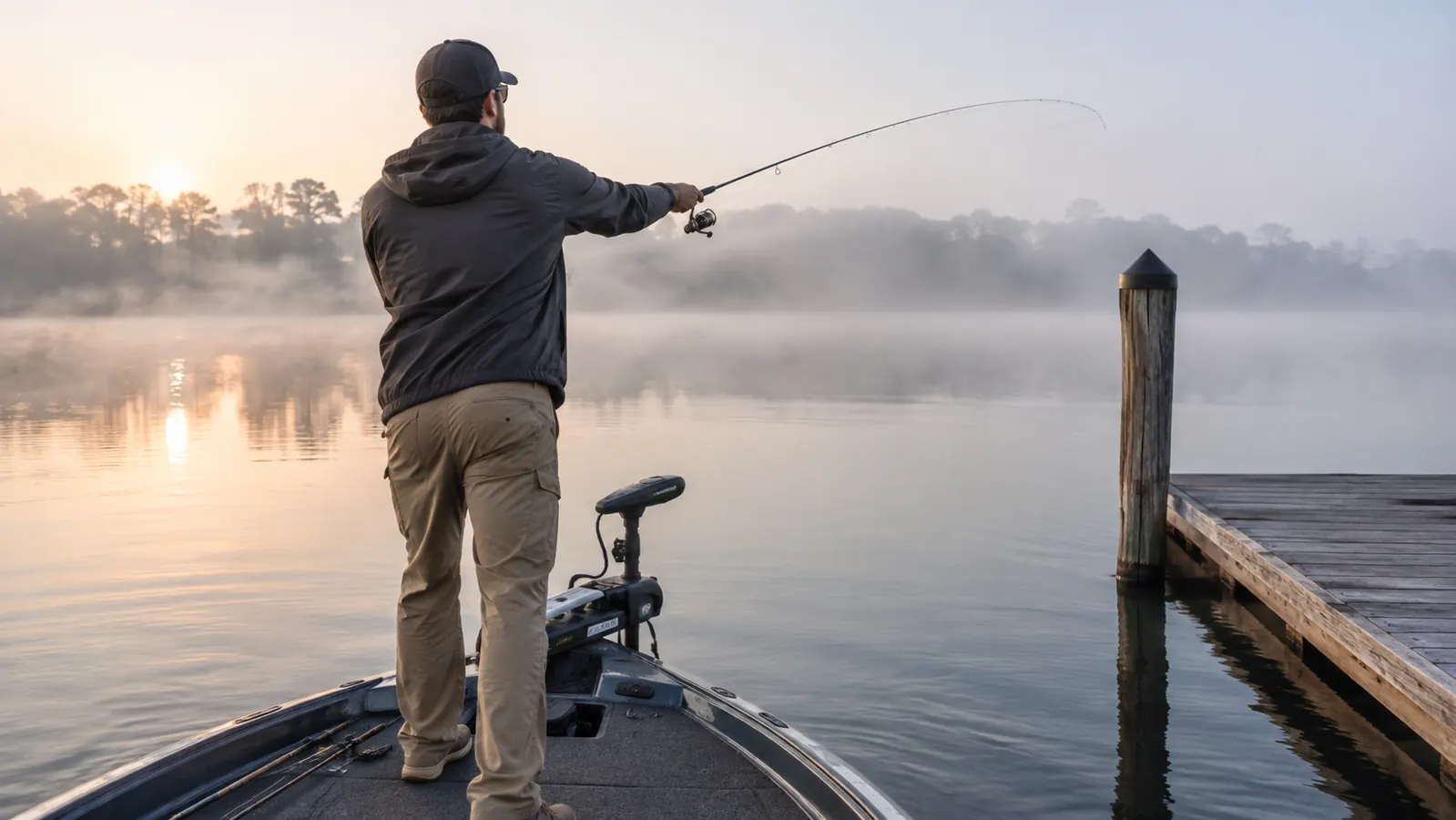
One morning last April on Wilson, I put a 3/8 ounce jig into a laydown sitting in about six feet of water and a fish ate it before I had the rod settled. She came up and rolled once, and I horsed her out of the branches instead of playing her soft the way I would have on lighter line. The jig came back with the hook still sharp, the line still in one piece, and the knot sitting exactly where I tied it. A buddy in the back of the boat asked what I was running. I told him, and he had a spool ordered before we got back to the ramp. That is the whole review, honestly. Everything below is detail.
Abrasion is the second argument. Pickwick has shell beds and rock, and fluorocarbon that scuffs out on the first pass is a waste of a Saturday. Red Label takes a lick and keeps going. I check the last two feet after every fish because that is what you do, not because the line is falling apart. With the cheap stuff I have cut off six inches after a single cast along a shell bank and told myself it was normal. It was not normal. It was the line.
The third thing, and this one never makes it onto a spec sheet: it behaves on a bait caster. Designed for bait casting reels is not filler in this case. The line is stiff enough that it does not want to jump off the spool and nest up on a hard cast with a heavy jig or a deep crankbait. It lays down on the reel and stays where you put it. If you have ever spent twenty minutes on the water picking out a backlash caused by line that was too limp and too light for the reel, you already know what that is worth on a short morning before work.
Where KastKing Fluorokote Wins
Cost per yard, and it is not close. KastKing sells this line in bulk spools that land well under the Seaguar per yard, and for an angler who respools three or four times a season that difference turns into real money in the tackle budget. Darlene does not fish and does not care about line, but she sees the bank statement, and she has opinions about the tackle budget. The KastKing answer is an easier conversation.
The second win is manageability. Fluorokote is simply softer in the hand. On a spinning reel, throwing a light shaky head or a small drop shot, that softness is an advantage instead of a compromise. It comes off the spool clean, it does not coil and jump off the reel, and it casts light baits with less fuss than the stiffer Seaguar will. I keep a spool in the boat bag for exactly that reason, and I have had mornings where it out fished the expensive rod sitting next to it. The line was the only thing that changed that day, and I am smart enough to notice when that happens.
The line I respool first every spring, before anything else in the boat
15 pound Seaguar Red Label on 200 or 1,000 yards. Knot strength, abrasion resistance and bait caster manners that hold up over a full season on the Tennessee River.
Amazon Check Today's Price on Amazon →What 15-Pound Red Label Actually Does on the Water
Most of my fishing is a 3/8 ounce jig or a Texas rig pitched at laydowns and shell, not bombed for distance. With 15 pound Red Label on the reel, the line does not fight me on a pitch. It comes off the spool smooth, it does not loop back over the level wind, and it turns a fish away from cover when I need it to. There is stretch in it, which is what you want in fluorocarbon near the boat, and not so much that I cannot feel a tick on the fall.
Wind is where a line either earns trust or gets cut off. On a morning last fall with a steady crosswind pushing down the lake, I was throwing a deep crankbait into it at an angle I would not normally pick, mostly because the fish were stacked on a point and I did not have a better idea. The line did not bow up and drag the bait off course the way a limp fluorocarbon will, and I could still feel the plug ticking bottom at the end of a long cast. The bite came as a light tick instead of a thump, which is a feel question that lives in the line as much as in the rod. I set the hook and she was in the net maybe fifteen seconds later.
The place it surprised me was spinnerbaits. I had always treated fluorocarbon as a bottom contact line and assumed something this stiff would hurt a moving bait. It did not. Burned along a ledge on Wilson, it tracked straight, and I could feel the blades turning the whole way back. That is not a thing I can say for every fluorocarbon I have spooled up, including a couple that cost more.
Where it does not shine is finesse. Throwing a weightless worm or a small drop shot on a spinning rod, this line is too stiff for my taste. It wants to coil and it wants a heavier bait to pull it straight. That is not a defect in the line. That is a line doing exactly what it was built to do while I ask it to do something else.
Three seasons on the same jig rod, retying after every fish, and I have not lost one to a knot failure I could blame on this line.
Spool Size and How Often You Respool
This is the part anglers skip and then complain about. Red Label comes in 4 to 20 pound test on 200 and 1,000 yard spools. The 200 is the easy grab when you want to try a test weight or top off one reel. The 1,000 is the one that changes your habits, because once you are not rationing line you will cut off the scuffed end instead of fishing around it. Line is the cheapest thing on the boat and the only thing between you and the fish. Treat it that way.
Here is what that looks like in practice. One 200 yard spool fills my bait caster with a little backing underneath, which is fine for a single rod and not much else. It is not fine if you have three bait casters and a spinning rod and you want fresh line on all of them before the spawn. The 1,000 yard spool covers the whole rack with line left over for leaders, and enough left to respool in July when the shell has chewed up the first forty yards of everything. I keep the leftover spool on a nail in the garage and I have never once regretted buying the big one.
My routine is simple. I strip the top forty or fifty yards at the start of the season, put fresh line over the backing, and then cut back as the year goes on. The 1,000 yard spool means I do that without flinching. If you respool that often on a value line bought in small spools, you are not saving anything by the end of the year, you are just spreading the cost out in smaller pieces that feel better at the register.
Where They Are Close Enough Not to Matter
Both are fluorocarbon, so both sink and both are close to invisible underwater compared to a bright monofilament. Both hold up to a full day of casting without fraying into uselessness. Both will catch bass on Pickwick on a Tuesday morning. If you are a bank angler throwing a Texas rig twice a week, either line does the job, and the difference between them will show up in how often you respool, not in whether you get bit.
Water clarity is the other place they do not separate. Pickwick can run clear enough to see a jig three feet down, and both of these lines fade out at that depth in a way that a bright monofilament does not. I fish a farm pond where the bass are pressured and spooky, and the difference between a visible line and a fluorocarbon one is the difference between a bite and a long quiet afternoon. Neither line is the weak link there. The weak link is how you present the bait and whether you are standing where your shadow falls across the water.
The other thing they share is a limit. Neither one fixes a bad hookset, a dull hook, or a drag set too tight. I have watched anglers blame the line for a fish that came unbuttoned at the boat when the real problem was a hook point rolled over on a rock an hour earlier. Buy decent line, then check your hook. That order of operations matters more than which spool you pick.
What I Liked
- Holds at the knot under load, which is the reason to buy it
- Takes abrasion on shell and rock instead of scuffing out on the first pass
- Stiff enough to behave on a bait casting reel with heavy baits and hard casts
- Available from 4 to 20 pound test on 200 and 1,000 yard spools
- 1,000 yard spool lets you cut back line instead of rationing it
Where It Falls Short
- Stiffer than the value lines, so it punishes light baits and spinning gear
- Costs more per yard than KastKing Fluorokote
- Too much line for finesse work like drop shots and weightless worms
- Wants a heavier bait to pull it straight on a pitch
Who Should Buy Which
Buy Seaguar Red Label if a bait caster is your primary rod and you fish jigs, Texas rigs, crankbaits or spinnerbaits around cover. Buy it if you are tired of losing fish to a knot that let go, or cutting off line every twenty casts because a shell bank chewed it up. Buy the 1,000 yard spool if you fish often enough to respool more than twice a season, because that is the version that stops you from fishing around a frayed end on a morning when the bite is finally on and you do not want to stop casting to tie on fresh line.
Buy the KastKing if a spinning rod is your main tool, if finesse is how you fish, or if the budget is tight and you respool constantly. It is a good line at a value price and I am not going to pretend otherwise just because I like the other one. Plenty of anglers keep both, which is exactly what I do, and it is not a cop-out. It is a two rod answer to a question that people keep trying to answer with one spool.
Put Red Label on the rod you actually fish
15 pound fluorocarbon, 200 or 1,000 yards, built for bait casting reels. If your jig rod is the one that pays for the boat, this is the line that belongs on it.
Amazon Check Today's Price on Amazon →