I spooled Seaguar Red Label onto one baitcaster in April and left it there until November. That was not discipline on my part. It was laziness at first, then habit, and somewhere in the middle of the summer it turned into a slow, unplanned test of whether a workhorse fluorocarbon could hold up for a whole season on the Tennessee River without me having to think about it. A 200 yard spool of 15 pound test is not a big commitment, so when the line survived the first month I quit paying attention and just kept fishing.
The water was Wilson and Pickwick, out of the same 17 foot aluminum boat I have run for years, plus two farm ponds up the road that Darlene says I treat like a personal laboratory. Both river lakes run clear, and clear water is the whole reason a bass angler bothers with fluorocarbon in the first place. When a fish can see ten feet, it can see your line. Seaguar Red Label is the one that stayed on the reel, and this is what a season of it looked like.
The Quick Verdict
A workhorse main line for a baitcaster. Strong at the knot, well behaved on the spool, nearly invisible in clear water, and honest about what it is not: a finesse line or a topwater line.
Amazon Check Today's Price →The spool I never bothered to swap out until November
Seaguar Red Label in 15 pound test, 200 yards. Spooled once in April, fished all season on Wilson and Pickwick, and it never gave me a reason to change it.
Amazon Check Today's Price on Amazon →How I've Used It
The reel is a baitcaster I keep rigged for jigs and Texas rigs. Seaguar Red Label is built for baitcasting reels, so I used it the way it was meant to be used. Single strand fluorocarbon, 15 pound test, 200 yards on the spool, and a limited warranty on the label that I hope never to need. The spool itself is small and light enough that it rides in the bottom of my tackle bag without me knowing it is there. I filled the reel in April and did not respool until the water turned cold.
A normal week was one or two trips, four to six hours each, depending on the weather and whether Darlene had a list for me. I dragged a football jig across the ledges at Wilson. I flipped a Texas rig into buck brush on the upper end of Pickwick where the current breaks. I threw a big jig around the shell bars where the spotted bass stack up in July and August. Same line, same fill, all of it. Ruby rode along on the calm mornings and spent most of her time trying to get her nose into the livewell, which meant I spent most of my time keeping her away from treble hooks.
I do not have an exact count of days on the water, but I can tell you the line got fished hard from the second week of April through the first week of November. Call it thirty plus trips, most of them starting before the sun cleared the treeline. I would launch at Safeway Landing on Wilson, run up the reservoir a couple of miles, and fish a stretch of ledge rock that has produced for me since the nineties. Nothing glamorous about the routine, which is the point. A line either survives repetition or it does not.
I did not baby the line. The rod stays on the deck between stops, the boat lives in the garage, and the reel sat in the sun more afternoons than I would recommend to anybody. Somewhere around July I noticed I had stopped thinking about the line at all. That is the highest compliment I can give a piece of tackle, because the gear you notice is the gear that is failing you.
Knot Strength and the 15 Pound Question
15 pound test sits squarely inside what Red Label offers, which runs from 4 to 20 pound test on 200 yard spools, with 1,000 yard spools for the people who buy line the way I buy coffee. I picked 15 because it is the size that handles a jig on a baitcaster without turning the rod into a broomstick, and it is heavy enough that a good fish in heavy cover is not an automatic breakoff.
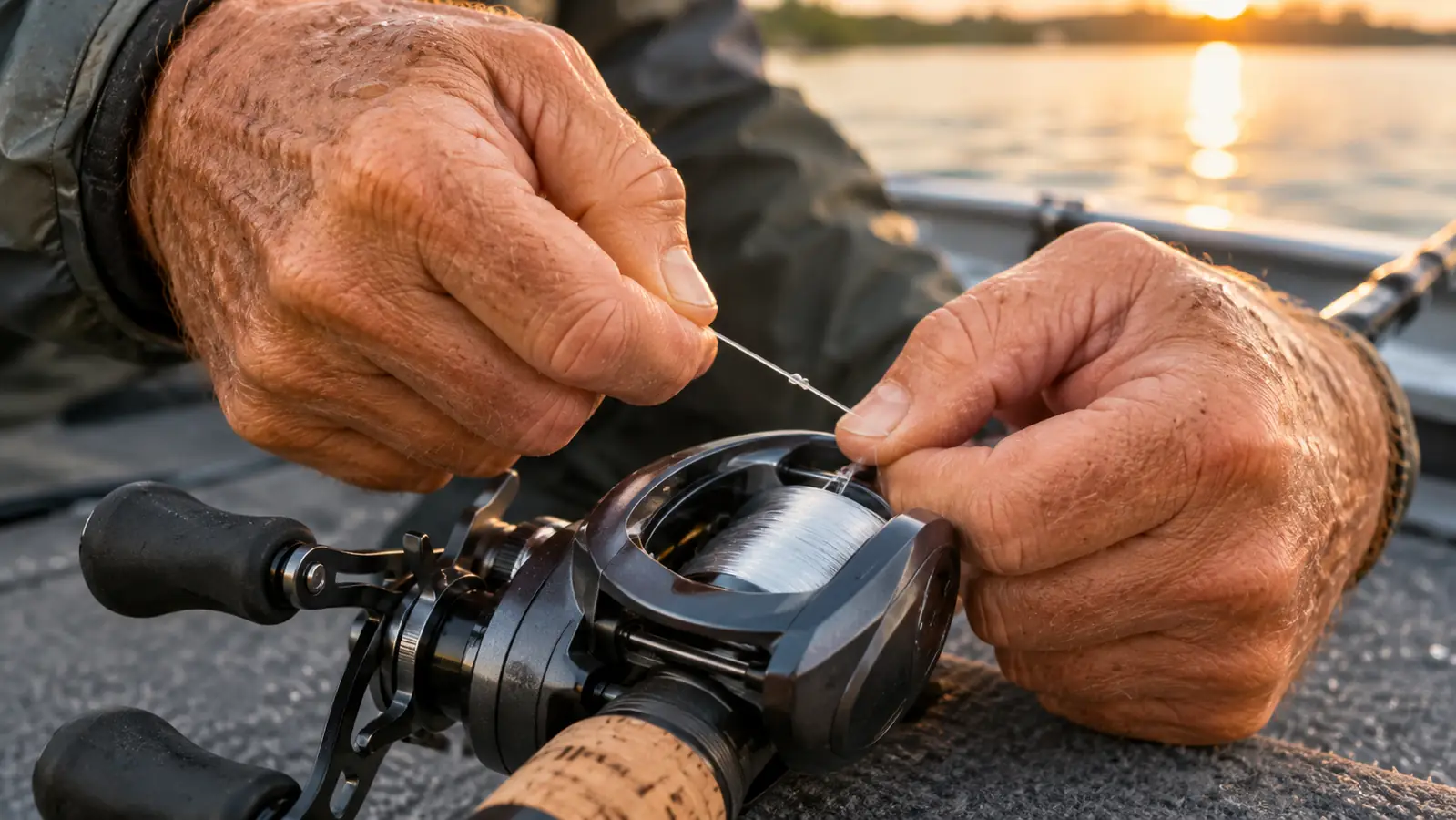
I tie a Palomar almost exclusively and I wet the knot before I pull it down, which is not a technique I invented and not one I will apologize for. All season, with 15 pound Red Label, that knot held. I broke off exactly twice. Both times the line parted at a shell edge maybe six inches above the bait. Both times the knot was still there when I got the jig back, which told me what I wanted to know about how this line behaves at the weakest point most anglers actually create.
The first breakoff came in June on a shell bar off the main channel at Pickwick. I had been dragging a black and blue jig through the rocks and felt the line go slack instead of tight. When I reeled in, about eight inches of line above the eye of the jig was rough as a cat's tongue and the Palomar was intact, tight as the day I tied it. I cut back three feet, retied, and went right back to it. The second came in August, same story, different bar, and I did not lose any more of the day over it than the five minutes it took to re-rig.
A line that breaks at the knot wastes your money and your afternoon. A line that breaks where a rock cut it is just fishing. That distinction is the whole reason I care about knot strength more than any number printed on the package. I also cut a handful of leader sections off this spool for a braid setup on a second rod, and it did that job fine. It is sold as a main line and that is where it earns its keep, but it will serve as a leader if that is what you need.
Rocks, Shell Beds, and What Actually Breaks Line
Pickwick has shell beds that will teach a man humility. I drug a jig through them for most of June. Red Label takes a nick like any fluorocarbon will, and when I felt a rough patch on the last few feet I cut it back and retied. I probably lost fifteen or twenty feet of line over the season to that habit alone, which is exactly why a 200 yard spool matters more than a small filler spool.
Here is the routine I settled into, and it is not complicated. After every fish, and after every stretch where the bait came across shell, I ran the last three feet through my fingers above the reel. If it felt smooth, I kept fishing. If it felt like sandpaper, out came the clippers and I pulled off eighteen inches to two feet and tied fresh. That took about ninety seconds. Over a full day it adds up to maybe ten minutes, and it is the difference between a season on one fill and a breakoff that costs you a five pound fish you would have been telling people about for a year.
I would not call it the most abrasion resistant line I have ever fished. There are tougher fluorocarbons on the shelf, and they come with their own tradeoffs in stiffness and handling. Red Label sits in a practical middle. It is tough enough that careful retying keeps you fishing, and not so tough that it handles like fence wire on the reel.
The package says not to let pike and other toothy fish scare you off. There are no pike in the stretch of river I fish, so I cannot vouch for that claim one way or the other. I can tell you that a spotted bass does not have teeth worth worrying about, and I did not lose a fish all season to a frayed line that I know of.
Spooling It and Living With It All Season
Fluorocarbon has memory. It comes off a filler spool in coils, especially in cool weather, and if you load a baitcaster carelessly you will spend your first hour on the water picking out a backlash the size of a fist. I spooled it on tight, kept tension on it with my thumb, and let it sit overnight before I fished it. After that it laid down on the reel and stayed there. No line conditioner, no tricks.
The first attempt, if I am being honest, did not go well. I filled the reel the way I fill a braid reel, which is to say not paying attention to tension, and the next morning I made one cast into the wind and got a backlash that took me twenty minutes and a dull pocket knife to sort out. I stripped about forty yards off, respooled the remainder through a wet rag held in my left hand so the line went on damp and tight, and that was the end of my trouble. Forty yards out of 200, and it was the best forty yards I ever wasted.
By August the spool was down maybe halfway, mostly from retying and one backlash bad enough that I had to cut it out. The line on top still came off the reel smooth. It did not go chalky. It did not start popping off in loops on a long cast. In November, on the last decent trip before the cold set in, I was still throwing the same jig on the same fill I put on in April. It had lost a little of that slick new feel but it cast the same distance, and I would not have known the difference blindfolded.
Where Red Label Falls Short
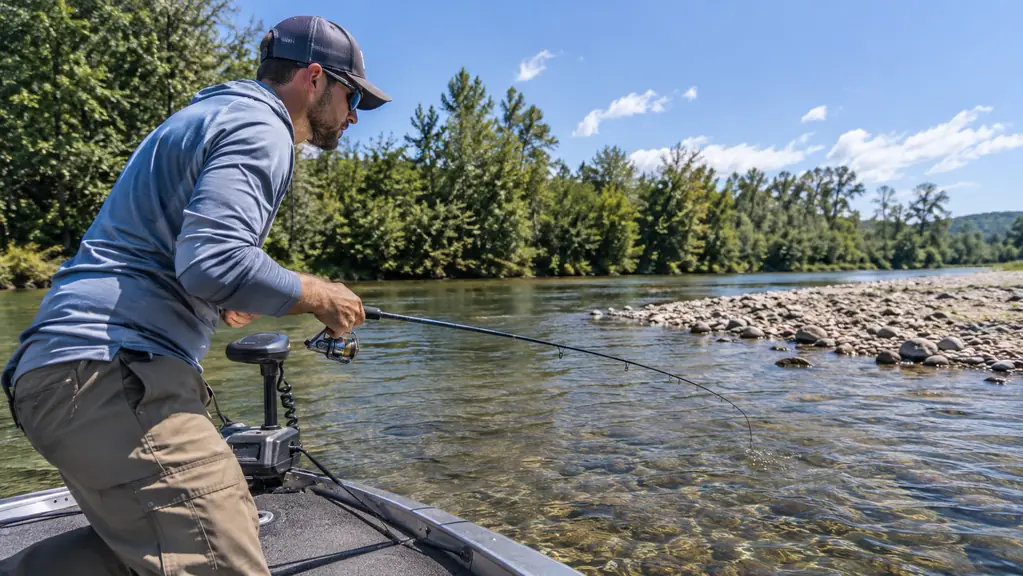
It sinks. Fluorocarbon does that, and it is the reason I do not throw a walking bait or a popper on it. If topwater is a big part of your day, this is the wrong line for that rod, and no amount of knot skill changes it.
It also stretches more than braid, which cuts feel on a slow bottom bite. On a windy day with a long cast, a soft take on a shaky head is easier to miss on fluorocarbon than it is on braid. I keep braid with a fluorocarbon leader on my finesse rod for that exact reason, and Red Label serves fine as the leader.
And in the lighter sizes on a spinning reel, the stiffness will fight you. I would not want 6 or 8 pound Red Label on a drop shot rod for a pressured pond bass that has seen every lure in the box twice. It can be done. I just do not think it is where this line is happiest, and there are softer fluorocarbons for that job.
What I Liked
- Palomar knots held all season at 15 pound test, with both breakoffs happening at shell rather than at the knot
- Behaves on a baitcaster once it settles on the spool, no constant backlash management
- Nearly invisible in the clear water of Wilson and Pickwick
- Survived a full season of jigs and Texas rigs with routine retying and no respool
- Sold from 4 to 20 pound test on 200 and 1,000 yard spools, so there is a size for most rods in the boat
Where It Falls Short
- More stretch than braid, which costs feel on a slow bottom bite
- Not the most abrasion resistant fluorocarbon on the shelf around shell beds
- Sinks, so it is the wrong line for topwater
- Stiff in the lighter sizes on a spinning reel
- You have to retie when the last few feet get rough, and they will get rough
I broke off twice all season, both times on shell, and both times the knot was still there when I got the bait back.
Who This Is For
This is a line for the angler with a baitcaster and a jig or a Texas rig tied on, fishing water clear enough that the fish get a good look at what is coming. If you drag a football jig on ledges, flip a worm into brush, or fish a river lake where the visibility runs several feet, Red Label does the job without asking you to think about it. It is also a good fit for the guy who wants one fill to last a season instead of respooling every three weeks.
It suits the angler who does not mind retying when the last few feet get rough. That habit, more than the line itself, is what got me through a season without a heartbreak. Fifteen pound test on 200 yards covers a lot of water, and the 4 to 20 pound range means there is a size for most of the rods already in your boat.
Who Should Skip It
Skip it if topwater is your religion. Skip it if you want maximum feel on a slow finesse bite and you are not willing to give up braid to get it. Skip it if you are the kind of angler who will not cut back and retie when the line gets rough, because no fluorocarbon forgives that and this one is no exception.
And skip it if braid has already won you over and you never looked back. Braid does things this line cannot, and Seaguar Red Label is not trying to be braid. It is a fluorocarbon main line for a baitcaster, it does that one job with no drama, and it is still on my reel, which is the only review that counts for much at the end of a season.
One spool, one season, one less thing to think about
15 pound test, 200 yards, built for a baitcasting reel. It stayed on my reel from April to November and never gave me a reason to change it. If your water runs clear, that is worth something.
Amazon Check Today's Price on Amazon →