

I caught the first bass on the KastKing Centron Lite in March, a two-pound largemouth sitting tight against a chunk rock bank on Wilson, and I nearly lost it at the boat because I had the drag cranked down like a man expecting a catfish. That was the combo's first lesson. It will take more abuse than I gave it credit for, but it will not cover for me.
I have fished bass since I was a kid, about forty years now, most of it on the Tennessee River lakes out of a 17-foot aluminum jon boat with a 40 horsepower outboard and a bow mount trolling motor. I am hard on tackle in a specific way. I am not a tournament guy. I fish two or three mornings a week from March into October, I throw moving baits and Texas rigs, and I lay rods down on the deck instead of sliding them into a locker. So when I say I fished the KastKing Centron Lite for a full season, I mean it got rained on, stepped over, and used hard from the day it came out of the box.
The Quick Verdict
A seven-foot medium heavy baitcasting combo that fishes bigger baits well and held up for seven months of real use. Dial the drag in properly and it will not be the reason you lose a fish.
Amazon Check Today's Price →The combo that spent seven months on my deck
Seven feet, medium heavy, IM6 graphite, paired with a 7.1:1 reel rated for 15.4 pounds of drag. It is the rig I reach for when I want to throw a jig at a dock.
Amazon Check Availability on Amazon →How I've Used It
The combo showed up in March and went straight into the boat, no ceremonial unboxing on the kitchen table. The first trip was a jerkbait morning on Pickwick with the water still in the low fifties, and I threw the seven-foot medium heavy the entire time because I wanted to know what it was before I trusted it with anything expensive. It cast a three-eighths ounce jerkbait fine once I quit trying to overpower it. That is a me problem, not a rod problem, and it took about ten casts to figure out.
Through the spring it did duty with Texas rigs, a ChatterBait, and a small swimbait. In summer it turned into my main rod for a half-ounce jig around boat docks, which is where a medium heavy earns its money. In the fall I threw a walking bait on it. That is not what the rod is built for, but it worked, and I caught fish doing it. Somewhere in there my wife Darlene asked why I needed another rod, and I did not have a good answer, which is normal around this house.
The trip that sold me came in mid-May, a Saturday on Wilson with the water up in the buck brush and the bass pushed shallow. I had a half-ounce jig tied on and a floating dock with a walkway that always holds a fish or two. First cast I pitched it under the walkway, felt the tick on the fall, and set the hook on a fish that came straight up and shook her head in the morning light. The rod had enough backbone to keep her out of the pilings and enough tip to soak up the jump. I caught three more off that same dock before the sun cleared the treeline. That morning is why the rod stayed on the deck the rest of the year.
I also carried it to a farm pond down the road a few times when I did not feel like hooking up the trailer. Ruby, my Lab mix, comes along on the calm mornings and has to be reminded that treble hooks are not snacks. None of that is the combo's fault, but it is part of the honest record of how this thing got used. Bank trips, boat trips, and a lot of bouncing around in the back of the truck.
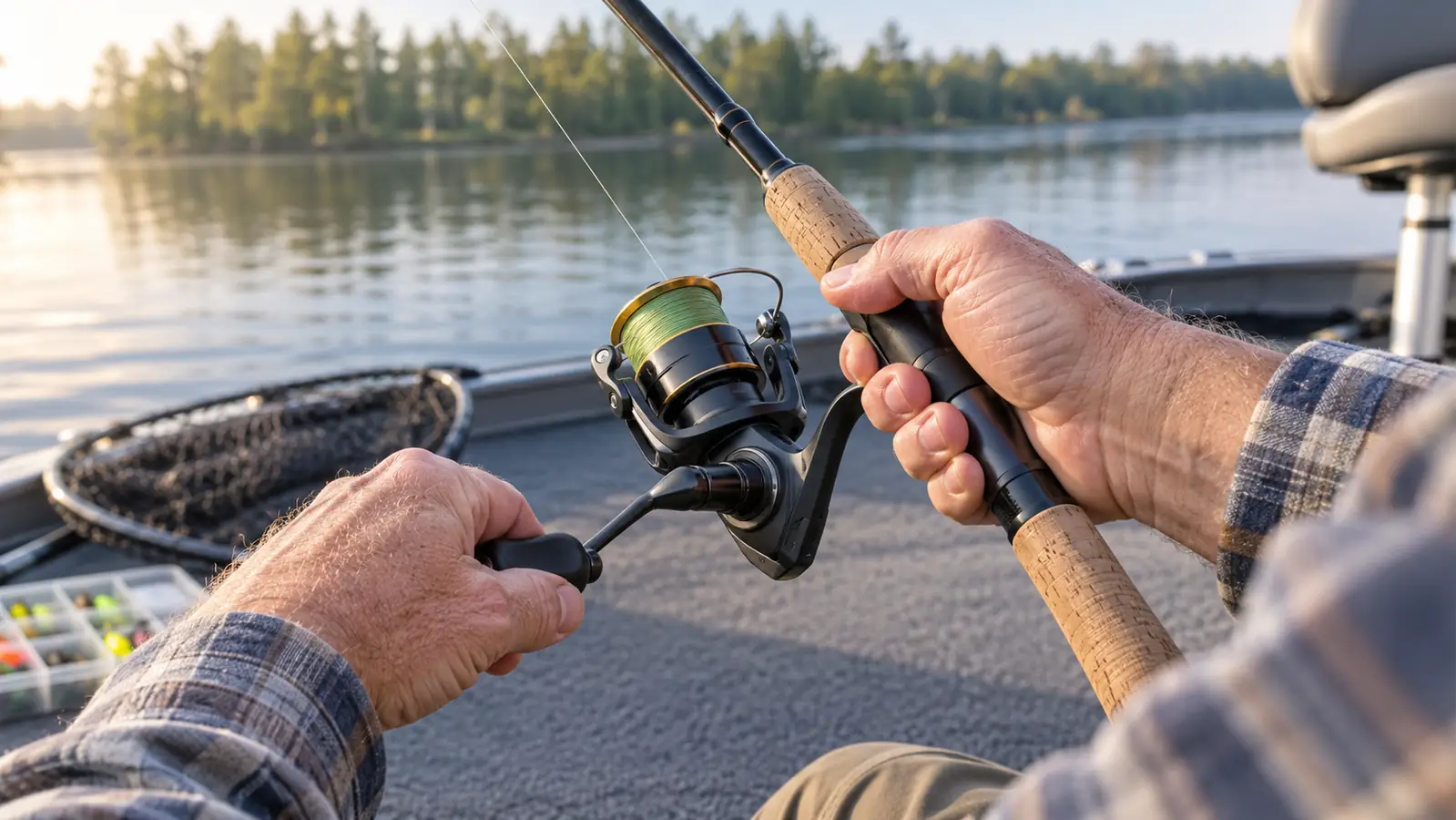
The Reel: 7.1:1, 15.4 Pounds of Drag, and No Drama
The reel that comes with the KastKing Centron Lite runs a 7.1:1 gear ratio, which sits in the middle, and the middle is where I want to be. It is fast enough to pick up slack on a jig bite before the fish feels the weight of the bait, and slow enough that I am not cranking a squarebill like a man winding a clock. I have fished reels geared lower and higher. For the mix of moving baits and bottom baits I throw from March to October, 7.1 is the honest answer.
One thing I did early: I spooled it with fifteen-pound monofilament because that is what the reel is rated for, and I did not try to be clever about it. Fifteen-pound mono on a baitcaster is a known quantity. It is stiff enough to manage and it does not dig into itself the way a thin braid will if your attention wanders for one cast. I filled the spool a hair under the lip and never buried a cast all season, and that is partly the line and partly me not overfilling it. The spool got respooled in June, not because anything failed but because a season of sun on an open boat deck will rough up monofilament no matter what you paid for it.
The drag is rated at 15.4 pounds, and I believe the number, mostly because I had it set tighter than I should have for the first month and it never slipped on me. Where drag actually matters is a fish coming up and shaking its head at the boat. I lost one in April on a jump because my thumb was on the spool and the drag was locked down, and that was on me. Once I backed it off and let the reel do the work, I landed the next four fish I hooked on that same bait.
Casting is where a cheap baitcaster gives itself away, usually with a backlash that takes ten minutes and a pocket knife to fix. This one behaved. It took me about twenty casts to get comfortable, and after that I stopped thinking about it, which is the highest compliment I can pay a reel at this level. The listing calls the hand orientation ambidextrous and right, and mine is set up right hand, which is what I fish.
The Rod: IM6 Graphite, Medium Heavy, and a Split Rear Handle
The KastKing rod is 84 inches, which is seven feet, two pieces, medium heavy power, on an IM6 graphite blank. Seven feet is the length I reach for most often. Long enough to cast a long way from the bank, short enough to skip a jig under a dock from the front deck without clipping the trolling motor on the way through.
Medium heavy is an honest label on this one. The tip loads with a three-eighths ounce bait and the backbone is there to turn a fish out of buck brush. It is not a finesse rod. I threw a weightless Senko on it exactly once, and it felt like casting a potato chip with a broom handle, and I did not repeat the experiment.
The grips are EVA foam and the rear handle is split, which I like because it puts my hand closer to the blank and I can feel a jig ticking across rock. The blank is graphite, and the hardware is aluminum and stainless steel per the listing. After a season of being laid on the deck, I have no rust showing and no wobble where the reel seats.
Seven Months on the Deck: What Held Up and What Did Not
I am not gentle with gear. The rod rides in the bottom of an aluminum boat with three other rods, a net, and a cooler that has no business being that heavy. It got rained on in June, baked in the truck in July, and dropped on gravel at the ramp in August. The only thing that failed all season was the line, which I change anyway on a schedule of my own.
Two things I check on any rod that lives in a boat: whether the guides stay put and whether the reel starts to rock in the seat. I wrap electrical tape around the butt of every rod I own because an aluminum deck will chew up anything, and the Centron Lite is no different. What I am watching for is the reel working loose after a few weeks of casting. It did not. I checked it with a thumbnail every trip, the way I check every rod, and I snugged it back down once all season, and that one time was because I did not set it tight on installation day. The guides ran monofilament through them for seven months without a groove or a rough spot.
The two-piece joint is where I expected trouble and where I got none. I check it every trip out of habit after a rod came apart on me years ago. It stayed tight through a summer of casting a half-ounce jig, which is more strain than most people put on a two-piece rod.
The twin tip is the reason I bought it. The second tip section lives in the rod locker, and I fished the medium heavy tip all season because I never had a day where the bite demanded something lighter. I would rather tell you that than pretend I swap back and forth every trip. If you fish small ponds and lighter plastics, that second tip is the part of this combo that earns its keep, and it is the reason the word twin is in the name.
Seven months, two lakes, one farm pond. The only thing I replaced was the line.
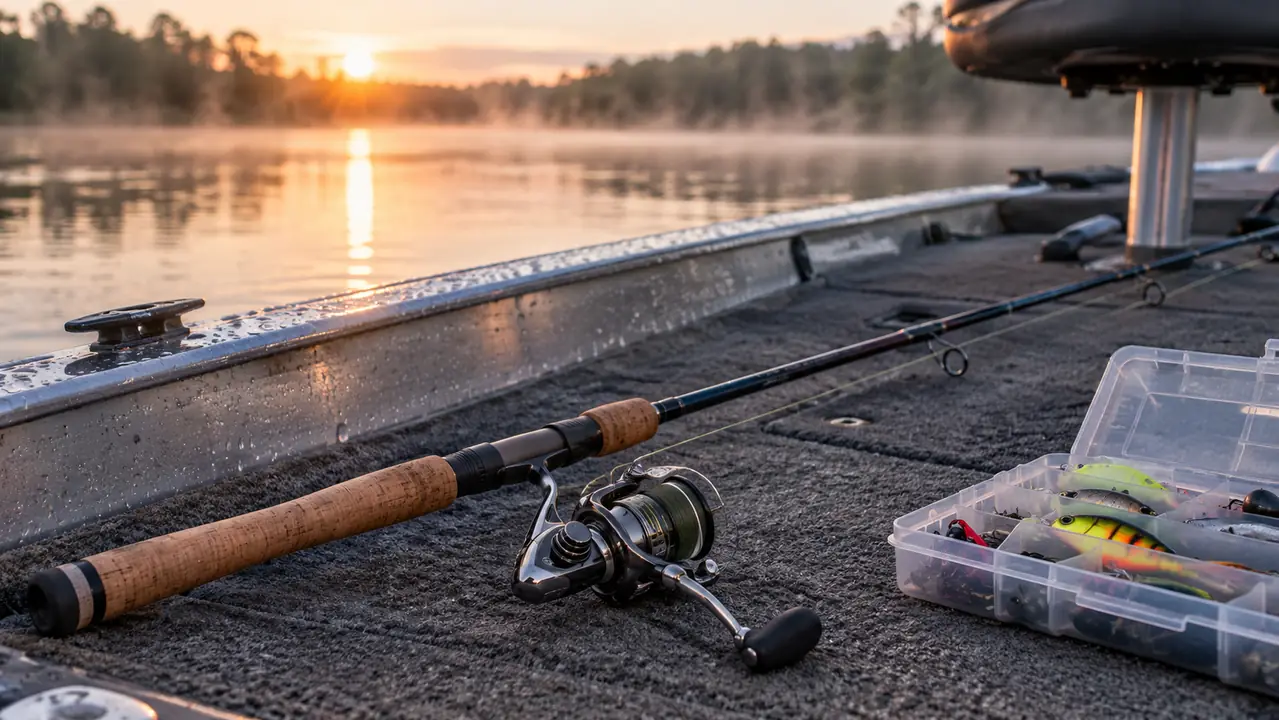
Where the Centron Lite Comes Up Short
The first thing I would tell a friend is that this is not a light combo in the hand, whatever the name suggests. On a long summer morning of casting a ChatterBait, I felt it by hour four. It is not a burden, but a seven-foot medium heavy with a baitcasting reel on it is not a feather, and if your shoulder is already sore, that matters more than any spec on the box.
The drag is strong but not buttery at the top end. Backed off to where I actually fish it, it is smooth. Cranked down, it gets grabby. I had that happen in July, a fish that ate a jig on a dock corner and ran straight under the walkway. I had the drag tighter than it needed to be, and instead of giving line evenly it gave it in stutters, and the fish came unpinned a few feet from the net. Maybe the hook pulled on its own. Maybe it did not. I backed the drag off a quarter turn after that and did not lose another fish to it all season, and a quarter turn is usually the whole difference between landing one and telling the story about the one that got off.
And the KastKing combo is built around 15.4-pound monofilament. That is the rating, and it tells you what the rig is for: heavier line, heavier baits, fish that need turning away from cover. If your idea of bass fishing is eight-pound fluorocarbon and a drop shot on a spinning rod, this is not the tool and you will fight it all day long.
What I Liked
- 7.1:1 reel with 15.4 pounds of drag, enough to turn a bass away from a dock
- IM6 graphite blank in a seven-foot medium heavy that handles jigs without feeling dead
- Two-piece build that breaks down and rides in the truck cab
- EVA foam grips and a split rear handle that stay usable when your hands are wet
- Survived a full season of deck time, rain, and gravel ramps with no hardware issues
Where It Falls Short
- Heavier in the hand than the name suggests over a long casting day
- Drag gets grabby when you crank it down tight
- Not a finesse setup, so light plastics are a compromise
- Reel is built around 15.4-pound monofilament, which limits how you rig it
Who This Is For
This combo fits the angler who fishes from a boat, a kayak, or the bank and wants one rig that handles a jig, a ChatterBait, and a Texas rig without a fuss. If you are the guy who keeps two rods on the deck and one of them is always a medium heavy baitcaster, this is that rod. The 7.1:1 reel and the 15.4 pounds of drag cover the fishing most of us actually do on Wilson and Pickwick, and it does not ask you to treat it like glass.
It also fits anyone who needs a rod that travels. It breaks into two pieces and goes in the truck cab or the back seat, and I have not had a joint issue in a season of use. If you are hauling a boat an hour each way and you are tired of one-piece rods banging around in the bed, that matters more than the spec sheet says.
Who Should Skip It
Skip it if you fish light. If your box is mostly weightless plastics, drop shots, and small finesse jigs, a medium heavy baitcaster is the wrong tool and you will be unhappy by the second trip. I tried it once with a weightless Senko and I did not try it again. That is not a knock on the rod. It is a knock on using the wrong rod for the job.
Also skip it if you want a spinning setup, or if you are brand new to baitcasting and want something forgiving to learn on. A medium heavy rod throwing heavier baits is a reasonable place to learn, but the reel still wants you to set it up and pay attention for the first hour. If you want to unbox something and cast it without thinking, buy a spinning combo and save yourself the frustration.
Seven months of notes, one combo, no surprises
If you want the rig I kept on the deck from the March jerkbait bite through October, this is it. Seven feet, medium heavy, 7.1:1, and a drag that will handle a bass at the boat.
Amazon See the Centron Lite on Amazon →