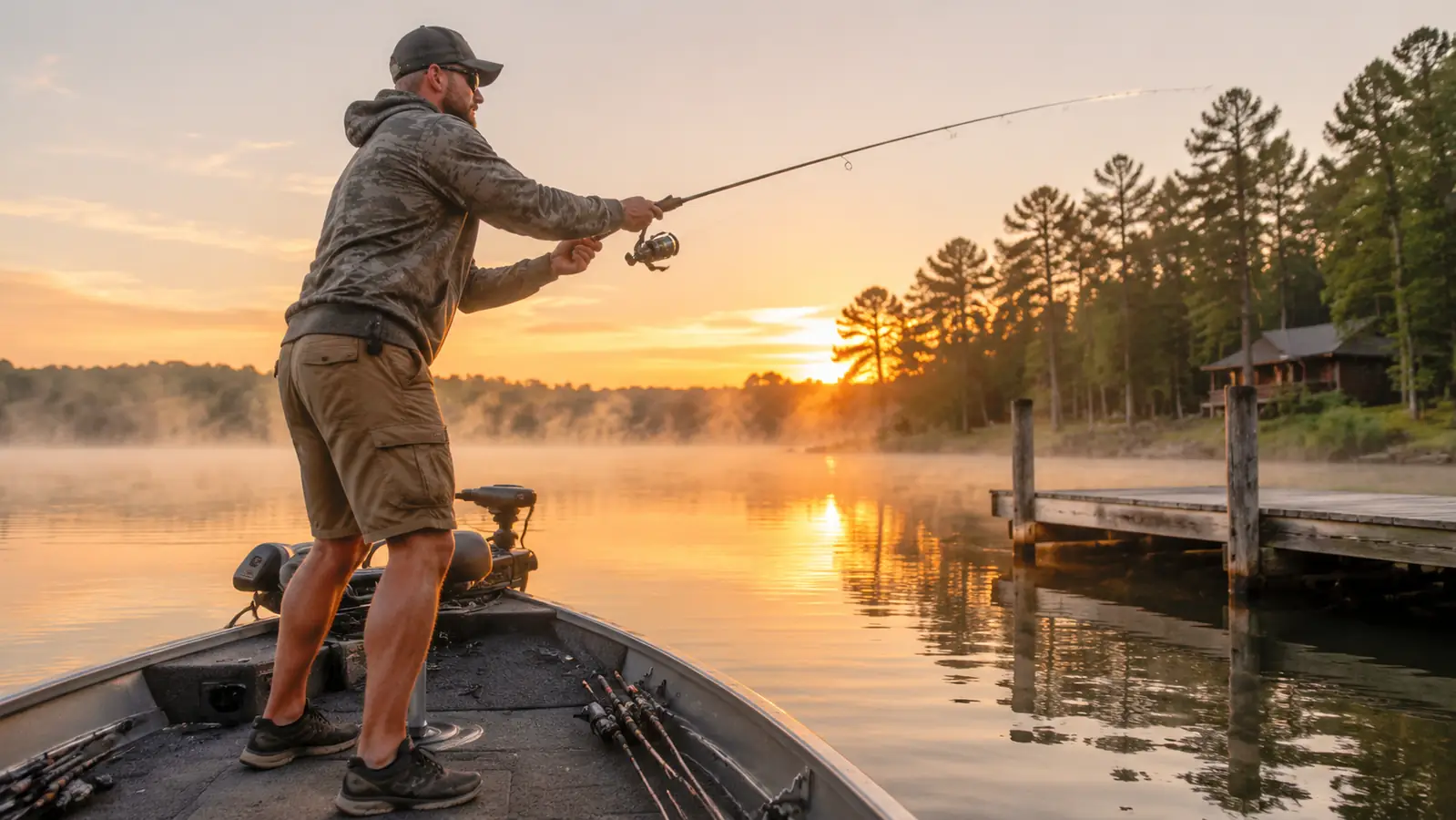
Two summers back I lost a solid largemouth at the boat on her second jump. Not the knot. The line. I sat there on Wilson Lake in the July heat with a slack rod and a bad attitude, and I decided I was done guessing about what I spooled. The next weekend I put Seaguar Red Label in 15 pound test on my baitcaster, and I have not had that particular heartbreak since. This is not a pitch. It is ten things I noticed after fishing that spool down near the arbor and buying another one.
I am not a line scientist. I am a retired lineman who fishes four or five mornings a week and has lost enough fish to know when a problem is me and when it is the tackle. Fluorocarbon is not magic and it is not for every job. But on a baitcaster, in the water I actually fish, it has put more bass in the boat than the monofilament I fished for thirty years before it. Here is the list, in the order I would tell it to a fella at the ramp.
The 15 pound spool that ended my line-guessing problem
200 yards of Seaguar Red Label fluorocarbon, the same spool I keep buying. Check the current price and the size chart on Amazon.
Amazon See the Seaguar Red Label spool on Amazon →It Sinks and Stays Down Where the Bass Actually Live
Monofilament floats. On a windy afternoon on Pickwick I used to watch my mono bow off the surface like a clothesline, dragging a jig off the ledge and into the boat lane. Fluorocarbon goes down. With Seaguar Red Label on the spool the line tracks under the surface and the bait stays in contact with the bottom where the fish are holding. That contact is the whole game. You feel the tick of shell, the mushy weight of a fish mouthing the bait, and the difference between a bite and a hang-up.
Fifteen Pound Test Fits a Baitcaster Without Fighting You
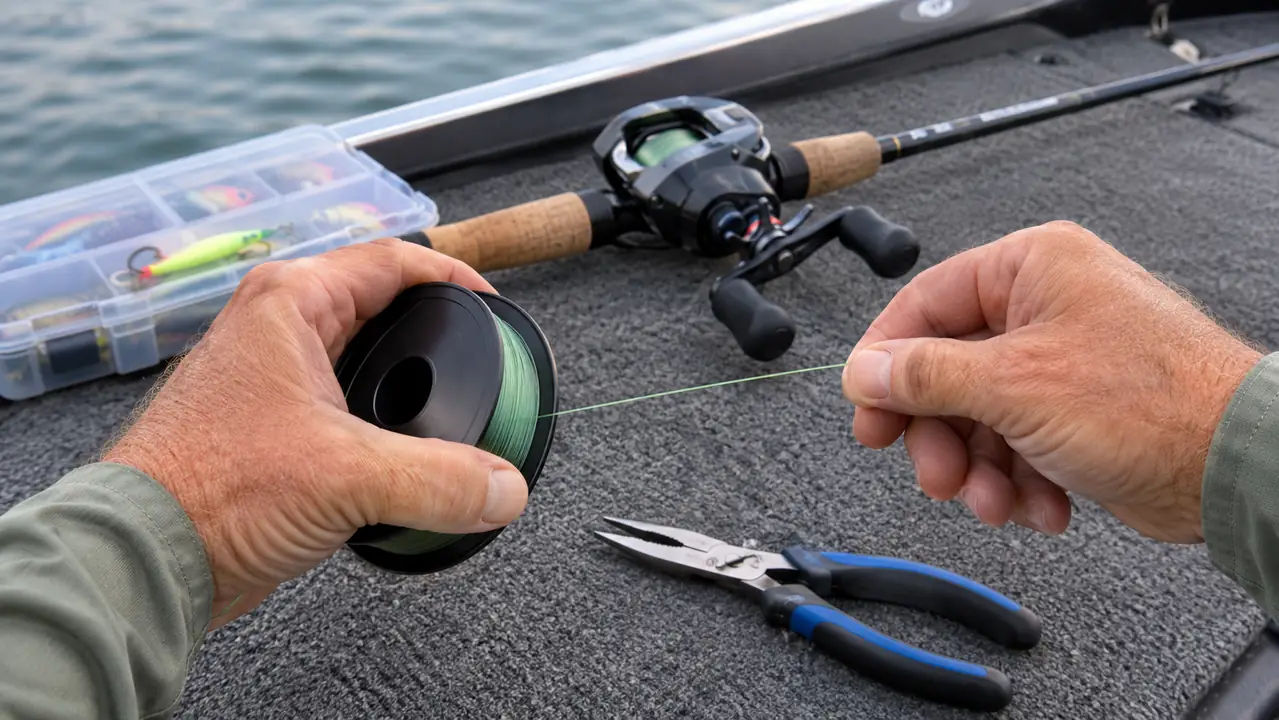
The listing says it is built for bait casting reels and I believe it. I run 15 pound on a 7 foot medium heavy rod with the spool tension set the way I like it, and I am not picking backlashes out of the reel every third cast. A line that is too stiff or too springy will cost you a whole morning of picking at a bird nest with your thumbnail. This one lays on the spool and comes off clean. That sounds like a small thing until you have donated twenty minutes of a two hour topwater bite to untangling.
The Knots Hold When a Good Fish Makes That Second Run
Knot strength is the number I care about most, because the failure is expensive and it happens at the worst possible moment. I tie a Palomar to jigs and Texas rigs and an improved clinch when I am in a hurry. In two seasons of fishing this line I have had knots pull exactly once, and that was a knot I tied badly in the dark. On a baitcaster with the drag set right, the line holds at the hookset and holds again when a four pound fish turns and runs at the boat.
It Shrugs Off Chunk Rock and Shell Beds
I drag a jig through some ugly places on the Tennessee River, and rock will chew up a soft line in a hurry. I have pulled this line over shell beds and through chunk rock and it comes back fishing instead of coming back fuzzy. The listing mentions pike and other toothy fish, and while I am not chasing pike down here, the same abrasion resistance is what keeps a river bass from sawing you off on a mussel bar. I still check the last six inches after every fish. I am careful, not trusting.
Picky Fish in Clear Water Still Eat
Some of the ponds I fish are clear enough that you can watch a bass inspect a bait and turn away. Fluorocarbon is nearly invisible in the water compared to a line that shows up like a spiderweb. I am not going to tell you it turns a pressured fish into a stupid one. What I will tell you is that since I switched, my bites in clear water went up enough that I noticed without keeping a logbook. That is the honest version. Seaguar makes its own resins, and whatever they are doing, the line does not spook fish the way I was used to.
One 200 Yard Spool Covers a Whole Season of Weekends
A 200 yard spool fills a baitcaster with enough left over for a respool or two, and I am not a guy who changes line every trip. I fish about four mornings a week from spring through fall, and one spool carries me most of a season before I strip it and start fresh. The 1,000 yard spools are out there if you fish harder than I do, but for a weekend angler on a jon boat, 200 yards is the sensible size. It sits in the bottom of the boat bag and does not take up room.
It Ties With the Knots You Already Know
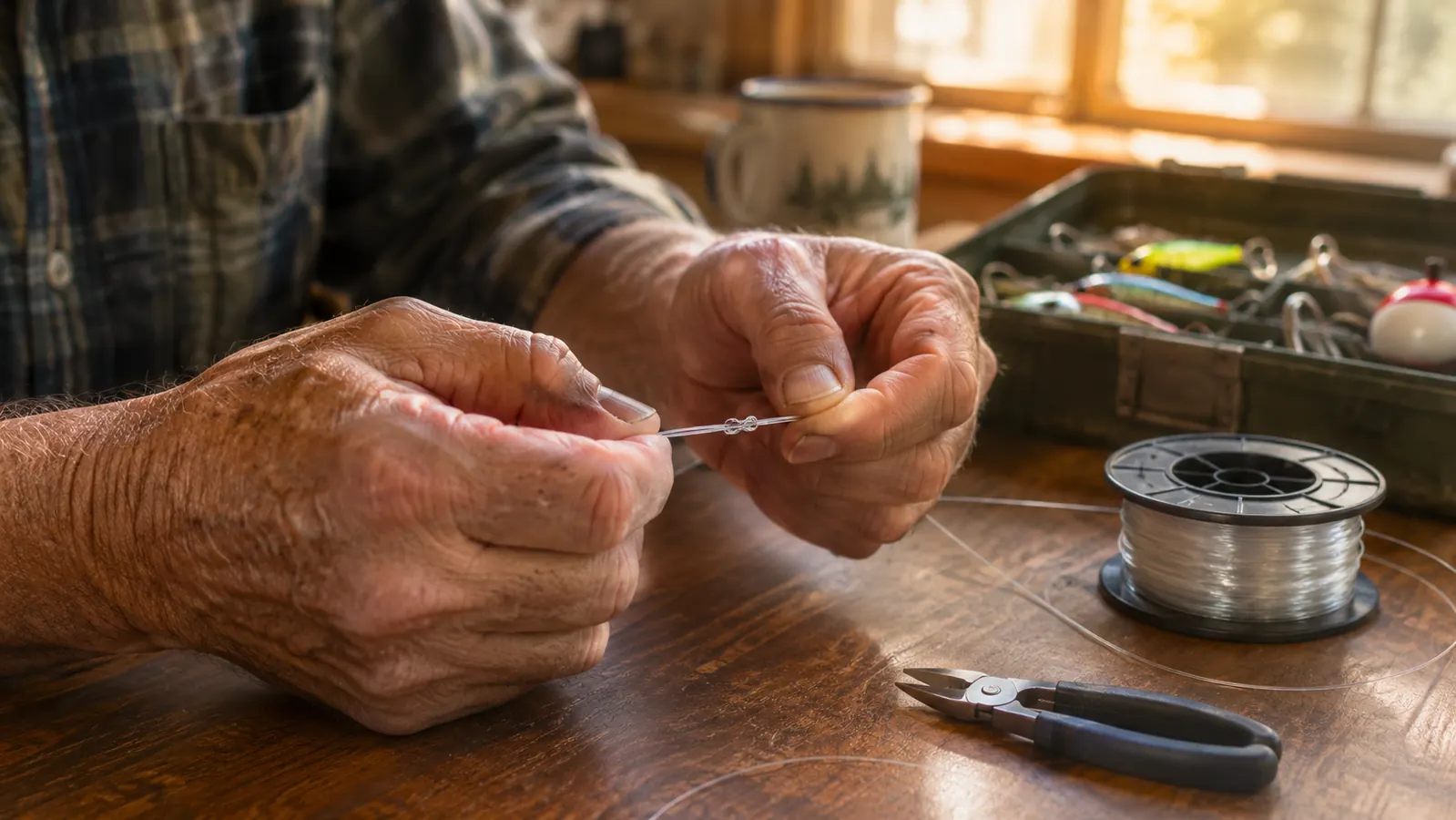
I did not have to learn a new knot to fish this line, and that matters to a man my age with hands that have been in a bucket truck for thirty years. Palomar, improved clinch, a double uni when I make a leader. All of them cinch down and hold. The one thing I will say is to wet the knot before you pull it tight. That is not a knock on the line, it is just good practice with fluorocarbon, and it costs you nothing but a second.
It Works as a Main Line, Not Just a Leader
Plenty of folks only use fluorocarbon for a short leader in front of braid, and that is a fine way to fish. But the listing calls this a freshwater main line and that is how I run it, spool to bait. It saves me the connection knot and the extra twenty minutes rigging in the driveway before daylight. If you have been paying for leader material by the yard, spooling a main line is simpler and it fishes the same water just as well. That is not a knock on leaders. It is a note that you have options.
You Feel the Bite Before the Rod Ever Loads
A sinking line keeps you tight to the bait, and tight to the bait means you feel things sooner. With a jig on the bottom, my bites now show up as a small tick or a weight that suddenly is not there, and I am setting the hook before the rod tip ever loads. With the floating line I fished for years, half those bites got swallowed before I knew anything happened. Some of that is me getting older and slowing down. Most of it is the line going where the bait is instead of lying on top of the water.
Spooling It Takes Ten Minutes at the Kitchen Table
There is no trick to putting this on a reel. Run the line through the level wind, tie it off on the arbor with an arbor knot, and crank it on with a little tension from your fingers. Ten minutes at the kitchen table with a cup of coffee, and Darlene is telling me to move my tackle box off the tablecloth. I do not soak it, I do not stretch it, I do not do anything special. I spool it, I fish it, and I respool when it starts looking rough. Simple is what I want at 5 a.m.
Two seasons, one knot failure, and that was a knot I tied badly in the dark. The line was not the problem.
What I'd Skip
If you fish a hollow body frog across grass all morning, do not spool this on that rod. A sinking line drags the frog under and ruins the walk. Keep monofilament or braid for the topwater rod and save the fluorocarbon for the bottom baits. I would also skip the heavy tests if you are finesse fishing a shaky head in deep, pressured water, because a lighter test in this same family will cast better and get more bites. And if you are the kind of angler who respools with bargain line every other trip, be honest with yourself about that before you spend more. This line rewards a guy who keeps it on the reel and fishes it.
One spool, one season, fewer lost fish at the boat
15 pound test, 200 yards, fluorocarbon built for a baitcaster. If your line has been the weak link, this is the cheapest fix on the boat.
Amazon Check today's price on Amazon →