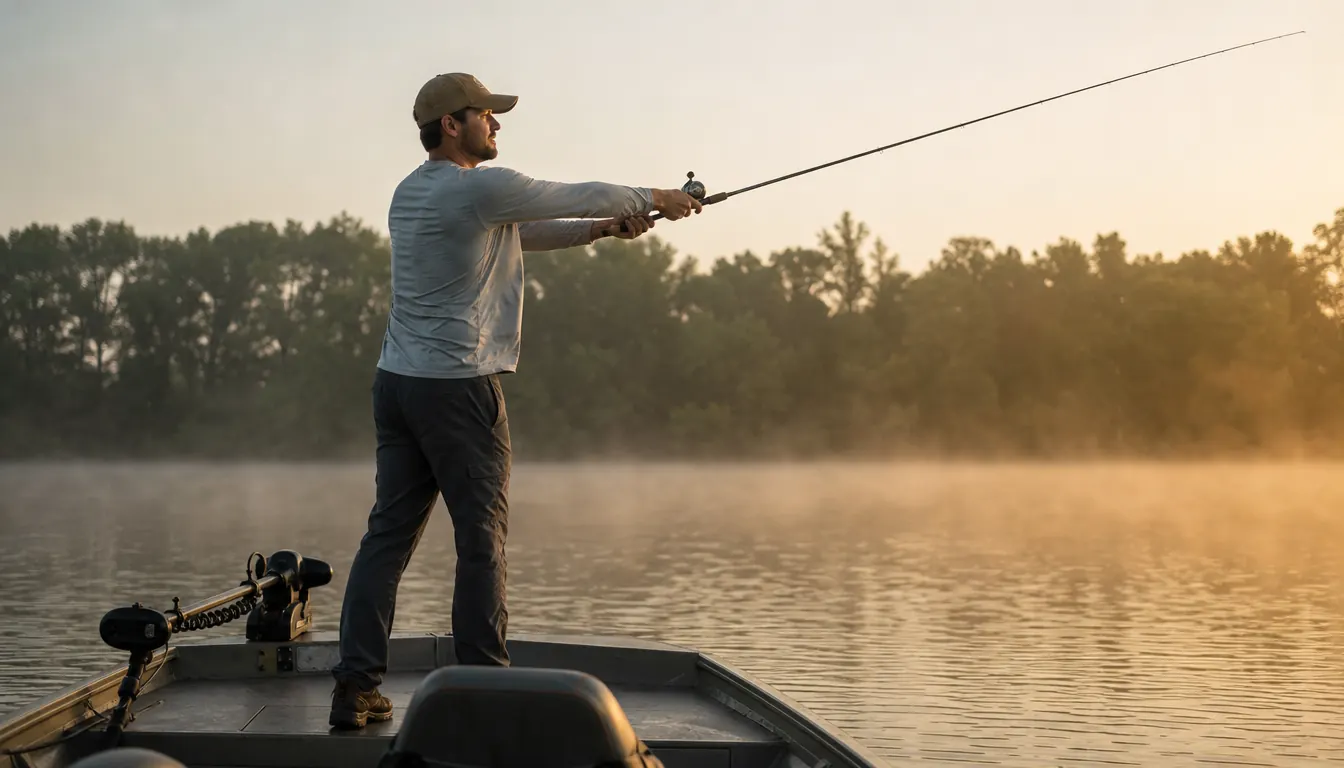
Most bass anglers do not lose fish because they picked the wrong bait. They lose them because the line between the bait and the rod was the wrong size for the job, and they never found out until the fish was already gone. I have been on both sides of that. I have thrown line so heavy a bass could look at it and change its mind, and I have thrown line so light that a five pound fish in the buck brush ended the fight in about two seconds.
Seaguar Red Label is a freshwater fluorocarbon main line that runs from 4 to 20 pound test on 200 and 1,000 yard spools. That range covers nearly everything a bass angler around here does, from a clear farm pond outside Florence to the rock below the dam. Finding the line is not the hard part. Picking the number is. This is how I work it out now, after enough Saturdays to have opinions and enough broken knots to have humility.
One spool of 15 pound test and a lot fewer mystery breakoffs
Red Label is the fluorocarbon I keep on the deck rod. Single strand, 15 pound test, 200 yards, built for baitcasting reels and freshwater duty.
Amazon Check Today's Price on Amazon →Step 1: Pick the weight from the cover, not from the fish
Cover is the first question and the only one that really matters. If I am pitching a jig into laydowns and chunk rock, I want 15 or 20 pound test, because I am going to have to drag a fish out of something that does not want to give it back. Fluorocarbon takes a scrape better than monofilament does, but taking a scrape is not the same as being immune to one, and a 10 pound line sawing across a limestone ledge all afternoon is going to fail eventually.
That lesson cost me a good fish on Wilson in June. I was pitching a black and blue jig into a row of laydowns on the north bank with 10 pound test on the reel, telling myself the water was clear enough to get away with it. The fish ate, I set the hook, and she wrapped me around a limb about the size of my wrist before I ever got her turned. I sat there looking at slack line and did the arithmetic I should have done on the ramp. A heavier spool would not have guaranteed anything, but it would have at least given me a chance to win that argument.
If I am out on a main lake point throwing a crankbait over clean flats with nothing to rub, 12 pound test is plenty and I get a little more feel out of it. If I am dropshotting in 20 feet of clear water with no cover within a country mile, I will go to 8 and not think twice.
The mistake I made for years was picking line for the average of the day instead of the worst part of it. If there is one dock on the whole lake with brush under it, and I plan to fish that dock, that brush sets the number. Pick for the worst thing you plan to put the bait into, not the typical thing.
Step 2: Match the weight to the reel and to the bait you plan to throw
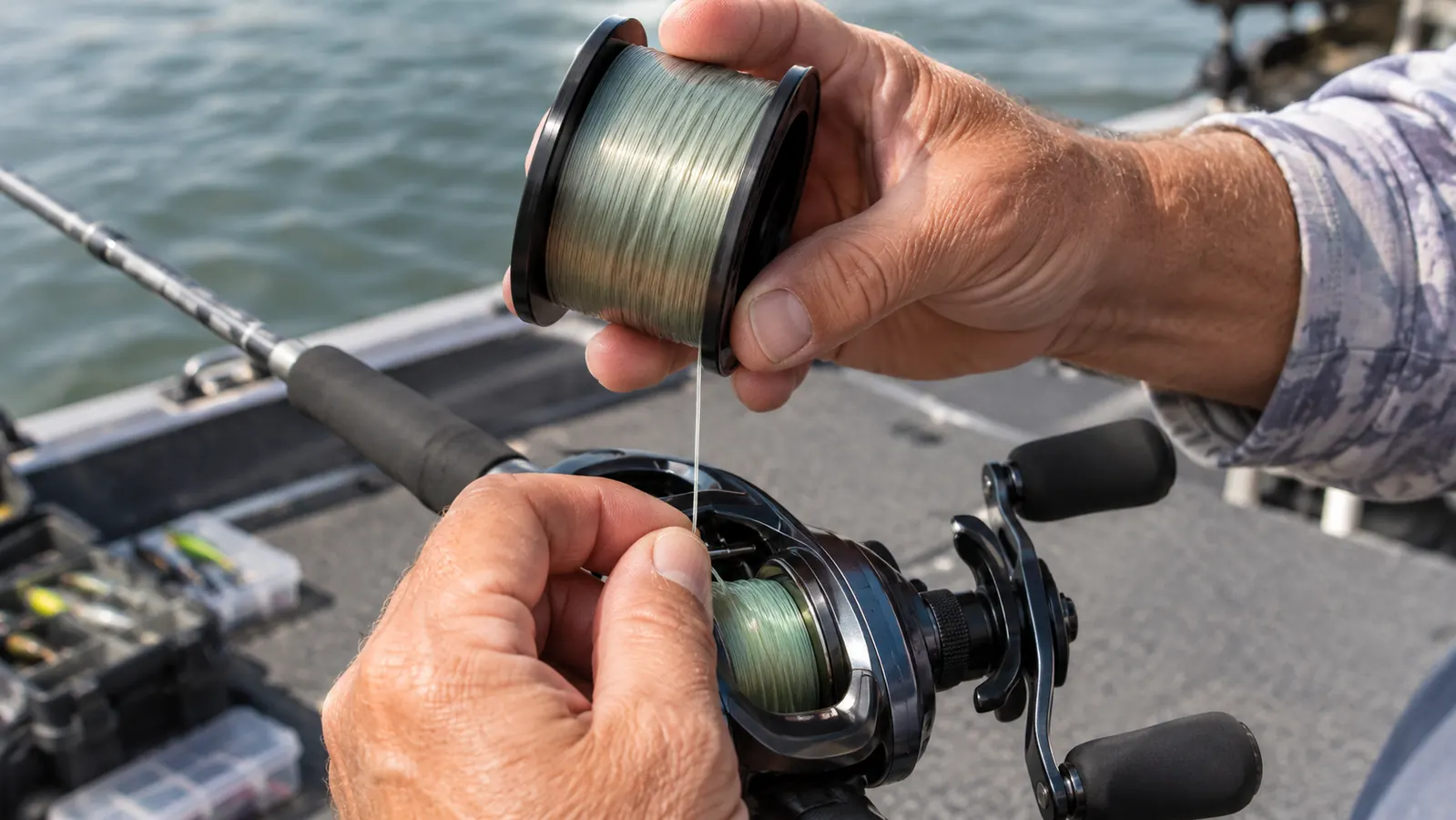
Red Label is designed for baitcasting reels, and that matters more than most people give it credit for. Fluorocarbon is stiffer than mono, and a stiff line on a cast control setting that is too loose is a backlash waiting on a headwind. Fifteen pound test on a 200 yard spool is the number I keep coming back to. Heavy enough to turn a fish out of the brush, light enough that the spool still starts up cleanly when I am throwing something small.
I got reminded of that on a windy April morning on Pickwick, throwing a quarter ounce shaky head on a reel I had just spooled with heavier line and set the brakes loose out of habit. The first cast into the wind ballooned, the spool overran, and I spent nine minutes in the floor of the boat with my thumb picking out a backlash while the school I had been idling toward went right on about its business. Nothing was wrong with the line. Something was wrong with the pairing. Seaguar Red Label will cast clean all day when the reel is set for it and the bait has enough weight to pull line off the spool.
The bait sets the floor underneath that. A three eighths ounce jig and a quarter ounce shaky head want different line, not because the bass care, but because the cast has to work before anything else can happen. Heavier line comes off the spool with more attitude. If I am throwing something light into the wind, I want the smaller number, and I want to be honest with myself about whether I can actually cast it.
Two hundred yards is also just a practical amount. It spools a bass reel with room to spare without gutting the whole spool in one sitting, and it means I am not placing an order every other week. The 1,000 yard spool is there if you respool as often as you should.
Step 3: Size down when the water clears up
Fluorocarbon is nearly invisible in water, which is the entire reason it exists. Nearly invisible is still not invisible. The difference between 15 and 10 pound test in a clear pond in August is the difference between fish eating and fish following, and I have watched it happen on the same bait, on the same day, with nothing changed but the spool.
I have a pond off County Road 8 that I fish from the bank, maybe four acres, spring fed, and by mid June you can count crawfish on the bottom in six feet of water. The first summer I fished it I was throwing 15 because that is what was already on the rod. I got followed baits all evening and landed two fish. Next trip I put on 8, same bait, same bank, same hour, and boated nine. That is not a subtle difference, and it was not the bait.
I fish two very different kinds of water. Wilson and Pickwick most weekends, where there is some color in the water and the fish are not staring up through a foot of sunlight all day. And a couple of farm ponds near the house where you can see bottom in eight feet. On the lakes I am comfortable at 15. In the ponds, from about May on, I go to 10 or even 8, and my catch rate goes up. Nothing changed except the number on the label.
If you only want to buy one spool and be done with it, buy the 12. It is a compromise that does not do anything great and does not do anything terrible, and there are worse ways to spend a season.
Step 4: Set the drag and your knots for the line you picked
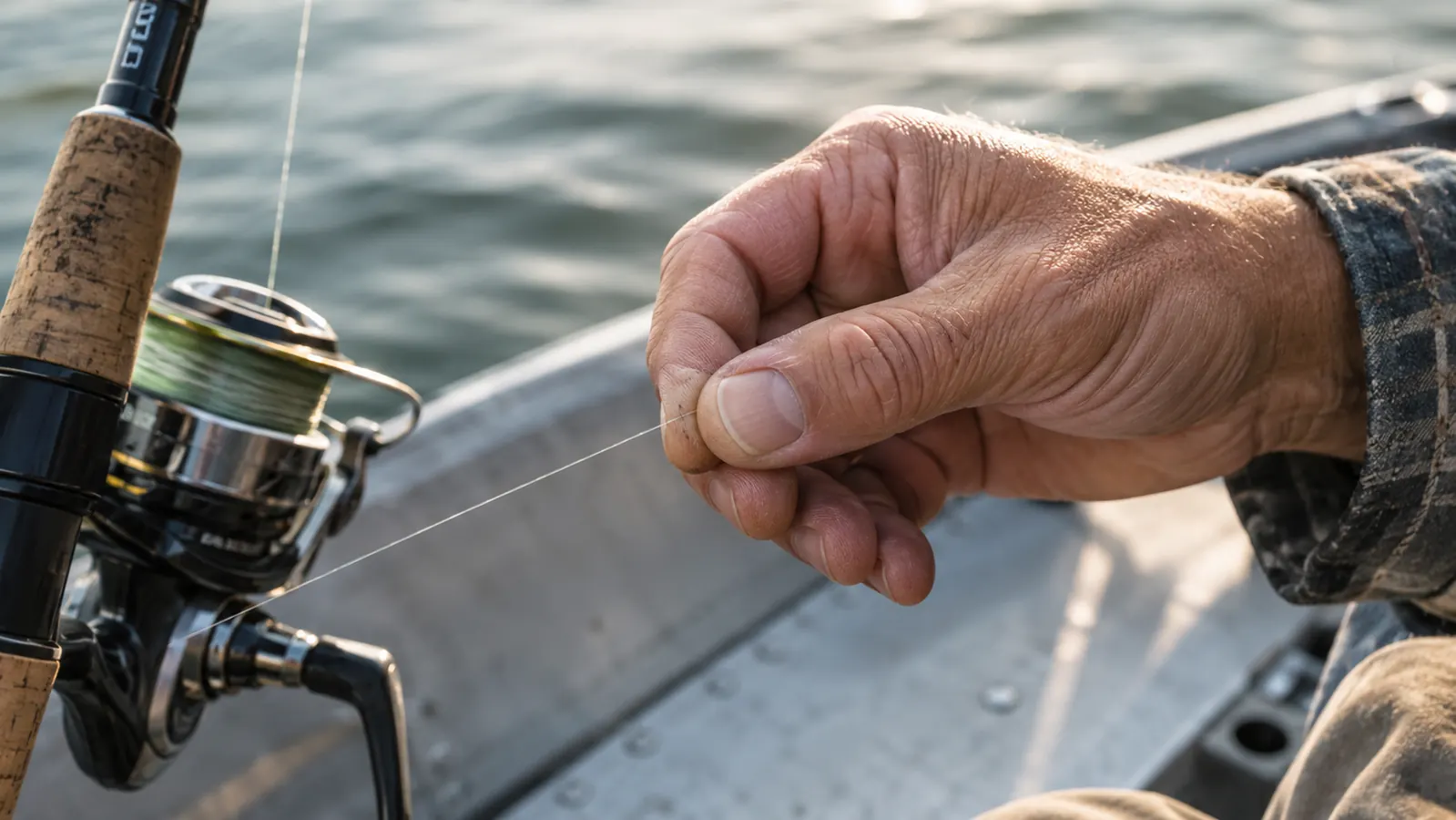
A line only breaks at its weakest point, and the weakest point is almost never the middle of a cast. It is the knot. Fluorocarbon is stiffer than mono and it does not forgive a sloppy knot. I wet every knot before I snug it down, I pull it tight slow instead of jerking it, and I check it after any fish that took drag.
I broke off a good fish at the boat last fall and I still think about it. Palomar knot, tied in a hurry because the light was going, and I did not wet it before I pulled it down. It held through the cast, held through the hookset, and popped right at the eye of the jig when the fish came up and shook. Fluorocarbon will do that to you. The knot was the failure, not the line, but I could not tell you that in the moment. I can tell you I tie slower now and I wet every one.
Set the drag a little lighter than the line's rating can handle. Fifteen pound line does not need 15 pounds of drag and I do not want it. I want the drag to give before the line has to, especially on a close range hookset with a jig, where there is no stretch in the system to soak up a mistake.
Retie often. Every hour or so, and any time the line has been across rock. Fluorocarbon will take a nick and keep fishing right up until it does not, and when it goes it goes suddenly. Running the last three feet between your thumb and forefinger tells you more than anything printed on the spool.
Step 5: Carry two spools and change with the season, not with your mood
The number that works in April is not the number that works in September. Early season the fish are shallow, the water is up in the bushes, and I want 15 or 20. By late summer they have pulled out to the ledges, the water has cleared, and I want to be at 10. Same lake. Same rod. Different fish and different water.
The calendar I actually fish by is water temperature more than the month on the wall. Once the lake gets up past about 70 degrees and the fish move off the bank, I am dropping to 10 and staying there through September. When the water starts falling back in October and the shad bunch up in the creeks, I go back to 15, because I am throwing a spinnerbait and a chatterbait around wood again. That is the whole system. Two numbers, one rod each, and I swap spools at the kitchen table when the pattern changes instead of out on the water when I am already aggravated.
So I keep one baitcaster rigged at 15 and one rigged at 10, and I will drop the 10 down to 8 with a leader if the fish get fussy. That is not a lot of tackle. It is two 200 yard spools and a pair of reels, and it covers most of what I actually do on the water.
The thing to resist is changing line because you had a bad morning. Bad mornings happen for a dozen reasons that have nothing to do with pound test, and respooling is the easiest way to feel like you fixed something when you did not. Change when the water changes. Not when your feelings change.
I went from 15 down to 10 in the ponds and my catch rate went up. Nothing changed except the number on the spool.
What Else Helps
Seaguar Red Label is built as a main line, and that is how I use it. It is not a leader material first, and while some folks run it as one, I would rather keep it on the reel and use a dedicated leader for the toothy water. The listing bullet about pike is not marketing noise. If you fish water with pike or pickerel in it, you are going to lose baits on fluorocarbon eventually, and that is the cost of doing business in that water.
Spooling tension matters more than people think. If you load line on loose, it will bury itself on the first hard hookset and you will spend the rest of the morning picking at it with your thumbnail. I run it on tight, with a wet rag pinching the line as it goes on, and I have not had a bury problem since I started doing that.
Keep the rod tip up and the line wet. A dry fluorocarbon line coming off a reel in the cold is a line that wants to jump off the spool. And check the guides on your rod after a fish runs you into structure, because a nicked guide will eat line faster than any rock will. One more thing: Ruby rides in the boat on calm mornings, and she has to be kept well clear of treble hooks. That dog has cost me more fishing time than any bad spool I have ever bought, and I would not trade a minute of it.
Pick your number and get back to fishing
Seaguar Red Label runs 4 to 20 pound test on 200 and 1,000 yard spools, 4.7 stars across 5,675 Amazon ratings. For most bass water around here, the 15 pound 200 yard spool is the one to start with.
Amazon Check Today's Price on Amazon →