
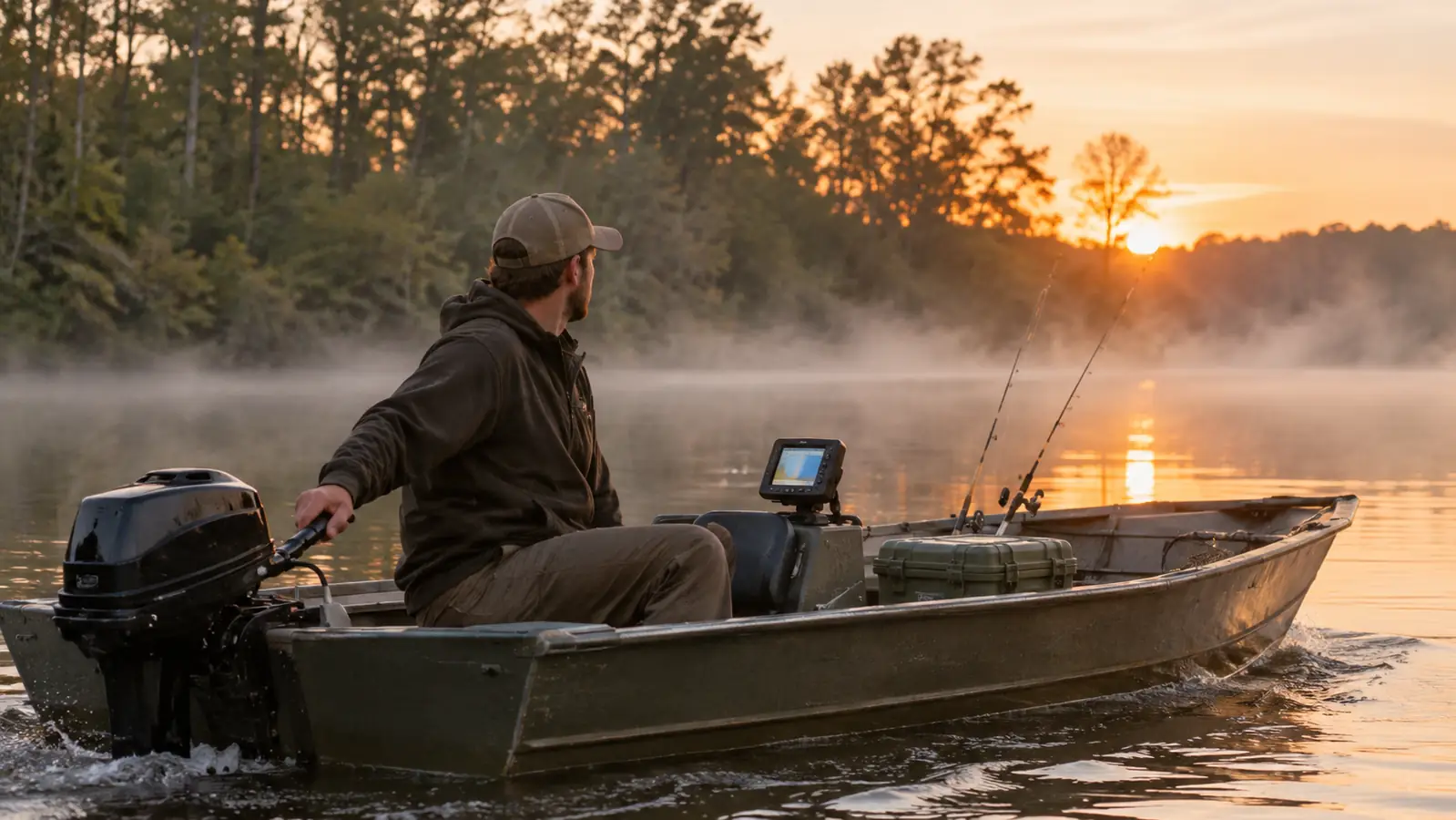
Two fish finders on the same boat ramp on a Saturday morning, and by noon one of them is showing you the stump line you have idled past for ten years while the other is showing you a fish that has already swum off. That is the whole argument between the Garmin Striker 4 and the Humminbird PiranhaMAX 4, and it took me two seasons of early mornings on Wilson and Pickwick to be sure which one I wanted bolted to the console of my boat.
Short answer first. If you fish structure and you want to remember it, the Garmin Striker 4 is the one. It marks the bottom, it lets you drop a waypoint on the interesting part, and it will steer you back to that same brush pile next April. If you fish open water, or you fish from a kayak or the bank, and you want depth and fish returns on a screen you can read at a glance, the Humminbird PiranhaMAX 4 gives you a bigger picture and asks less of you. Neither one is a mistake. They answer different questions.
| Garmin Striker 4 | Humminbird PiranhaMAX 4 | |
|---|---|---|
| Screen | 3.5-inch LCD, split between sonar and the waypoint map | A larger display, sonar only |
| Bottom detail | CHIRP plus ClearVü scanning, so a brush pile has a shape instead of a smear | Clean standard sonar returns, readable but less defined |
| Waypoints | Marks stumps, docks and brush piles and navigates you back to them | No waypoint map on the base unit |
| Menus | Keyed interface with dedicated buttons, but several screens to page through | Fewer screens, faster to read mid drift |
| In the box | Transducer, power and data cable, tilt and swivel mount, transom hardware | Transducer and mount, check what your specific kit includes |
| Deep water | Rated to 1,600 feet | Built for the water most of us actually fish |
| Best for | Structure fishermen who want to find the same cover twice | Anglers who want depth, fish and nothing else to learn |
How These Two Ended Up Side by Side
Both units are compact, both run on battery power, and both are sold to people who do not want to spend a Saturday running cable through a hull. My boat is a 17-foot aluminum with a 40 horse outboard and a bow mount trolling motor, and console space on a rig like that is about the size of a paperback. A 3.5-inch display fits. A bigger one fits if you give up something else. That is the trade you are actually making, and it is the reason I keep coming back to these two instead of pointing you at a 9-inch graph that belongs on a boat twice the size.
I have run the Striker 4 for a couple of seasons now, mostly early, mostly on Wilson and Pickwick, with a few farm pond afternoons thrown in when the wind let me. Ruby, my black Lab mix, rides along on the calm mornings and has learned to stay clear of the treble hooks. The PiranhaMAX 4 I have used on a friend's boat and borrowed for a week of dock fishing on Pickwick. That is enough time to know what each one is good at and where each one will start to annoy you around hour four.
One thing I want to be clear about before the comparison. Neither of these is a mapping unit in the sense a tournament guy means it. There is no lake chip to buy, no contour shading of the whole reservoir. The Garmin gives you a waypoint map, which is a blank grid with your own marks on it and a line pointing you toward the one you picked. That sounds thin on paper. In practice it is the single most useful thing on the screen, because the marks are yours and they are on water you actually fish.
What the Screen Actually Shows You
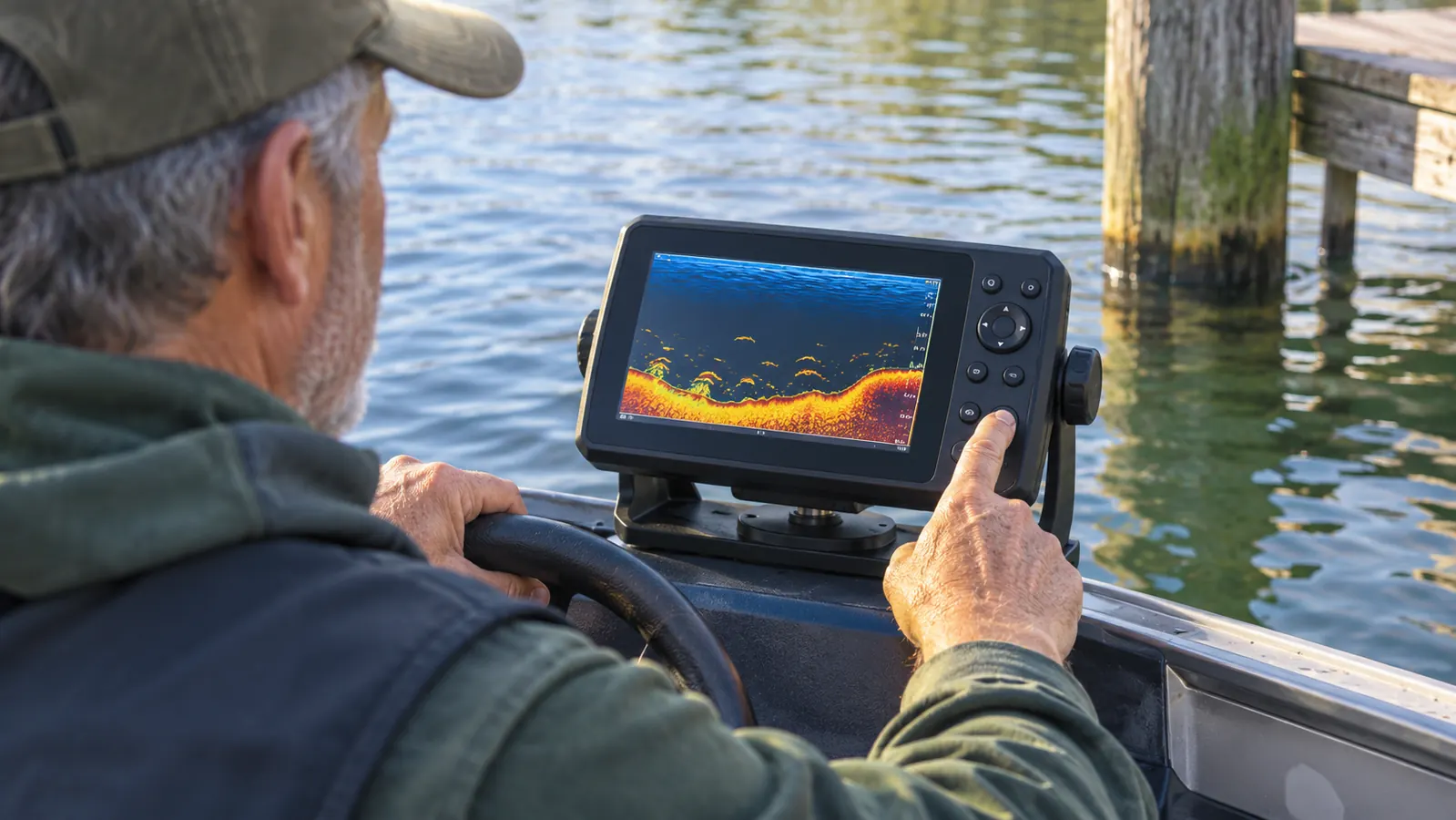
The Garmin Striker 4 uses CHIRP sonar and ClearVü scanning. In plain terms, CHIRP sweeps a range of frequencies instead of firing one ping, so the return separates a fish from a branch better than basic sonar does. ClearVü is the high frequency look, near photo quality is how the listing words it, and what that means on the water is that a brush pile stops being a gray blob and starts having a shape. I can tell the top of a sunken cedar from the limbs coming off it. That matters when you are dropping a jig down the trunk of a tree instead of through it.
The PiranhaMAX 4 shows a clean, readable sonar picture on a larger screen, and for straight fishfinding that is not a small thing. Sitting on a bucket in the rain, a bigger return is easier to read than a sharper one. Where it gives ground is shape. You will see that something is down there. You will have a harder time seeing exactly what it is, and on a lake where the difference between a rock and a stump is the difference between a bite and a snag, that costs you.
Screen size and screen detail pull in opposite directions on a small boat, and you have to pick a side. I picked detail because I fish the same water over and over and I want to know what I am looking at. If you fish a new lake every weekend, you may not care what the cover is, only that there is some. That is a real difference in how people fish, and it should decide this for you before any spec sheet does.
Where Garmin Striker 4 Wins
The scanning sonar is the reason I stopped carrying a marker buoy in the rod locker. On Wilson there is a stretch of bank where a storm took down a line of cedars about eight years ago. On a plain sonar unit that whole stretch reads as one long gray shelf. On the Striker 4 the trees stand up off the bottom. I can put a Texas rig on the deep side of the trunk instead of the shallow side, and on a cold January morning that is the difference between three bites and none. I went deeper on that in my long-term review if you want the season by season version.
The waypoint map is the reason the unit keeps permanent space on the console. Every brush pile, stump field and dock corner I find gets marked, and the Striker 4 navigates me back to it. I have waypoints on Pickwick from two winters ago that I still fish, and I have never once failed to find one. Without that you are doing what I did for twenty years, which is squinting at a shoreline and telling yourself you will remember the big oak with the split trunk. You will not remember. I never did, and I lost some good cover because of it.
The rest of the package is unglamorous and correct. It weighs 8 ounces, so a ram mount or a small shelf does not care that it is there. The box includes the transducer, a power and data cable, a tilt and swivel mount and the transom hardware, so there is no second trip to town on a Friday night. The keyed interface with dedicated buttons means you are not hunting a touchscreen with wet hands. It is rated to 1,600 feet, which no bass angler in Alabama will ever test, and it carries a 1-year limited warranty. None of that makes you a better fisherman. It just means the thing works when you get to the ramp.
Where Humminbird PiranhaMAX 4 Wins
The PiranhaMAX 4 wins on screen, and I am not going to pretend otherwise. A bigger display at the console is easier to read at a glance, and you glance at it constantly. When you are running a trolling motor with one hand and holding a rod with the other, a return you can read in half a second beats a return with more detail that takes two. On a choppy day with spray on the lens, that gap widens.
It also wins on simplicity. Fewer screens. Less paging. The whole unit behaves like a fish finder and not like a small computer that happens to have sonar built into it. For a lot of people that is the right call, especially on a kayak where you are managing paddle, rod and transducer cable all at once. My buddy who runs one has never once opened a menu mid drift. I open menus on the Garmin constantly, because I am the kind of person who marks a waypoint on a fish that turns out to be a submerged log. That is a me problem. But it is also a menu problem.
Mark the Stump Once, Fish It All Winter
The Garmin Striker 4 pairs scanning sonar for reading structure with a waypoint map for finding it again. That combination is what actually puts you back on fish, and it is the reason this one stays in my boat.
Amazon Check Today's Price on Amazon →Who Should Buy Which
Buy the Garmin Striker 4 if you fish structure and you fish it more than once. Brush piles, stump fields, dock corners, the deep lip of a channel ledge. If you have ever idled away from a good spot telling yourself you would find it again, this is the unit that ends that conversation. It is also the right pick if you run a small boat with limited console space and you want depth, sonar and navigation off one 3.5-inch screen instead of bolting on a second unit next spring.
Buy the Humminbird PiranhaMAX 4 if your fishing is simpler than your electronics need to be. Bank fishing, pond hopping, a kayak on a farm lake, a first boat for a kid who is still learning to read a depth change. You want to know how deep it is and whether something is under you, and you want to read that from a screen you can see while seated. You do not want to learn a menu tree. Nobody standing on a pond dam has ever wished for a waypoint map.
And if you are genuinely torn, ask yourself one question. Have you ever found a piece of cover and immediately thought about how you would get back to it tomorrow? If the answer is yes, buy the Garmin. If your honest answer is that you will fish wherever the boat ends up, the bigger, simpler screen is the better use of your console space and your attention.
I can mark the same brush pile in April that I found in October, and the Striker 4 puts me back on it within a boat length. That is the whole feature list as far as I am concerned.
What I'd Check Before Either One Goes In the Boat
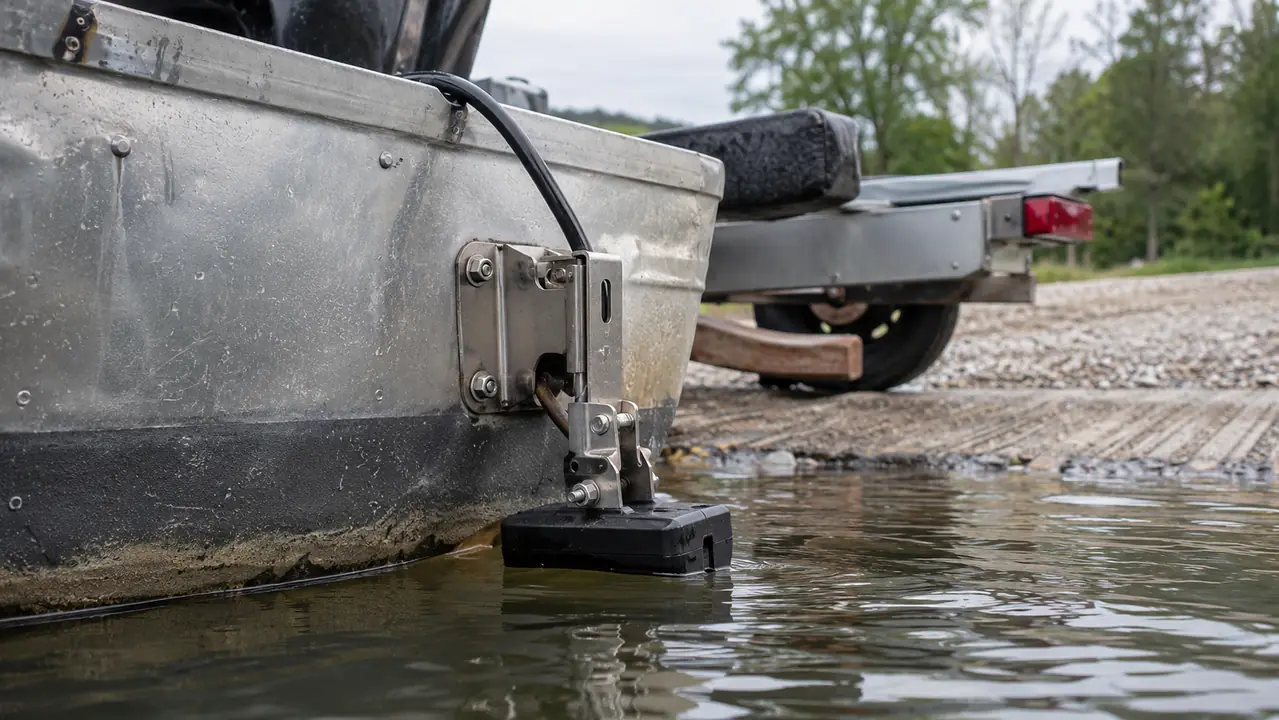
Transducer placement decides more of your picture than the unit does. Get it flat on the transom, below the waterline at speed, and clear of the prop wash coming off the outboard. On my aluminum hull that meant a small shim and a second set of holes, which took twenty minutes and one beer. Mount it high and you will get a clean screen at idle and nothing but static the moment you open the throttle, and then you will blame the fish finder for something that was never its fault.
Check the screen in direct sun before you commit, and think hard about where it will actually live. The tilt and swivel mount is forgiving, but on a console the size of a paperback you have to pick between the spot where you steer and the spot where you cast from. I put mine where I steer, because I want to see depth while I am running. Run it off a dedicated battery or a good fused line too. A fish finder that browns out every time you hit the starter is not telling you anything worth reading.
One Screen, Two Jobs, No Excuses at the Ramp
Scanning sonar for the shape of the cover, a waypoint map to bring you back to it, and hardware in the box that fits a small console. The Striker 4 is the one that stays in my boat.
Amazon Check Today's Price on Amazon →