
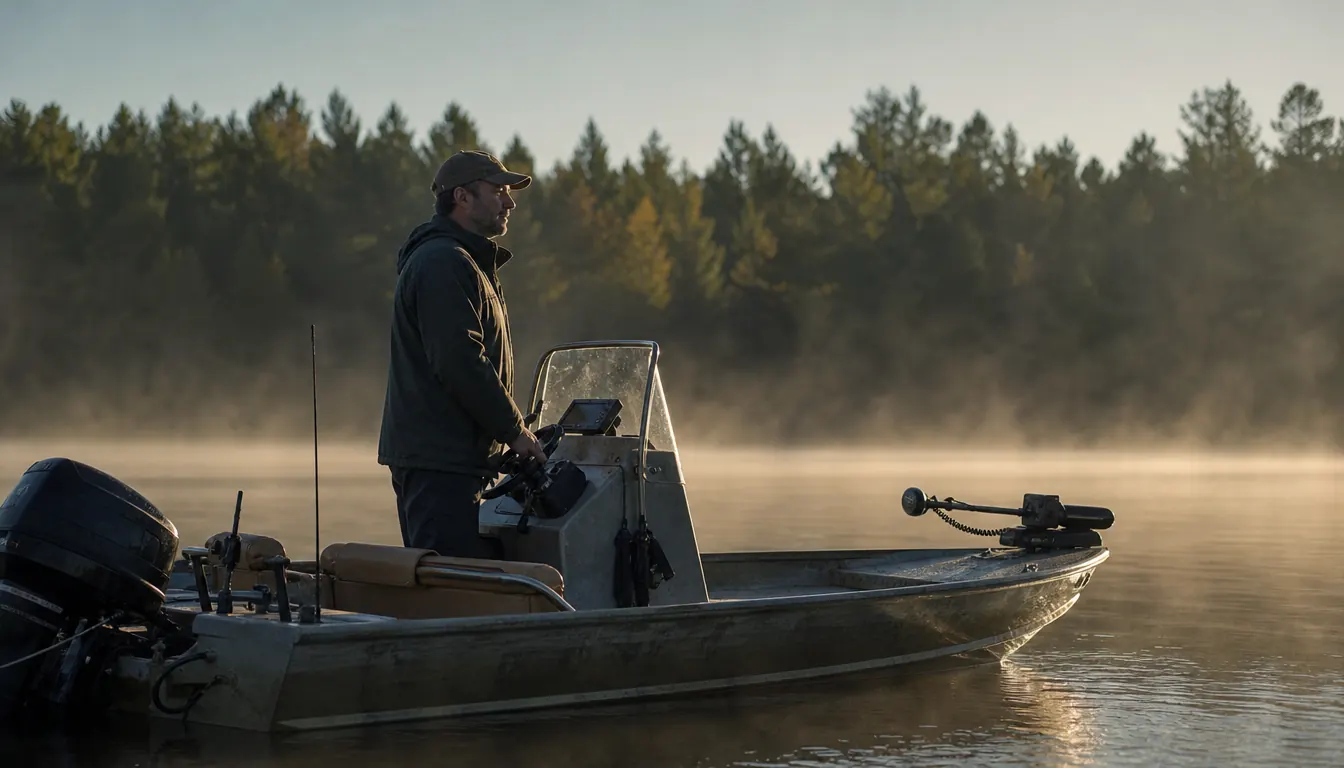
I bought the Garmin Striker 4 for a reason that had nothing to do with electronics. I was working a squarebill along a stump flat on Wilson Lake, casting at water I could not read, and a man in an older boat idled past me and started catching bass off the same bank. He was not a better caster and he was not throwing a better bait. He had a small screen on his console and he knew where the ledge dropped off before he ever made a cast. I never did get his name. I got the lesson.
I ordered one that week. It has been in the boat ever since, which for me is the real test. I have a garage shelf full of things that seemed like a fine idea in March and were gone by June. This one keeps earning its spot, and it is the only Garmin product I own.
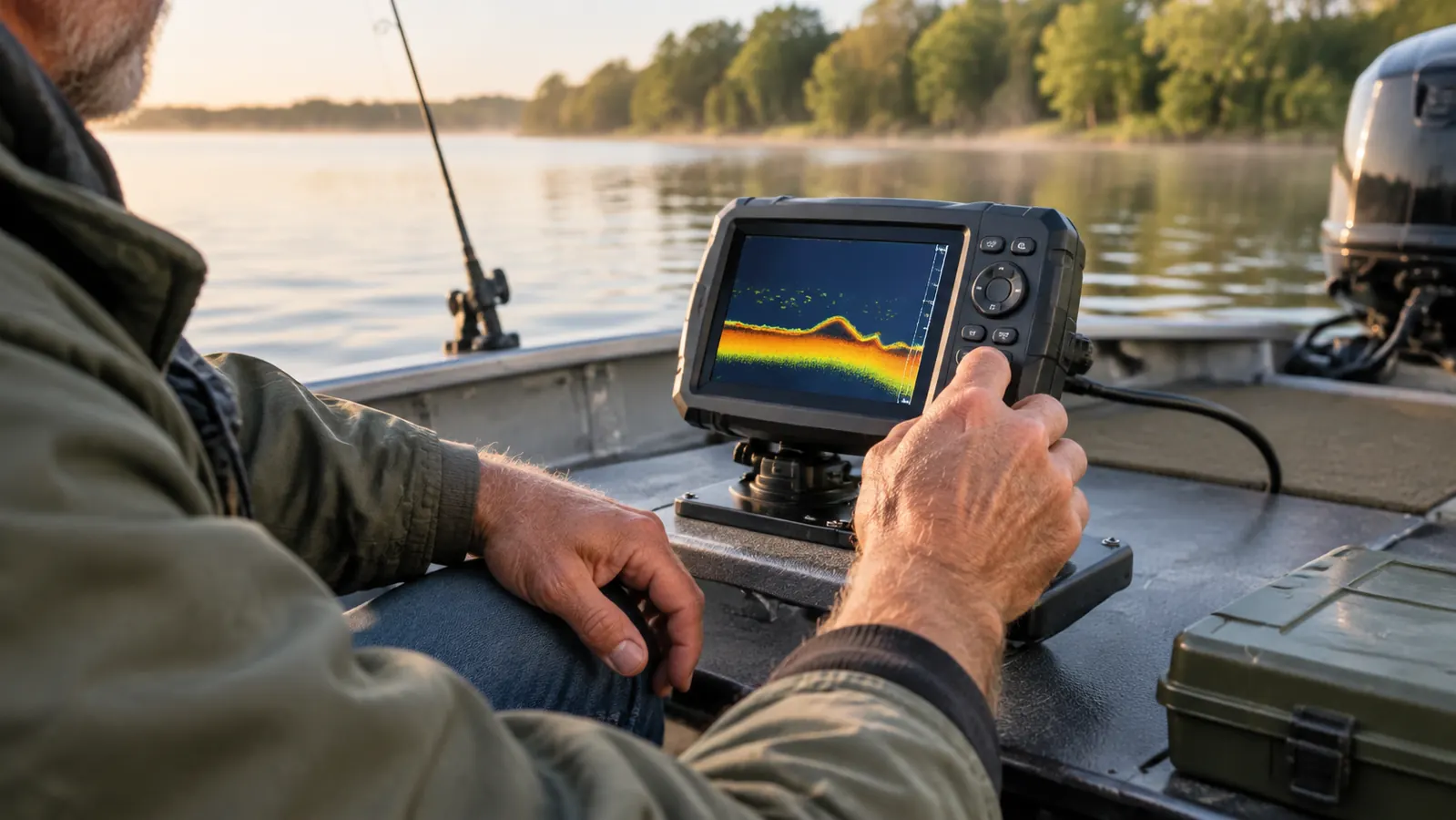
Here is what the Striker 4 actually is, because the listing does not tell the story in plain words. It is a 3.5 inch fish finder with CHIRP sonar and ClearVu scanning, a keyed interface with dedicated buttons, and a waypoint map you can use to mark brush piles, stumps and docks. It weighs eight ounces. It runs on battery power. In the box you get the unit, the transducer, the power and data cable, and a tilt and swivel mount, plus the transom hardware. That is the whole list. Nothing hidden and nothing extra.
Mine lives at the console of a 17 foot aluminum jon boat with a 40 horse outboard and a bow mount trolling motor. That boat does not have much dash to spare. The mount footprint is roughly the size of a coffee saucer, so it fits where a bigger unit would have to hang off an arm.
The first morning I used it, I did not catch more fish. I want to be clear about that, because a screen does not make a bass eat. What changed is that I stopped wasting casts. I found a ledge on the lower end of Pickwick that I had fished past for years without knowing it was there. I marked it with a waypoint before I ever put a bait in front of it, and the next pass I fished the break instead of the flat.
A screen does not make a bass eat. What it does is stop you from casting at empty water for two hours.
Read the break before you spend the cast
Eight ounces, a 3.5 inch screen, and a waypoint map. The same unit that reads a ledge on Pickwick will read one on your home lake.
Amazon Check Today's Price on Amazon →The part I like best is the part most write-ups skip right over. Dedicated buttons. Garmin kept the controls keyed instead of burying them in menus, and that matters when the wind is pushing you down a bank. I run this thing in November with cold hands and in April with rain running off my hat brim, and I can hit the button I want without looking down. A touchscreen in a boat that takes spray is a liability. Keys are not.
The transducer goes on the transom and the cable runs forward to the console. I get a clean read at trolling speed and a usable one when I am idling, which is enough for the way I fish. I am not scanning open water at wide open throttle looking for suspended schools. I am looking at the bottom under my trolling motor, and that is the job this unit is built for.

Now the drawbacks, because there are some. The 3.5 inch screen is small. In the middle of the day with the sun coming straight down, I have to shade it with my free hand to see fine detail. The listed maximum depth is 1600 feet, which is a number a bass angler will never use in a farm pond or on the Tennessee River. And this is a fish finder with a waypoint map. It is not a chartplotter and it does not pretend to be one. Garmin sells other units for that job and charges accordingly.
What it does well, it does without fuss. The waypoint map has become the feature I lean on most. I mark a dock on Wilson that holds fish in the spring, a stump row on a pond out past the house, and a brush pile I sank myself. Next trip I go straight to them instead of idling around trying to remember which stretch of bank it was. That alone changed how I spend a short morning.
Ruby rides with me on calm mornings, and she has learned that the cable between the console and the transom is not a toy. It is the one piece of boat wiring she has never chewed, mostly because I ran it high and out of her reach. Darlene says I spend more time organizing that boat than I do fishing out of it. She is not wrong. It is a one year limited warranty unit, so I keep it out of the weather when it is not in use, and it has given me no trouble.
What I'd Tell You If We Were Sitting at My Kitchen Table
I would tell you the Garmin Striker 4 is not going to make you a better angler. It is going to make you a faster one. It cuts the guesswork out of a short morning on the water, and if you fish the way most of us do, a few hours here and there, that time is the whole thing you are protecting. If you already run a big console unit with side imaging and mapping chips, you are not the buyer here. If you have been fishing blind from a jon boat or a kayak and wondering whether the screen is worth the trouble, it is.
And I would tell you to learn the buttons on dry land before you take it out. Ten minutes in the driveway reading the waypoint map is worth an hour of fumbling on the water while the wind pushes you past your own brush pile. That is the one thing about this Garmin unit I would change if I could: I would have read the paperwork first instead of on the water.
The eight ounce unit that ended my guesswork
Same screen, same keys, same waypoint map, every trip since. If your mornings are short, this is the piece of gear that makes them count.
Amazon See It on Amazon →