
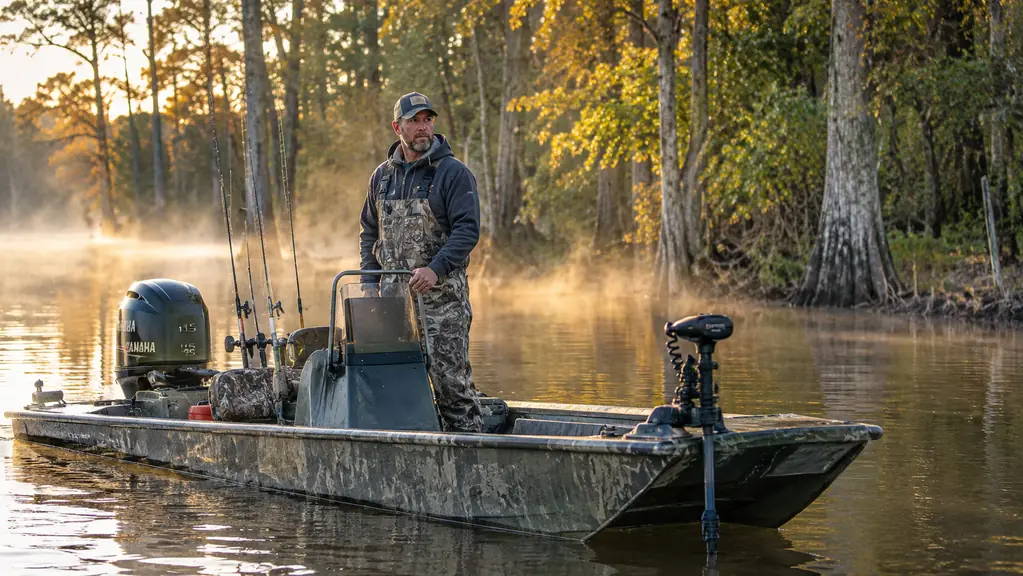
Three years I fished the same quarter mile of ledge on Wilson Lake and caught enough bass to keep me coming back, and I could not have told you where the bottom fell away if you had asked me straight out. I was casting at the bank. The fish were sitting on a channel swing forty feet out, and I never knew it was there. A friend idled past my spot one morning, looked down at his screen, and said the thing that stung: you are fishing the wrong side of that point.
That was the week I put a Garmin Striker 4 on the bow of my 17 foot aluminum boat. Not because I wanted another screen in my face. Because I was tired of guessing. Two seasons later I still run the same unit, and it changed where I stop and where I keep idling. Here are ten reasons a fish finder earns its space on a small boat, in the order they actually mattered to me.
The unit that ended my guessing, bolted to the bow since that spring
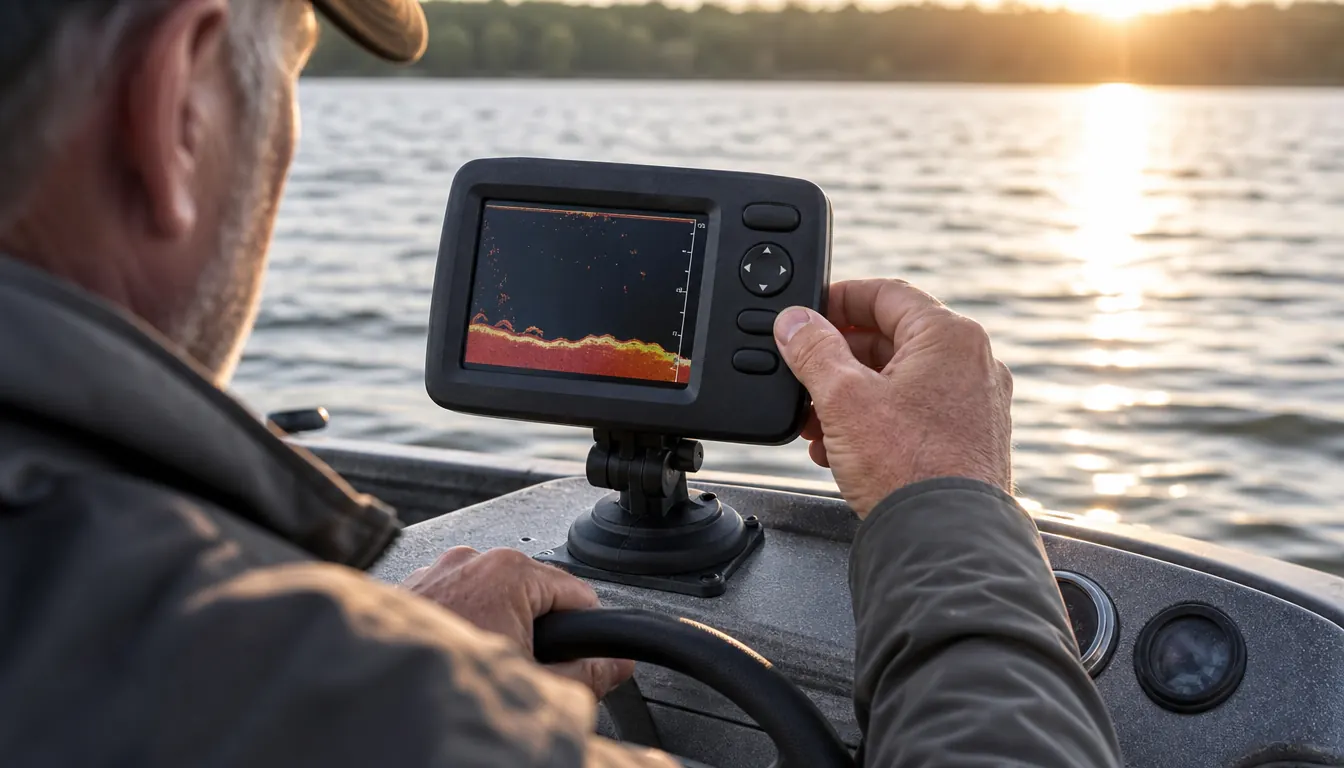
Garmin Striker 4 with transducer. A 3.5 inch display, CHIRP sonar, ClearVu scanning and keyed buttons you can hit with wet hands. Today's price is on the listing.
Amazon Check Today's Price on Amazon →It shows you where the bottom actually falls away
A paper map will tell you a lake has a creek channel. It will not tell you that the channel swings within thirty feet of the bank you have been casting at since daylight. The depth readout does. The first morning I idled that stretch with the graph on, I watched the number go from four feet to eleven in about two boat lengths. That ledge is where I start now, and it took ninety seconds to find.
It marks the brush pile so you can come back to it
I found a pile of sunken Christmas trees off a boat dock on Pickwick, marked it on the waypoint map, and have caught fish off it every spring since. Without the mark I would have idled straight past it, because that bank looks like every other bank on that lake. Coordinates on a screen beat a memory of a shoreline. A memory fades by August. A mark does not.
CHIRP separates fish from the cover they are sitting in
The older units I fished with smeared a brush pile and the bass holding in it into one blob. CHIRP returns are cleaner. You can see the tops of the limbs and the marks hanging beside them. That matters, because a bass tight to cover is not always a feeding bass. Seeing how the fish are sitting tells me whether to slow down with a jig or keep the trolling motor moving.
ClearVu shows what is directly under the boat
ClearVu scanning sonar gives you a high frequency look at the water column under the transducer. When I am on a point and that column comes up empty, I know the fish have slid off the edge before I waste twenty casts. It is not a photograph, and it took me a few trips to read it. But it answers the question I actually have out there: is anything down there at all.
The waypoint map turns one good cast into a repeatable spot
The bass I catch are not spread evenly across a lake. They are on a handful of stumps, one dock corner, and a rock pile I found by accident. Marking each one on the Garmin means I can run a route instead of wandering. On water the size of Wilson, that is the difference between fishing and looking. I do less looking now, and I am home before Darlene starts wondering.
You stop fishing water that has nothing in it
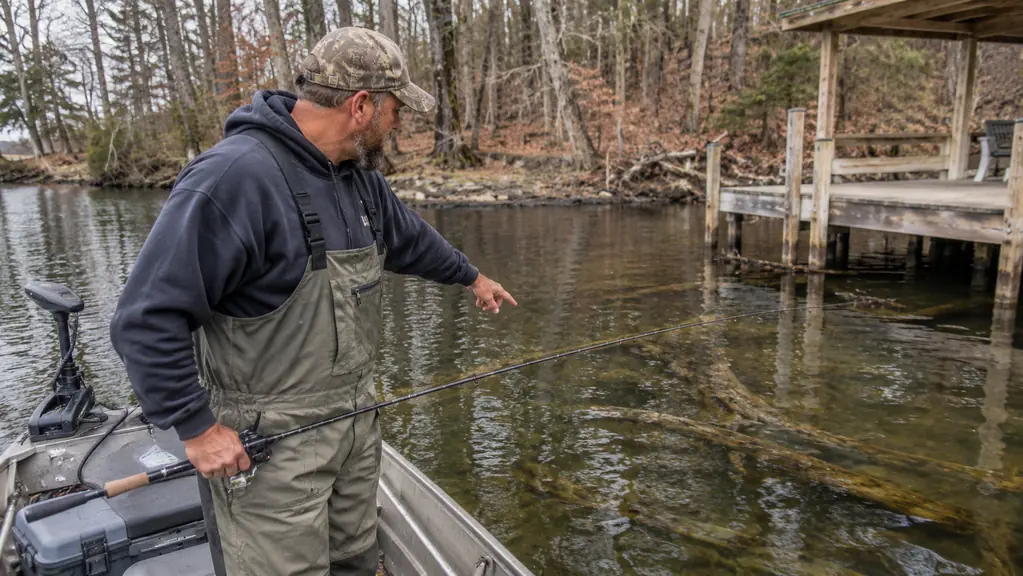
This is the plain one, and it is the one that changed my mornings. Before the graph, I fished whatever looked good to my eye. Now I idle a stretch, read the depth and the bottom, and either stop or keep going. I cover less water in a morning and catch more fish out of it. Darlene says I finally slowed down. I say I finally have a reason to.
It keeps you off shallow flats you cannot see
An aluminum boat with a 40 horse will bump bottom before it does real damage, but it still costs you an afternoon and a lower unit if you are unlucky. Watching the readout slide from eight feet to two while you are idling gives you time to turn the wheel. I have saved myself two props on unfamiliar water since I started paying attention to that number.
It runs on its own battery, so it does not borrow from the outboard
The unit is battery powered and draws little enough that a small sealed battery lasts me several trips. I do not have it spliced into the cranking battery, which means a long morning of idling and staring at a screen cannot leave me paddling home against the wind. Simple is good on a 17 foot boat. I have enough wires to worry about already.
It fits a small boat without taking over the console
The display is 3.5 inches on the diagonal, with a viewing area of about 1.9 by 2.9 inches, and the whole unit weighs 8 ounces. It sits on a tilt and swivel mount, so I can angle it toward the bow when I am up front with the trolling motor. On a jon boat, dash space is real estate. This one does not claim much of it.
Dedicated buttons beat a screen you have to hunt through
The keyed interface has dedicated buttons, not a menu you thumb through while the wind pushes you into a dock. Cold morning, wet hands, gloves half on. I can hit the button I need without looking down. That sounds like a small thing until you have tried to work a fussy screen with a bass thrashing on the deck and one eye on the trolling motor.
What I'd Skip
There is a version of this where you buy a bigger screen and a transducer that images sideways and then spend your whole morning looking down instead of casting. I have fished with men who do it. They know a great deal about the water and very little about where the fish are feeding. On a 17 foot aluminum boat I would skip the larger displays, the network boxes, and the transducer poles. Not because they are poor equipment, but because I fish small water and a 3.5 inch screen answers my one question. If you run forty miles of deep ledge in a day, buy more unit than I did. If you fish the near bank on Wilson and a couple of farm ponds, this one is enough, and the rest of the money is better spent on line, hooks and gas.
I cover less water in a morning and catch more fish out of it. That is the whole pitch, and it is the only one I have.
Ten reasons, one small screen, and a lot fewer blind casts
Garmin Striker 4 with transducer. 3.5 inch display, CHIRP and ClearVu sonar, waypoint map, keyed buttons, backed by a one year limited warranty. Today's price and stock are on the listing.
Amazon Check Today's Price on Amazon →