
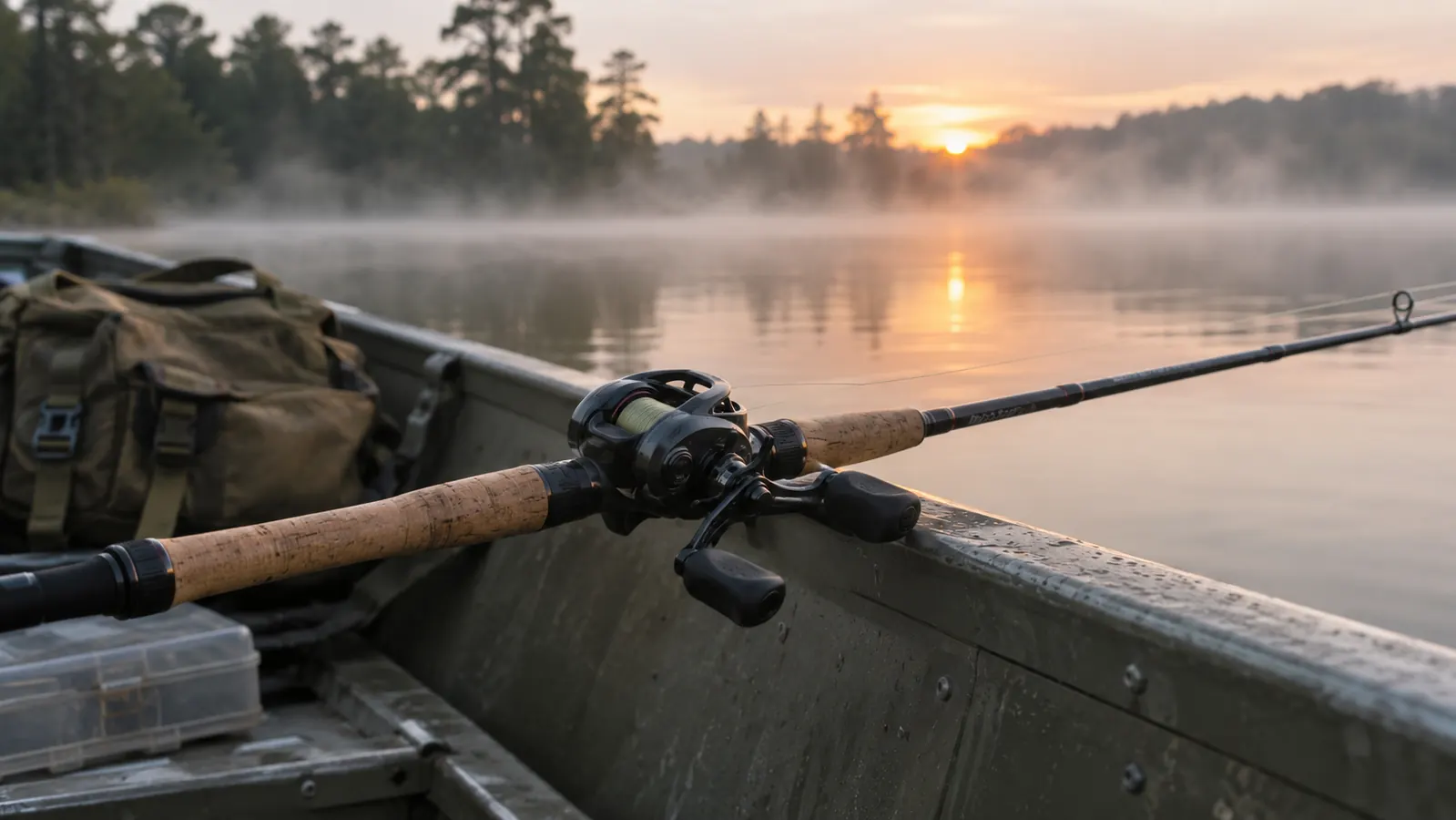
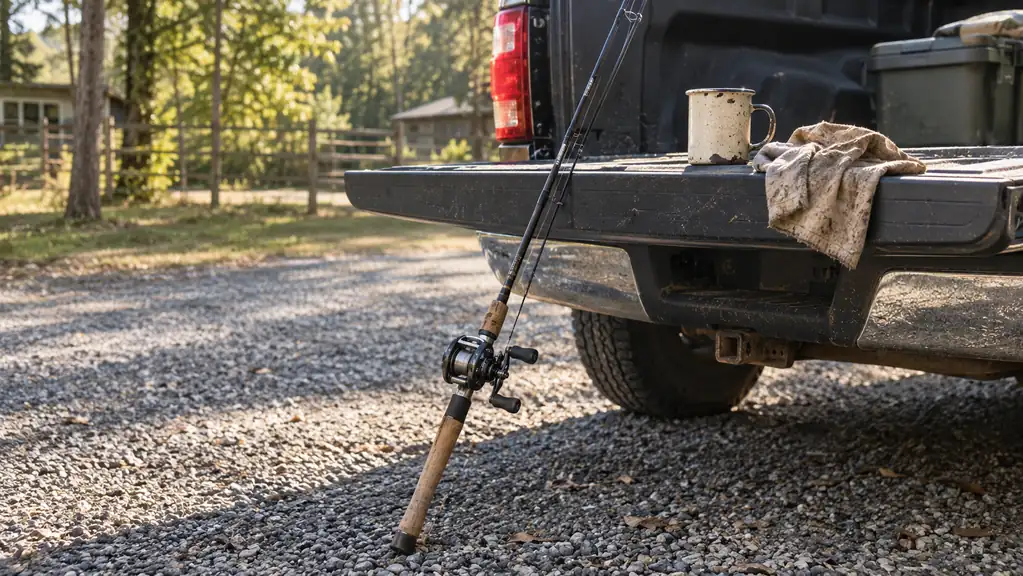
The first honest thing I can tell you about the KastKing Centron Lite combo is that I did not open the box expecting much. I have bought enough bargain combos over forty years to know the pattern. The rod looks fine leaning in the garage and feels like a pool cue on the water, and the reel sounds like a coffee grinder by August. So I laid the rod across my tailgate next to the rod I actually trust, ran a cotton ball through the guides, and told my neighbor I would know more in six weeks. This is what I know now.
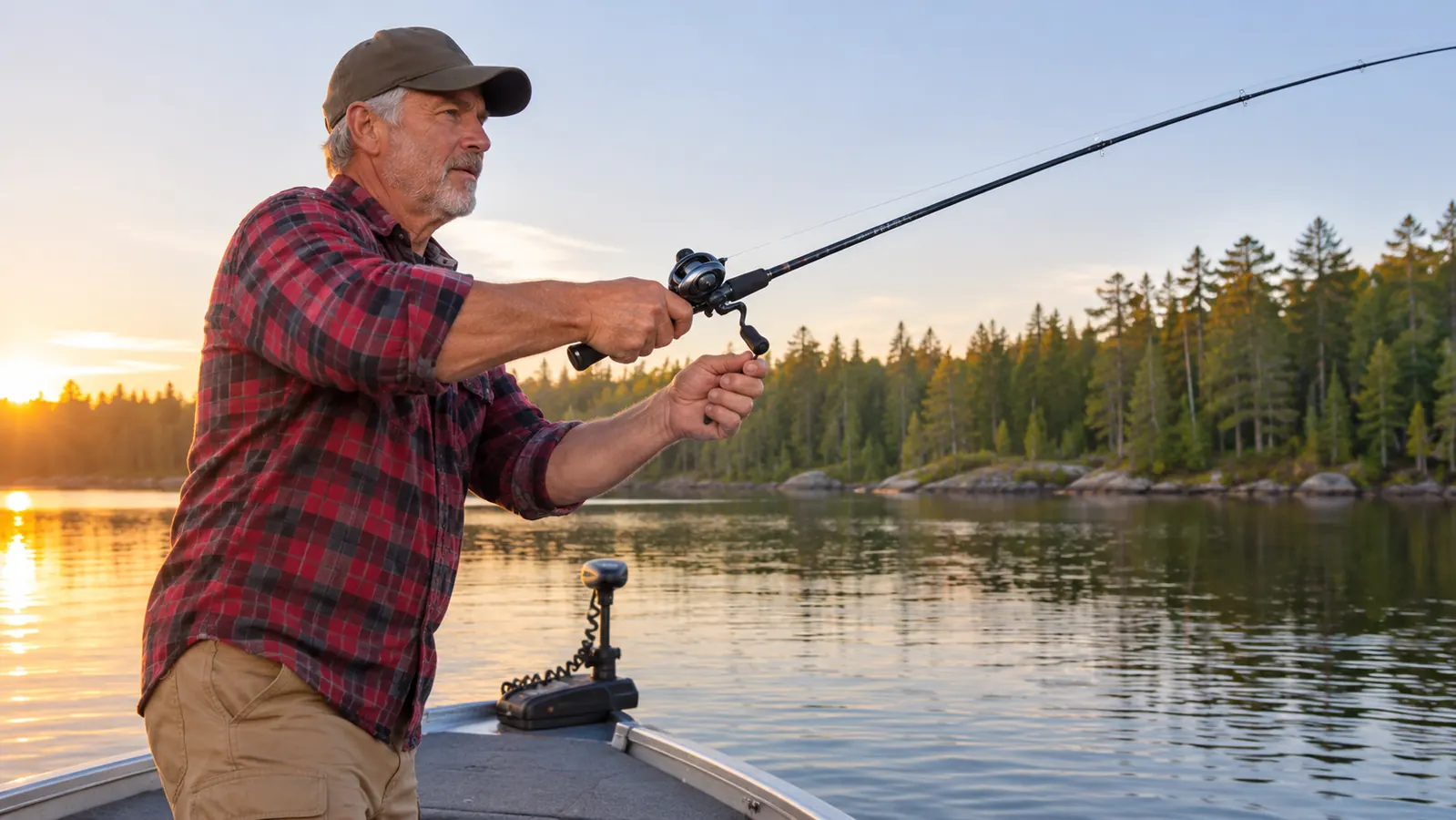
I am Clint Varner. Fifty-four, retired electrical lineman, living outside Florence, Alabama. I fish Wilson and Pickwick mostly, plus a couple of farm ponds when the boat is not worth hooking up. My rig is a 17-foot aluminum jon with a 40 horse outboard and a bow mount trolling motor. My dog Ruby rides along on calm mornings and has learned to stay clear of treble hooks, mostly. I am not a tournament angler. I fish early, I fish often, and I want a rod that works without me having to think about it.
The Quick Verdict
The rod is better than the price point suggests. The reel is where the corners were cut, and it will show up in year two or three. Buy it for the rod.
Amazon Check Today's Price →See What the 7-Foot Medium Heavy Centron Lite Sells For Right Now
Two piece, IM6 graphite blank, split rear handle, Centron Lite baitcasting reel included. Check the current price and the length options before you decide.
Amazon Check Today's Price on Amazon →How I've Used It
The combo went in the boat in late March and stayed there through spring and into summer. Call it thirty trips, mostly two to four hour mornings before the heat came up or before Darlene needed the truck. I threw a squarebill, a half ounce spinnerbait, a Texas rigged craw, and a small swimbait on a keel weighted hook. I fished it around laydowns on Wilson, along the riprap below the dam on Pickwick, and down one rocky point where I lose more baits than I catch fish.
I keep a log, not because I am organized but because my memory for conditions is poor. The first trip was March 22, water still in the low fifties, and I caught two keepers on a craw in six feet of water off a chunk rock bank. The best morning was in May, slick calm on Pickwick, when I put eleven fish in the boat before nine o'clock on a squarebill. The worst was a June afternoon when I donated a spinnerbait to a laydown and spent twenty minutes retying in a crosswind that pushed the boat sideways while I worked. None of that is really about the rod, except that the rod never asked for a single thing on any of those days, and that is the whole job of a working combo.
I did not baby it. It has been laid on the deck, stepped over, rained on twice, and bounced around in the rod locker of a boat that does not ride smooth. The EVA foam grips have collected dirt and sunscreen and still feel like grips. Nothing has come loose. The reel seat has not walked on me under a hard hookset, which is more than I can say for a combo I owned a few years back that would twist in my hand every time I swung on a fish.
What I did not do is fish a full season with it, and I want to be straight about that. Thirty trips is a fair look at a rod. It is not a five year verdict. I will tell you what I saw and where I would expect trouble, and you can weigh that against how you fish.
What the Rod Actually Does Well
The blank is IM6 graphite, and KastKing builds this line in three lengths from six feet to seven feet, all two piece, with split rear handles on the all purpose models. Mine is the seven foot medium heavy, which is the length I would pick for a boat rod anyway. Two piece means it rides in the truck cab instead of standing up in the bed. The joint has not loosened or clicked on a cast, and that is the thing that usually annoys me about two piece rods.
It loads well with a half ounce spinnerbait and a squarebill, and it has enough backbone to drive a hook through a Texas rig without me feeling like I am swinging a broom handle. Sensitivity is where a value rod usually gives itself away, and this one gives a little. I would call it adequate rather than sharp. On a soft plastic bite in eight feet of water I could feel the tick, but I had to be paying attention. My better rod tells me the same thing without asking anything of me.
One morning in April I had a solid fish eat a Texas rig right at the boat on Wilson, and I swung on it with the drag tighter than it had any business being. The rod loaded down into the handle and turned her, and the hook came through the top of the mouth clean. I have lost fish in that exact situation on rods with less backbone, usually because I get excited and swing like I am driving a spike. I also tried a three sixteenths ounce finesse jig on it one slow afternoon and did not enjoy the experiment. This rod wants weight. Under a quarter ounce it stops loading and the cast turns into a guess.
The guides have held up. I checked every one with a cotton ball fresh out of the box and got no snags, and after three months of monofilament plus one spool of braid there is no grooving. The hook keeper sits where it should and the foregrip is long enough that my hand is not halfway onto bare blank when I am working a bait.
The Reel Is Where the Compromise Lives
Here is the part that does not make it into the listing photos. A combo is a rod with a reel bolted to it, and the reel is always where the corners get trimmed. The Centron Lite baitcaster carries a 7.1 gear ratio, a stated max drag of 15.4 pounds, and a line capacity listed at 15.4 pound monofilament. Those are sensible numbers for general bass fishing. What numbers cannot tell you is how a reel feels on day one compared to day sixty.
Out of the box it was smooth enough that I raised an eyebrow. The spool spins free, the cast control is easy to set, and I had it dialed for a half ounce bait inside ten casts. I spooled it with 15 pound mono, right at the listed line weight. The cast control is not the most refined I have used. With a light bait into a headwind I had to thumb it more than I would like, and I did get one professional overrun in April that cost me about ten minutes and some dignity in front of a guy in a Ranger.
I also took the reel apart, which I do with anything I intend to keep. I pulled the spool, wiped the factory grease off the level wind, relubed it, and looked at the drag washers. Nothing was dry and nothing was missing, which at this level is not something I assume. That was in early May, somewhere around the fifteenth trip, and I have done it once since. If you never open a reel, plan on paying somebody to do it or plan on the reel telling you when it is unhappy. Mine has not complained. I also have not fished it in freezing weather, which is where a cheap bearing goes bad first.
Once I moved up to a half ounce and kept the cast control a touch heavier, it settled down and I stopped thinking about it. The drag will stop a bass from getting back into the brush. But drag washers and bearings on a reel at this level are not going to feel the same in year three as they do right now, and that is not a knock on KastKing specifically. It is how combos get built. The rod will outlive the reel. That is my honest expectation.
The rod will outlive the reel. I would rather tell you that now than have you find out on a good fish in three years.
Line, Drag, and the Numbers on the Box
The listing gives you a 7.1 gear ratio, a max drag of 15.4 pounds, a line weight of 15.4 pounds, medium heavy power, EVA foam grips, a rod length of 84 inches, and aluminum, graphite and stainless steel in the build. Hand orientation is offered ambidextrous and right. That is the whole spec sheet. What it does not do is translate any of it into an afternoon on the water, so let me try.
A 7.1 ratio is general purpose speed. It picks up line fast enough to burn a spinnerbait and slow enough to crawl a Texas rig if you work the handle instead of horsing it. Fifteen pounds of drag is more than a two pound bass requires and about what you want when you are fishing laydowns and need to turn a fish away from cover. The 84 inch length gives you casting distance from the bank or the front deck, and it gives you the leverage to move a fish on a hookset.
Where the numbers mislead is durability. Nothing printed on a box tells you how a reel feels after a hundred trips, or whether the drag holds the same on a cold morning hookset. All I can tell you is that mine held for thirty trips, and that I check the handle nut and the drag star every few weeks because that is what I do with any reel I intend to keep.
What Nobody Tells You
First, the twin tip. The listing sells this as a twin tip rod. I fished the seven foot medium heavy configuration for this review, and that is the setup I am describing. If you are buying it for the second tip, understand that a second tip is not a second rod. By design it shares the same handle, the same reel seat and the same butt section, and swapping tips on the water is a two hand job on a moving deck. It is a nice spare setup to have in the rod locker. It is not two rods.
Second, a combo is a package and you cannot upgrade half of it cleanly. If the reel disappoints you in year two, you are not out a reel, you are out a reel plus a rod you have to rebalance. I have done that. It works, but the rod was balanced for the reel that came bolted to it, and a heavier replacement makes the whole thing feel nose heavy in your hand.
Third, and this is the one I would want somebody to tell me, the value is stacked in the rod. If you already own a decent baitcaster, plan on fishing this reel until it annoys you and then moving your good reel onto the rod. That is the most practical path I can give you, and it is not the path the listing suggests.
Fourth is fit. The split rear handle and the EVA foam grips suit my hands, which are a lineman's hands, wide across the palm with thick fingers. If your hands are smaller, the reach from the reel seat to the trigger may feel long. Handle one before you commit, or buy from somebody with a return policy you trust.
Fifth, the line capacity figure is more useful than it reads. Fifteen pound monofilament at the listed capacity means you can spool it, fish it a while, and respool without fighting for backing. I ran fifteen pound mono with a mono backing under it and never came close to running out on a cast or on a fish. I did fish braid for a stretch in June, and if you go that route, fill most of the spool with mono first. Braid on a spool this size costs money and it will slip on the arbor if you do not. That is not a knock on KastKing. It is how braid behaves on any reel this size.
What I Liked
- Rod is genuinely good for the category: loads well with half to three quarter ounce baits and has real backbone on a hookset
- Two piece build travels in a truck cab and the joint stayed tight through thirty trips
- EVA foam grips and the reel seat held up to rain, dirt and a summer of deck abuse
- 7.1 ratio and 15.4 pounds of drag cover everything from a spinnerbait to a Texas rig
- Guides showed no grooving after three months of monofilament and braid
Where It Falls Short
- The reel is the weak link long term. Drag washers and bearings are where the first complaint will come from
- Sensitivity is average. You feel soft plastic bites, but only if you are paying attention
- Cast control wants more thumb on light baits in wind than a better reel does
- The second tip is a spare configuration, not a second rod, and swapping on the water is a chore
Who This Is For
This is for the angler who wants one baitcasting combo to keep in the truck or on the front deck and does not want to think about it. Bank fishermen who need distance. Kayak guys who need two pieces. Somebody getting into baitcasting who wants a rod that will not punish them while they learn to thumb a spool. If you fish a couple of weekends a month on Wilson or a farm pond, this KastKing combo will do the job and you will not spend your mornings retying tackle.
It also fits the guy who already has a good reel sitting in the garage doing nothing. Buy the combo, fish the included reel until it irritates you, then put your better reel on a rod that is better than the one you expected at this level.
Who Should Skip It
Skip it if you fish four or five days a week and expect a reel to stay glass smooth for three seasons. Skip it if you need real sensitivity for finesse work in deep water, because this rod will make you work for that bite. Skip it if you are a dedicated flipper or a dedicated crankbait angler, since one seven foot medium heavy does neither job especially well.
And skip it if you are the sort who will be bothered by a cast control that asks for more thumb than a premium reel. That is not a defect. It is a tradeoff at this level, and I would rather you know it going in than find out on a windy Saturday with a spinnerbait in the top of a sycamore.
Check the Centron Lite Combo Before Your Next Morning on the Water
Seven foot medium heavy, two piece, Centron Lite baitcasting reel included. Check the current price and confirm which length and hand you want before you order.
Amazon Check Today's Price on Amazon →