
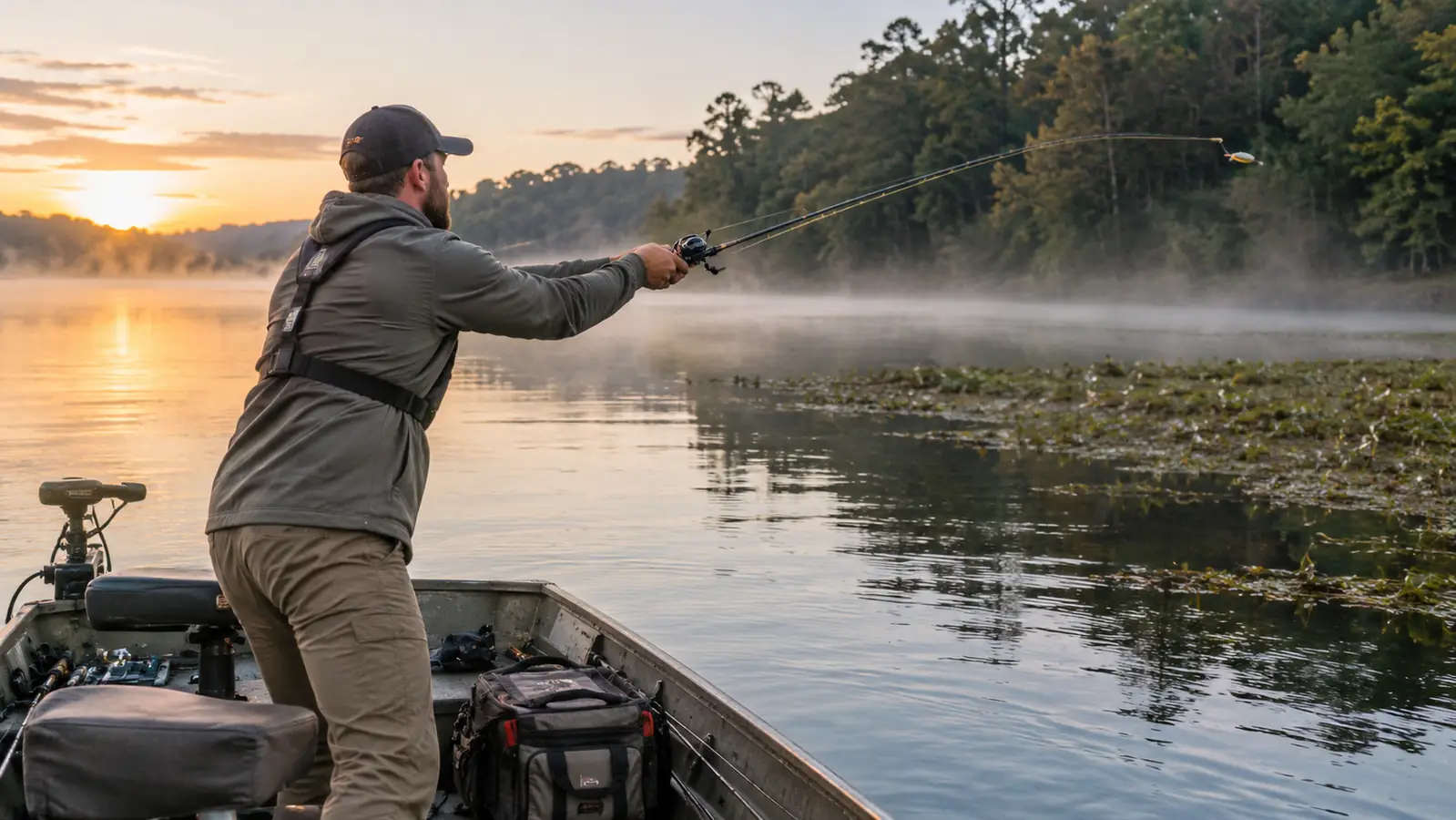
I have been fishing bass on Wilson and Pickwick since I was a kid, and I still learn something every time I tie on a lure. Last spring I started carrying a KastKing Centron Lite combo in the rod locker of my 17-foot aluminum jon boat for the short trips after work. It is a baitcasting rod and reel combo, not a spinning outfit, and that matters for the way I fish bass. If you are tired of fighting a spinning reel in the wind or wanting more control around cover, this is the reason list I wish I had read before I bought my first baitcaster.
I am not going to tell you a baitcaster is the easiest reel to learn. It is not. I backlash them same as anybody. But for bass, a baitcasting combo puts the rod and reel in a package that handles heavier line and heavier cover with less fuss. The Centron Lite is a 7-foot medium-heavy, two-piece rod with a matched KastKing reel, and the numbers on the spec sheet line up with the way I fish. Here are ten reasons it earns a spot in the boat.
The 7-foot medium-heavy is the one I reach for first
The KastKing Centron Lite combo pairs an 84-inch IM6 graphite rod with a matched baitcasting reel. If you want one rig for bass cover and open water, start here.
Amazon Check Today's Price on Amazon →A 7-foot medium-heavy rod handles bass cover without feeling like a pool cue
Rod length is 84 inches, and the power is medium heavy. That is a useful middle ground for bass. It has enough backbone to pull a fish away from a laydown, but it is not so stiff that I cannot cast a lighter Texas rig around a farm pond. On Wilson, I fish a lot of chunk rock and brush, and the 7-foot length gives me a little more reach when I need to steer a bass around the boat. A shorter rod is easier in tight quarters, but the 84-inch rod is the one I leave rigged.
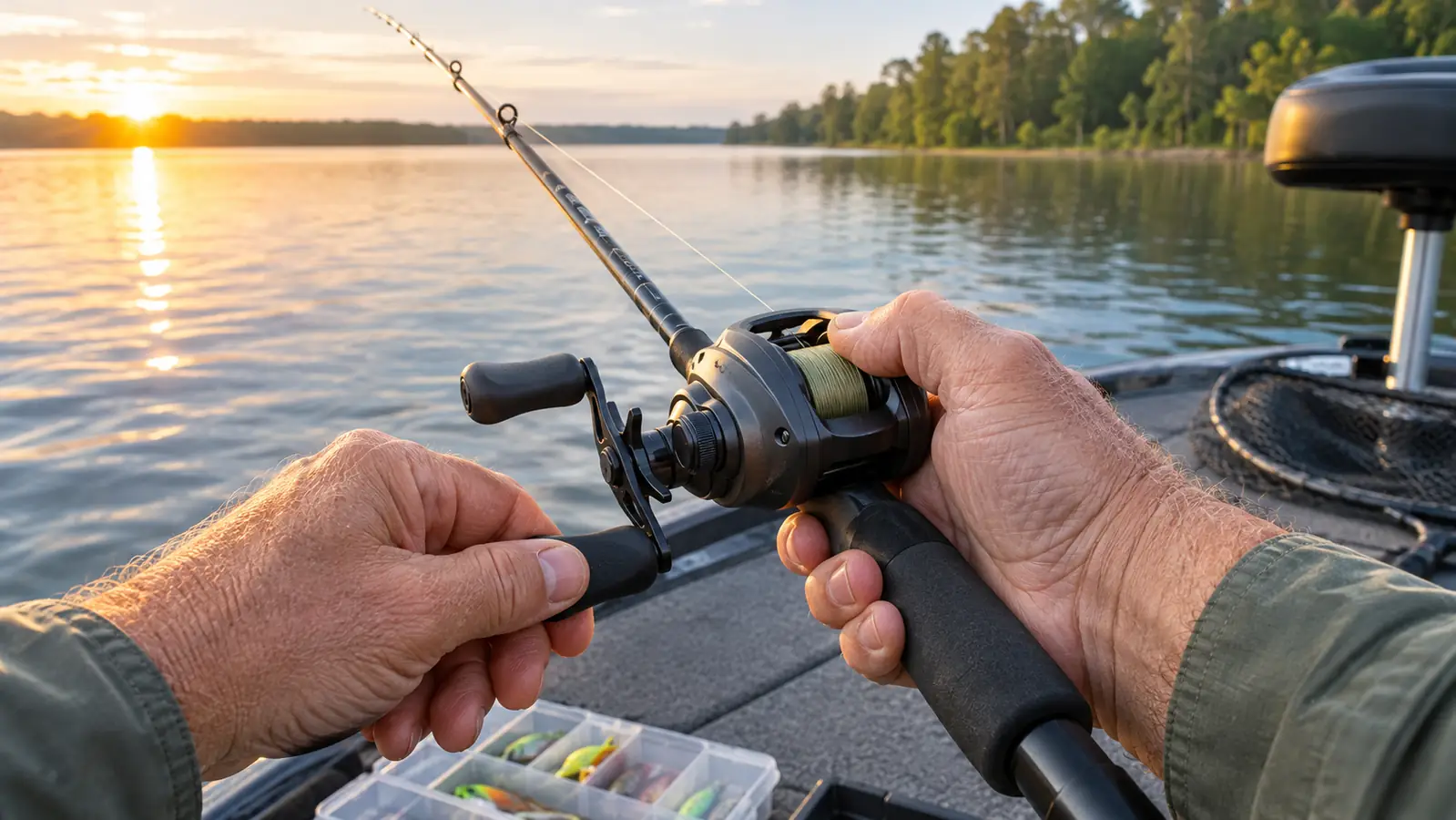
The 7.1 gear ratio picks up slack before a bass gets to the timber
Gear ratio is 7.1. That is not the fastest reel on the shelf, and I do not need it to be. What I want is to pick up line quickly when a bass eats a Texas rig and turns toward me. With a slower reel, I sometimes feel the fish before I catch up to it. The 7.1 ratio takes up line at a steady pace, and it still has enough torque to grind a bait through grass. I noticed it most on windy days when a bow in the line gives a bass a head start.
15.4 pounds of drag gives you a real chance in grass
The reel is rated for 15.4 pounds of maximum drag. Bass do not run like saltwater fish, but they do find grass and wood. When a good fish buries in a hydrilla edge, I want drag that I can lean on without it going slack. I set mine lighter than the max and tighten as needed. The point is that the reel has room above what a bass usually needs. That reserve matters when a fish makes one more run at the boat and I have to turn its head.
The two-piece 84-inch rod fits a 17-foot jon boat
All the Centron Lite combos are two-piece, and the 7-foot model breaks down to fit in my truck or along the gunwale of the jon boat. I do not have a rod locker that swallows a one-piece 7-foot rod, and I am not going to buy a bigger boat just to store a rod. The two-piece design also means I can keep it in the cab on a work trip and not worry about it riding in the bed. The joint has stayed tight for me on short trips, and I check it out of habit.
IM6 graphite lets you feel a Texas rig ticking bottom
The blank is IM6 graphite. That is the part of the rod that tells you what the lure is doing. On a Texas rig, I want to feel the weight tick across rock and then stop on something softer. A rod with no feel makes that impossible, and you end up dragging a bait through cover blind. The Centron Lite is not a high-dollar custom rod, but the graphite blank is sensitive enough that I can tell the difference between a hang and a bite most days. That is what I ask for at this level.
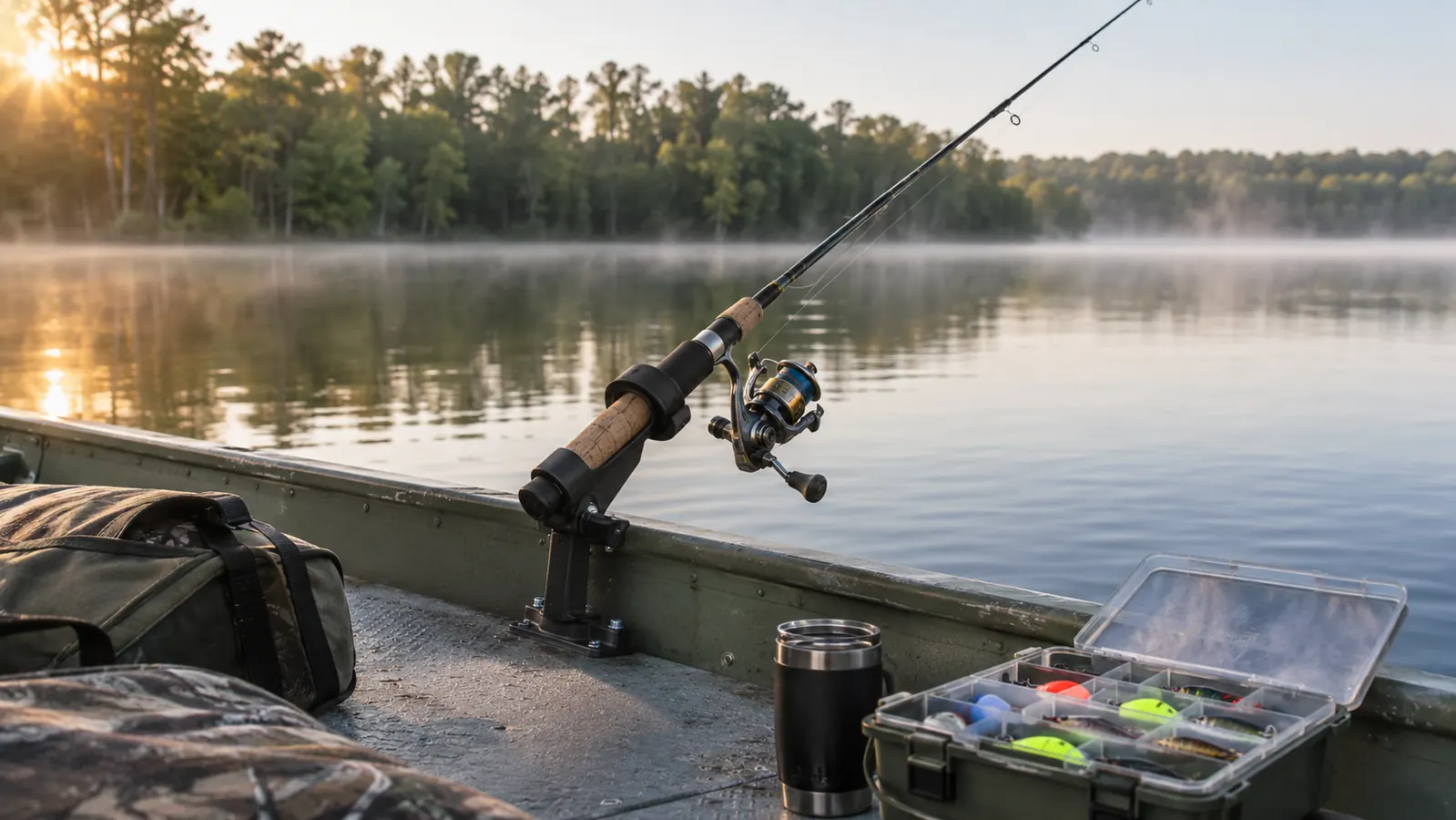
EVA foam grips stay usable with wet hands
The grips are EVA foam. In Alabama, a boat seat and a rod handle both get wet, and a slick handle is a nuisance when you are trying to set the hook. EVA foam gives me something to hold onto when my hands are wet from landing a fish or grabbing a soft drink out of the cooler. It also does not get as hot as some materials when the rod sits on the deck. I still wipe it down at the end of the day, but the grip has held up.
The split rear handle gives you leverage on a hookset
The 6-foot to 7-foot all-purpose combos use a split rear handle. That means the rod has a shorter section behind the reel seat and a longer section in front. I like the way it balances in my hand when I am working a bait with the rod tip down. On a hookset, the split grip lets me put my hand where I need it without the butt of the rod getting in the way. It is a small thing, but I notice it after a few hours of casting.
15.4-pound mono capacity keeps line changes simple
The reel is rated for 15.4-pound line, and it is built around monofilament. That is a simple setup for a bass angler. I can spool up with a line I trust, retie when I get a nick, and not worry about a complicated line system. The capacity matches the rod's medium-heavy power, so I am not putting line on that is too light for the cover I fish. I still check my line after every fish, but the combo is set up for the kind of mono I use on Wilson and Pickwick.
The matched reel takes the guesswork out of the combo
The combo includes a Centron Lite baitcasting reel matched to the rod. I have bought rods and reels separately and spent more time than I care to admit trying to get them to feel right together. When the maker matches them, the balance and the line capacity are already in the same neighborhood. The reel is right-handed, and the hand orientation is listed as ambidextrous and right, so I can set it up the way I cast. That is one less decision at the boat ramp.
One rig covers more bass water than three specialty setups
I can throw a Texas rig, a spinnerbait, or a small jig on this combo and feel like I am not fighting the rod. The 7-foot medium-heavy rod and the 7.1 reel are general-purpose bass tools. That is what I want when I have four hours after work and one rod in the truck. I am not going to win a tournament on one combo, but I can cover a bank, fish a brush pile, and make a few casts at a dock without changing rods. The KastKing Centron Lite has become the rig I grab when I do not know what the bass are doing.
What I'd Skip
I would skip the idea that this is a beginner's answer to every bass problem. A baitcaster takes practice, and you will backlash it. I would also skip the 6-foot model if most of your fishing is big water and wind, because the 84-inch rod gives you more reach and a little more forgiveness on a long cast. And I would not buy it as a dedicated frog rod for thick mats. The 7-foot medium-heavy is a general bass rod, not a broomstick. If you need to punch heavy cover all day, look for a heavier rod. For everything else, the KastKing Centron Lite is a sensible place to start.
The 7.1 gear ratio and 15.4 pounds of drag are the two numbers I care about when a bass turns toward a laydown.
One bass combo, ten reasons, fewer decisions at the ramp
The KastKing Centron Lite pairs a 7-foot medium-heavy IM6 graphite rod with a matched 7.1 baitcasting reel. It is the rig I leave in the boat for short trips on Wilson and Pickwick.
Amazon Check Today's Price on Amazon →