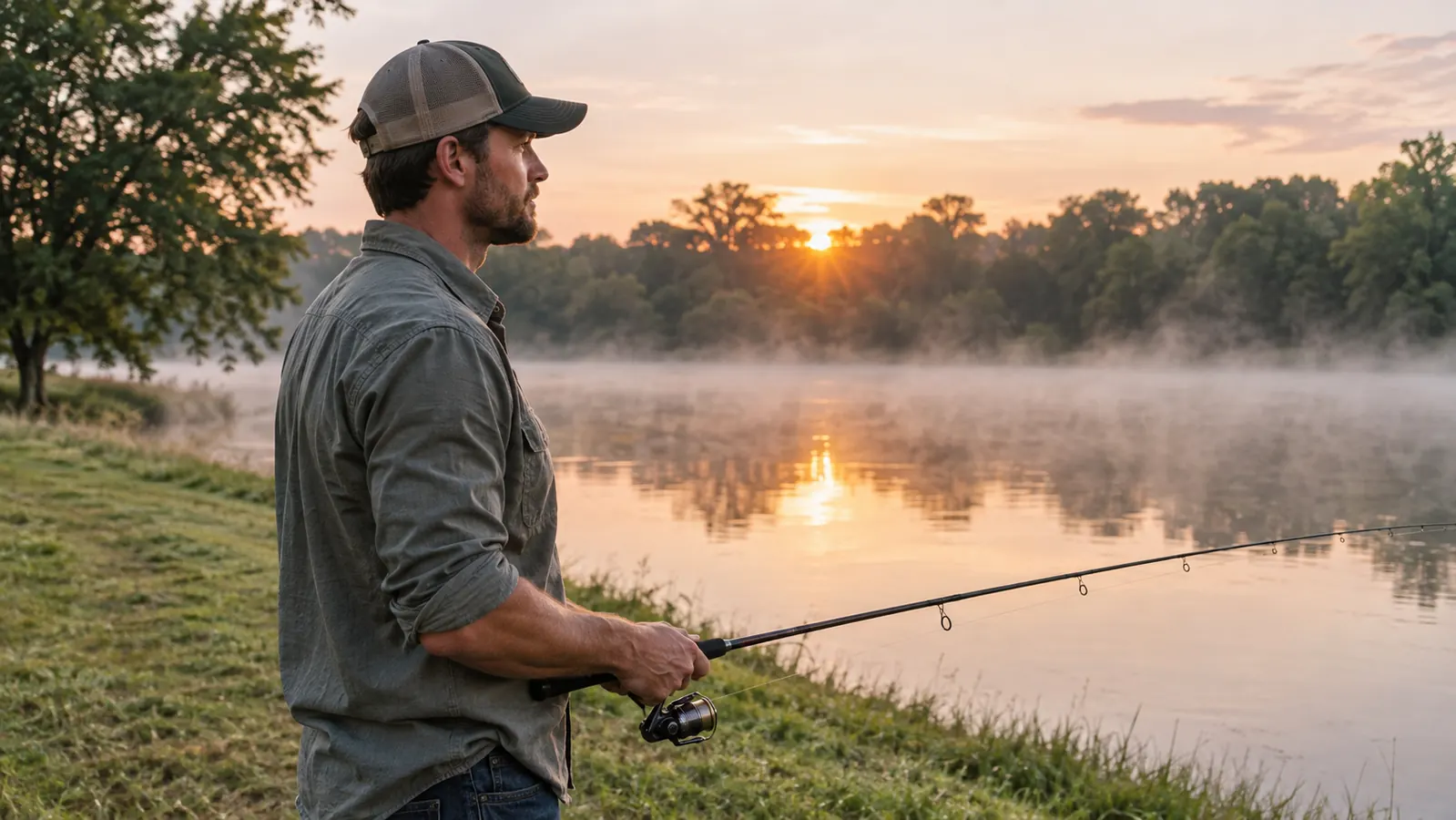
There is a farm pond outside Florence that gets fished hard. Bank pressure, kayak pressure, and two retired guys who are there every evening whether the bass cooperate or not. By mid-July those fish have seen every crankbait and spinnerbait that goes past their noses. They follow a bait to the bank and turn away. What they will still eat is a plain soft plastic worm hooked in the middle and fished so slow it barely looks alive.
A wacky rig is about as simple as bass fishing gets. You take a straight worm, run the hook through the middle instead of the nose, and let both ends flop free. No bullet weight, no bead, no rattle. The worm falls with both halves quivering, and a pressured bass eats it on the drop more often than it eats anything else you own. I have thrown a lot of plastics at pond fish, and the one I keep coming back to is the 5-inch YUM Dinger from Yum Lures.
The hook slot formed into the body is what makes it work for this. Push the point through that slot and it comes out the far side clean, so the bait hangs straight instead of bunching up and spinning. The plastic is soft enough to quiver on a slow fall and tough enough to survive several fish before you have to change it.
The bag that lives in my boat from April to November
Five inches, one hundred to a pack, and a hook slot that takes a middle hook clean. This is the worm I tie on when the pond goes quiet and nothing else is moving fish. Check today's price on Amazon and keep a bag under the seat.
Amazon Check Today's Price on Amazon →Step 1: Start With the 5-Inch Dinger, Not a Finesse Worm
Pond bass are not big, but they are not stupid either. A 4-inch finesse worm gets eaten by dinks and ignored by anything with shoulders. A 7-inch worm is more plastic than most pond fish want to commit to. Five inches sits in the middle, which is what the Dinger is, and it roughly matches the bluegill and crawfish those fish are already eating. That size also casts fine on the medium-heavy rod you probably already have rigged in the garage.
The hundred count matters more than it sounds. I used to buy grubs in little five-count bags and treat them like they cost a week's pay, which made me fish them scared. When you are not counting worms you fish them properly. You let the bait fall all the way down. You cast into the snaggy spot instead of skipping it. Yum Lures puts 100 in a bag, and every bag I have opened has been soft and straight, not dried out and bent from sitting on a shelf.
The Dinger is a straight-tail worm with a slot built into the body for the hook. That slot is the reason I rig this bait wacky instead of nose-hooked. Run a hook through the middle of a solid stickbait and the plastic grabs the shank and bunches, so the worm hangs crooked and spins on the way down. Run the point through the slot and it exits the far side clean. The bait hangs level, falls level, and the hook sits in a channel instead of buried in solid plastic, which is where better hookups come from.
Step 2: Find the Exact Middle and Run the Hook Straight Through
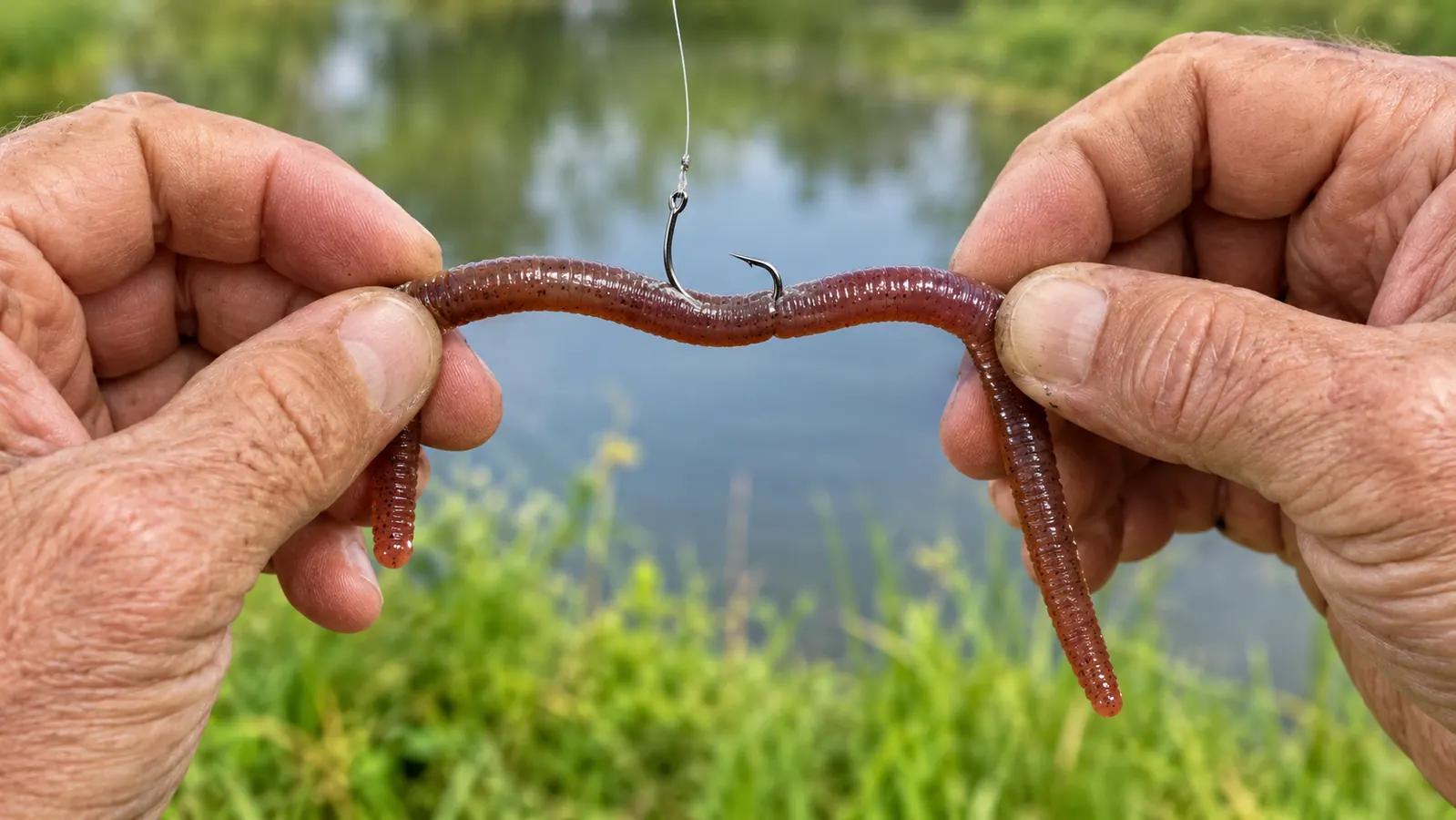
Finding the middle is the part people rush. Fold the worm in half and pinch it. Where your fingers land is the balance point. Miss it by half an inch and the worm noses down or tails down on the fall, and the action goes flat. On a 5-inch Dinger the middle is two and a half inches from either end, which sounds obvious until you watch somebody rig one in a hurry.
Push the hook point into the side of the worm at that pinch mark, cross through the body, and bring the point out the other side. The hook should sit across the worm with the point clear of the plastic. Some days I run it through the slot, some days I run it just forward of the slot. Either way, hold the rig up by the hook and look at it. If one end droops, you missed the middle and you should redo it.
An O-ring around the middle is the other way, and it saves worms. Slide the ring on, then hook under the ring instead of through the plastic. A worm rigged that way lasts a dozen fish instead of three. The tradeoff is a couple of extra seconds per rig and a worm that can slide on the ring after a hard bite. I use O-rings when the bite is hot and bare hooks when I am probing new water and expect to lose a few.
Step 3: Pick a Hook With an Open Gap and a Sharp Point
A wacky hook wants a wide gap. The worm hangs off the middle of the hook, so the gap has to clear the body of the bait on the hookset. A standard offset worm hook has too narrow a gap and you will miss fish with it all afternoon wondering why. I use a wide-gap hook or an octopus-style hook in the 1/0 to 2/0 range for a 5-inch worm. A needle point gets through the plastic without punching a hole big enough to tear out on the first cast.
Weedless matters on a pond with pads and brush. A weedless wacky hook with a wire guard lets you cast into cover that would eat an open hook every time. The cost is hookup percentage, because the guard gets in the way of the point. If I am fishing open water or a dock edge with nothing to snag, I fish an open hook and take the better hookset. If I am pitching into lily pads, the guard goes on and I accept losing a fish or two.
Whatever you tie on, keep it sharp. A hook that has been sitting in a wet box since May is not sharp, no matter what the package said when it was new. I run a file over a hook two or three times a season and I replace anything that has been bent out once, even if it bent back straight. It is cheap insurance against the one fish you actually wanted.
Step 4: Fish It Weightless First, Then Add Weight Only If You Have To
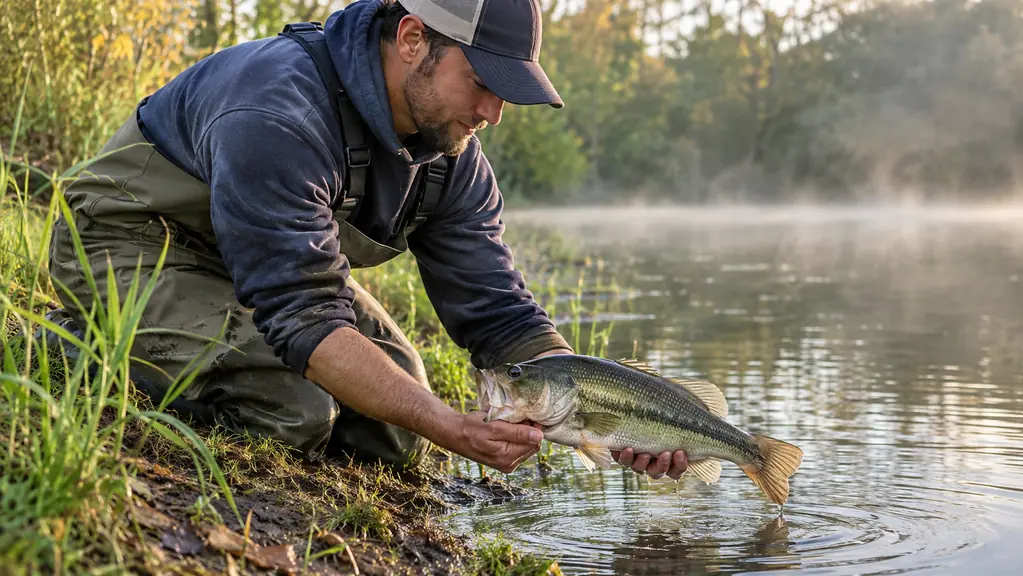
Weightless is the default, and it is where the wacky rig earns its keep. A 5-inch Dinger with no weight on it falls slow and shimmies the whole way down. In a pond that runs six feet deep or less, that slow fall is the entire presentation. The fish see a worm hanging and fluttering in the water column, and they eat it because it does not look like anything that has been thrown at them since April.
Wind and depth change the math. If there is a chop on the water and the boat is swinging, a weightless worm gets pushed around and you lose contact with it. A nail weight shoved into the head end, or a wacky jig head, puts the bait down faster and keeps it in front of fish holding on the bottom. I add weight when I am fishing deeper than eight feet or when the fish have quit coming up for anything.
Do not overdo it. The most common mistake I see on the water is a wacky rig weighted so heavy it drops like a rock and lands with a thud. The fall is the bait. If the worm is not fluttering on the way down, you have taken the one thing that works and thrown it away. I keep nail weights in the boat and use them maybe two trips out of ten.
Nine out of ten pond bass I catch on a wacky worm eat it on the first fall, before the bait ever gets near the bottom.
Step 5: Fish a Slack Line and Watch the Line, Not the Bait
Cast it out and let it fall on a semi-slack line. Watch the line where it enters the water, not the worm. Most bites on a wacky rig happen on that first drop, and you will not feel the majority of them in your hand. The line will jump, tick, or start sliding sideways. If it does anything it is not supposed to do, reel down until the line comes tight and lean into the fish.
If the worm makes it to the bottom, lift the rod tip slowly until you feel it come off the bottom, then let it fall again. That is the whole retrieve. Slow lift, slack, fall, wait. It is boring and it works. The guys who fish a wacky worm like a jerkbait, popping it up and down, catch a fraction of what the guys who let it sit catch.
On the hookset, do not swing for the fence. The hook is in the middle of the worm with an open gap, and there is not much plastic between the point and the fish. Reel down until everything is tight, then sweep the rod. Setting like you are Texas rigging a ten-inch worm pulls the bait out of more mouths than it pins shut.
What Else Helps
Line matters less than people argue about, but it still matters. I fish 8 to 10 pound fluorocarbon on a spinning rod for weightless wacky, and 12 to 15 pound braid when I am working around pads. Fluorocarbon sinks and has a little stretch, which helps keep a hooked fish pinned on a short line. Braid has no stretch and cuts through vegetation instead of loading up with it. Both catch fish. Neither one saves you if the drag is locked down.
The rod wants a medium-light spinning blank with a fast tip. You are casting a bait with no weight on it, so a stiff rod will not load and your casts will come up short all morning. The fast tip also lets you see the line tick on the fall, which is the whole skill in this technique.
Keep the bag out of the sun. Soft plastic that has cooked in a black truck console all summer gets brittle and tears off the hook on the cast. I keep a larger bag under the seat and rotate a handful into a small pocket box so I am not digging around in the bottom of the boat every time I break one off. A little scent on the bait does not hurt either, especially in water that gets as much pressure as a neighborhood pond.
Carry pliers that can cut a hook. A wacky hook buried in a finger is a real thing that happens, usually on a windy cast with a wet hand, and it happens more with an open hook than a guarded one. That is not a reason to fish scared. It is a reason to keep the cutter where you can reach it.
There is nothing complicated about this rig, and that is the point. Pond bass that will not touch a jig dropped on their heads will eat a worm hanging in the water column. The 5-inch YUM Dinger from Yum Lures is the version I settled on after trying plenty of others, mostly because the hook slot keeps the middle hook sitting straight and partly because I am not rationing them out of a five-count bag.
Rig it in the middle. Hook it with an open gap. Fish it weightless. Watch the line. Four things. Do those four things on a pressured pond in July and you will catch fish that the guys throwing crankbaits wrote off two hours ago.
Keep one bag in the boat and one in the truck
A hundred 5-inch YUM Dingers covers a full season of pond trips, and the hook slot makes a wacky rig sit straight every time you tie one on. Check today's price on Amazon before your next morning on the water.
Amazon Check Today's Price on Amazon →