
Short answer first, because that is what I want when I am standing in the aisle with a hook in one hand. The YUM Dinger, from Yum Lures, is the worm that lives in my boat. The Yamamoto Senko is the one I keep in a side pocket for the days when the bass have already looked at everything else. Both are five inch stick worms. Both catch fish. They are not the same bait, and the gap between them shows up on the third or fourth cast, not the first one. If you want a bag you can fish hard all season without babying it, the Dinger is the easy call. If you want the best falling stickbait ever poured, you already know where I land on the Senko.
I am Clint Varner, fifty four years old, retired out of the line trade, living outside Florence, Alabama. I fish Wilson and Pickwick out of a seventeen foot aluminum boat with a forty horse outboard and a bow mount trolling motor, and I fish a few farm ponds from the bank when the water gets crowded. I have been throwing soft plastics since I was a kid, so about forty years of it now. In that time I have watched a lot of worms get popular and then go quiet. What I care about is whether a bait survives a morning and whether it still catches fish that have been caught before.
| YUM Dinger | Yamamoto Senko | |
|---|---|---|
| The fall | Falls quicker and stiffer, more of a drop than a dance | Salt heavy and slow, shimmies and flutters the whole way down |
| Hook slot | Molded slot down the back that lines the hook point up for you | No slot, you seat the hook by eye and by feel |
| Durability | Survives several fish and a few hundred casts | Soft enough that one good fish or a bluegill can ruin it |
| Baits in the bag | One hundred per pack | A much smaller count, and you notice when they start tearing |
| Rigging | Texas, Carolina and wacky, weighted or weightless | Texas, Carolina and wacky, weighted or weightless |
| Salt load and density | Lighter and firmer in the water | Heavy salt load, dense, sinks with a different attitude |
| Skipping under docks | Doable, but it takes more effort to load the rod and send it | Density makes it the easier one to skip on a low cast |
| Clear, pressured water | Gets bit if you slow down and check your hook point | The bait those fish were raised on |
| Best for | Bank fishing, docks, and a bag you fish hard all day | Clear water and finicky fish that want a slow fall |
Read that table the way I meant it. The Senko wins the argument about how a stickbait should fall, and it is not close. The Dinger wins the argument about what happens after the fall, when you have to cast it again, and again, and again, into the same stump bed. Those are two different questions. Most side by side comparisons mash them into one so they can crown a winner and move on to the next page.
One more piece of context. I did not set out to like the Dinger. A buddy left a bag in my boat one spring and I am not the kind of man to throw away a worm. I fished it for a month out of stubbornness before I admitted it was doing the job. Same story in reverse with the Senko. I resisted that one because everybody talked about it like it was handed down on stone tablets. Then I watched a fish come up three feet in clear water to eat one and I stopped arguing.
Where Yum Lures Wins
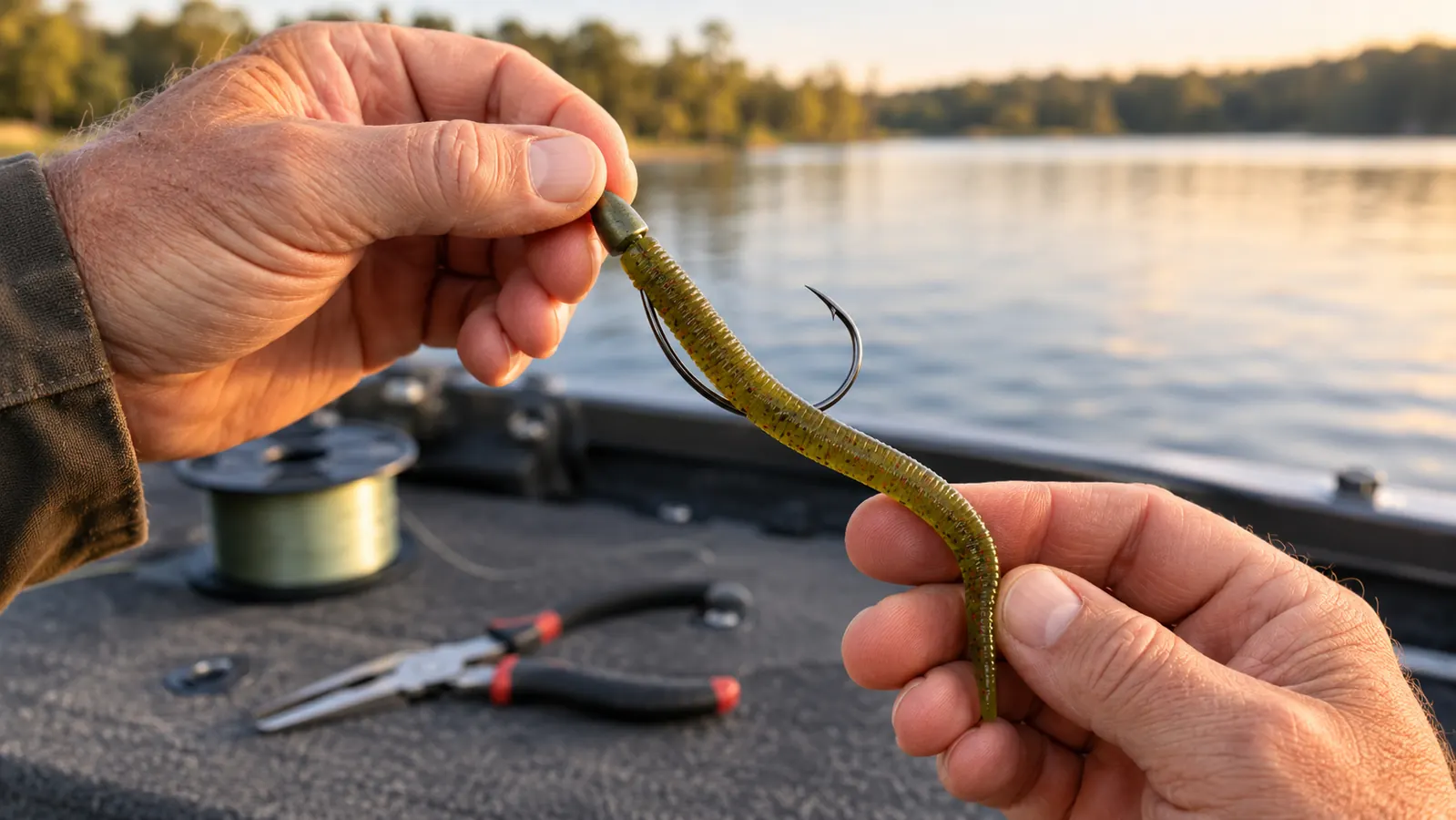
The hook slot is the reason I started buying Dingers by the pack instead of by the handful. On a Senko you seat the hook by eye. Push it through the nose, run it down the middle, bring the point back out and hope it lays straight in the plastic. Do it wrong and you lose the fish on the hookset, not on the fight, and you never get an explanation. The Dinger has a molded slot down the back that lines the point up for you. I can rig one in the dark in the back of the truck and know the point is sitting where it needs to sit. That sounds like a small thing until you have done it four hundred times in a season.
Second is the plastic itself. The Dinger is firmer than a Senko, and firmer means it survives. I have thrown one Dinger for most of a morning on Wilson in July, caught six keepers and a pile of short fish on it, trimmed the torn tail off with my teeth, and kept going. I have also watched good anglers baby a Senko through a whole flat because they did not want to lose it in a brush pile. Fishing careful catches fewer bass than fishing a lot. That is not an opinion, that is just time on the water.
Then there is the bag. A hundred baits in a pack changes how you fish, and it changes it for the better. You skip it under a dock and you do not flinch when it hangs. You let a pond full of spotted bass tear one up and you tie on another without thinking about it. Yum Lures built a bait that a man can afford to lose, and that freedom shows up in the cast you would not otherwise make. Some of my best fish have come on casts I only made because I was not worried about the bait.
Where the Yamamoto Senko Wins
The fall. Full stop. The Senko is salt loaded and dense, and when it hits the water it goes down with a shimmy and a rock that I have not found in another stickbait. It falls slower and flatter than the Dinger, and it keeps moving the entire way down. Bass eat it on the drop more often than they eat it on the bottom. On Pickwick in June, in water clear enough to see eight feet, I have watched fish rise and take a Senko that was doing nothing but sinking on a slack line. The Dinger falls, and it falls fine, but it does not dance.
The Senko also skips better. That density carries it under a dock or a laydown where a lighter bait stalls out, and from June through September a lot of the fish I find are sitting under exactly that kind of cover. And when the water is clear and the fish have been looked at since April, the Senko is the bait they were raised on. I keep four or five in a side pocket, not a bag. I put one on after I have thrown everything else at a school and gotten followed without a bite. Saying the Senko is the better finesse bait is not a knock on the Dinger. It is just true, and pretending otherwise would make the rest of this page worthless to you.
The worm that is still tied on after the fourth cast
A hundred to a pack, a hook slot that does the aiming for you, and a plastic that holds up to docks, stumps and short strikes. That is the bait I replace last, not first.
Amazon Check Today's Price on Amazon →The Fall Is the Whole Argument
Everything about a stickbait is the fall. You cast it, you let it sink, you watch the line, and you wait for the tick. If the bait goes down straight and dead, a bass has nothing to chase. If it rocks and stalls and slides sideways on the way down, a fish sitting under a dock will come up and eat it. That is the Senko's entire reputation and it earned every bit of it. The salt, the density and the softness work together to make a bait that moves on the drop without you doing a thing.
The Dinger answers that with a different approach. It is firmer, so it drops a little quicker and a little stiffer, and you have to work to get that glide out of it. Where it makes up ground is on the bottom and on the lift. A slow drag with a Dinger on a Texas rig across a pea gravel flat gets bit, and it gets bit by fish that already watched a Senko fall past them that morning. I also fish it weightless around grass and let it tick down through the stems. That is a different presentation, not a worse one, and on some days different is the only thing that works.
I have fished one Dinger for a whole morning on Wilson and never retied. I have never once done that with a Senko.
How I Set Them Up
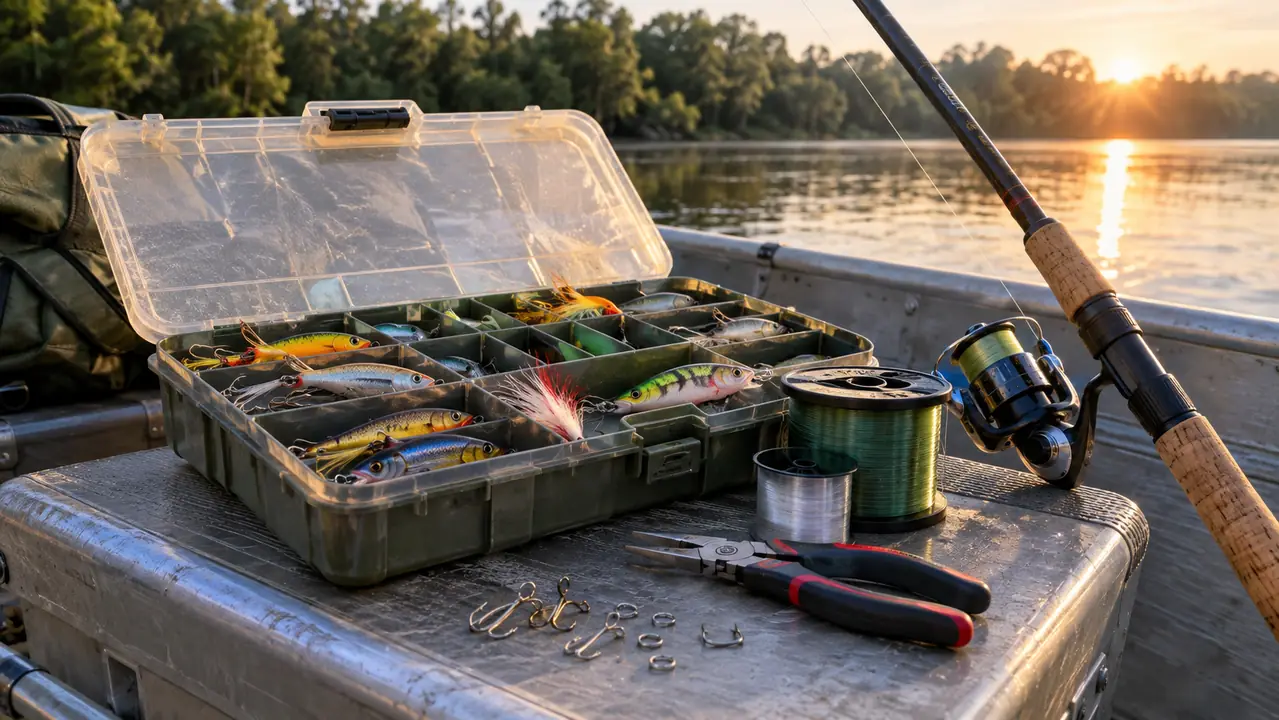
Texas rig, both of them, on a medium heavy baitcaster with fifteen pound fluorocarbon. I use an extra wide gap hook and I check the point every few casts, because soft plastic slides down the shank after a fish and the next hookset goes into nothing. On the Dinger the slot does the aiming for you. On the Senko you are the slot. Wacky rigging, I go to a spinning rod with eight pound line and a small hook through the middle of the bait. Both baits will take that setup and both will catch fish on it.
How I work them is where the two split again. The Senko I cast, let fall on a semi slack line, and watch. I do not move it until the line ticks or jumps. The Dinger I fish faster on the way down and slower on the bottom. Lift, drag, let it settle, take up the slack, do it again. Around grass I let it tick down through the stems on a tight line so I can feel the take. If you fish a Dinger like a Senko you will catch fish. If you fish a Senko like a Dinger you will miss fish, because you will be moving a bait that was built to do its work while it falls.
What I Liked
- One hundred baits per pack, so losing one does not change your day
- Molded hook slot keeps the point lined up on the cast and the hookset
- Firmer plastic survives docks, stumps and short strikes
- Rigs Texas, Carolina or wacky, weighted or weightless
- Still gets bit by pressured fish when you slow down and check your point
Where It Falls Short
- Falls stiffer than a Senko and does not shimmy the same way
- Lighter salt load, so it drops quicker in deep water
- The slot wears after a few fish and the bait slides on the shank
- Not the bait I reach for in clear, flat, heavily fished water
What the Fish Tell You
A follow is information. If a bass comes up behind a bait and turns away, the bait is close to right and the fall is wrong. That is when I switch. If fish are following the Dinger to the boat and peeling off, I put on a Senko and let it do the slow drop. If they are eating the Dinger on the lift, I leave it alone and keep casting. The mistake I see most is a man switching baits when he should be switching speed. Half the time the bait was fine and the retrieve was wrong.
The other tell is how the bait comes back. If I reel in a Dinger that is torn in half at the slot, a fish hit it and I never felt it. That happens with both baits, and it happens more in cold water when fish are sluggish and just hold on. Checking the bait after every cast is not fussy, it is how you find out you are getting bit. I have probably caught a third of my better fish in the last ten years on a bait I checked, felt was chewed, and recast with more attention.
Who Should Buy Which
Buy the YUM Dinger if you fish from the bank, fish docks and brush, or go through soft plastics fast enough that you have stopped counting them. It is the bait I would hand a guy who is just getting into stickbaits, because a molded hook slot forgives a sloppy rig and the plastic forgives a bad cast into a tree. Buy the Yamamoto Senko if you fish clear water, if the fish get looked at all weekend, or if you want the best slow fall you can get and you are willing to baby the bait to get it. Plenty of anglers carry both and never think about it again. That is what I do, and it has worked for about forty years. Yum Lures gets the bulk of my money and the Senko gets the last twenty minutes of a tough morning.
The one that stays on the hook when the bite gets stupid
Hook slot, firm plastic, a hundred to a pack. It is the stickbait I restock first and worry about last, and it is the one that keeps fishing after the third fish has torn it up.
Amazon Check Today's Price on Amazon →